
Safe latrines, clean water restore dignity for girls in Pader schools
Water has now been extended to key areas within schools, including girls’ washrooms, boys’ toilets, staff quarters, and central collection points. Public standpipes have also been installed to ensure easy access and reduce competition between schools and surrounding communities.
Pupils of Odum Primary school in Puranga sub county, Pader district collect water from a water source that was installed in their school under the One Health Project. (Credit: Lawrence Mulondo)
PADER - In schools across Pader District, a quiet but deeply rooted struggle has long shaped the lives of many girls. It was never about exams or grades, but about dignity.
For years, menstruation, a natural part of life, forced many girls to choose between enduring shame at school or staying home altogether. What should have been a manageable aspect of growing up instead became a monthly disruption to education, confidence, and future prospects.
At the centre of this challenge was a severe lack of basic sanitation facilities. Many schools had no changing rooms, limited access to sanitary materials, and unreliable water sources located far from classrooms. For girls entering adolescence, this meant navigating school life under constant anxiety, fear, and discomfort.
At Odum Primary School in Odum A village, Puranga Sub-county, headteacher Patrick Okello recalls the conditions before recent interventions. He explains that girls, especially from Primary Four onwards, needed proper facilities to manage their menstrual hygiene, yet the school lacked almost everything required to support them.
He recounts a particularly distressing incident when a Primary Six girl began her menstrual period while in class. With no sensitisation among boys and no facilities available, the situation quickly became overwhelming. The school had no water and no private space where the girl could clean herself and return to class with dignity.
At the time, the school had only one latrine block with four stances shared by both pupils and teachers, offering little privacy. Water scarcity made matters worse, as learners often walked one to two kilometres to fetch water from a community borehole. When the borehole broke down, they were forced to rely on unsafe water from River Achwa, making proper hygiene nearly impossible.
Brenda Apio, the senior woman teacher at the school, says the lack of facilities contributed significantly to school dropout among girls. Many would stop attending classes once they reached upper primary levels, particularly in Primary Five, Six, and Seven.
Girls often fled school when their periods began unexpectedly, while others stayed home for several days each month. The fear of staining their uniforms and facing embarrassment from peers discouraged many from returning to school. Over time, these repeated absences translated into lost learning opportunities and, for some, a complete end to their education.
For many girls, menstruation became a barrier that steadily eroded their chances of completing school.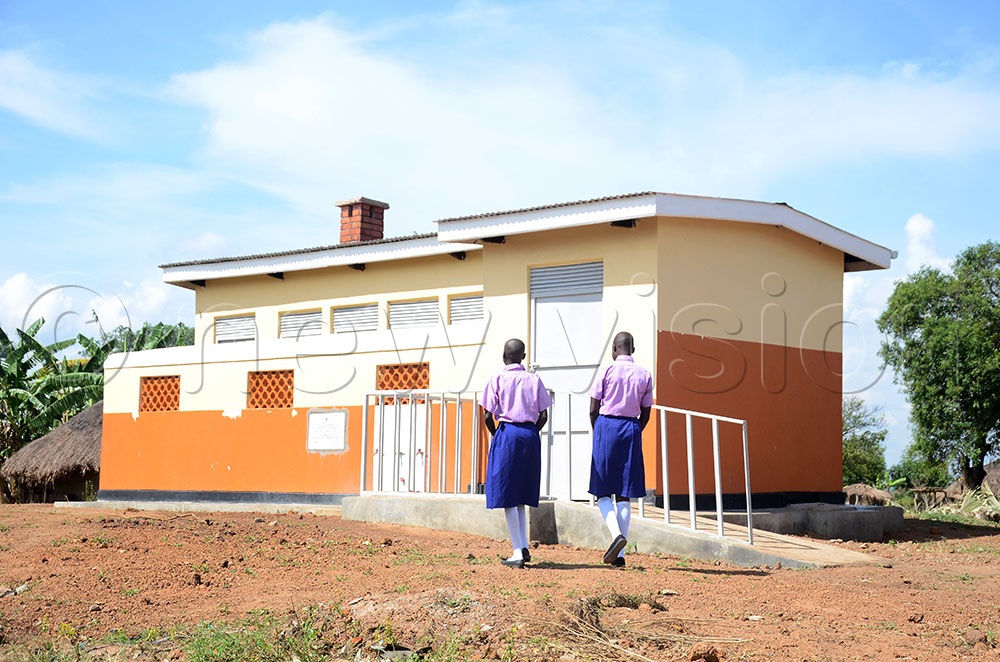
Pupils of Odum Primary School in Puranga sub county Pader district moving to their improved latrine that was installed in their school under the One Health Project. (Credit: Lawrence Mulondo)
Water and sanitation project brings relief
Relief came with the introduction of the One Health for Inclusive WASH Services project, implemented by Amref Health Africa Uganda with support from Water for All.
The six-year initiative, launched in 2021 and now in its final phase, focuses on improving access to water, sanitation, and hygiene services in underserved communities.
The project adopts a One Health approach, recognising the link between human health, animal health, and the environment. In Pader, it has transformed both schools and surrounding communities by addressing water scarcity and poor sanitation simultaneously.
Issa Sematimba Kasozi, the WASH project manager in Pader, explains that the initiative targeted areas identified as having limited access to groundwater. In its first phase, six solar-powered piped water systems were installed to serve schools, nearby communities, and health facilities.
The second phase added three more systems with 10,000-litre reservoir tanks, further extending water access.
As a result, the distance to water sources has been drastically reduced from over one kilometre to less than 200 metres. In areas where piped systems could not be installed, the project rehabilitated boreholes, restoring dozens that had long been non-functional.
Today, more than 23,000 pupils in the district have access to safe drinking water at school, while tens of thousands of community members have benefited from improved sanitation and hygiene programmes.
Kasozi notes that before the project, many schools relied on contaminated surface water, leading to frequent illness and absenteeism. Pupils sent to fetch water often failed to return to class, disrupting learning and placing an even heavier burden on girls.
Water has now been extended to key areas within schools, including girls’ washrooms, boys’ toilets, staff quarters, and central collection points. Public standpipes have also been installed to ensure easy access and reduce competition between schools and surrounding communities.
Beyond water access, the project prioritised the construction of improved latrines designed to meet safe sanitation standards. These facilities are drainable and reusable, ensuring long-term sustainability. They include private washrooms and incinerators that allow girls to manage menstruation safely and discreetly while at school.
With these facilities in place, girls can change, wash, and dispose of sanitary materials without leaving school. Clean water is also readily available for drinking and personal hygiene, helping to ease menstrual discomfort and promote overall health.
The improvements have addressed overcrowding in school latrines as well. In many schools, the ratio has been reduced from more than 80 pupils per stance to fewer than 40, aligning with recommended standards.
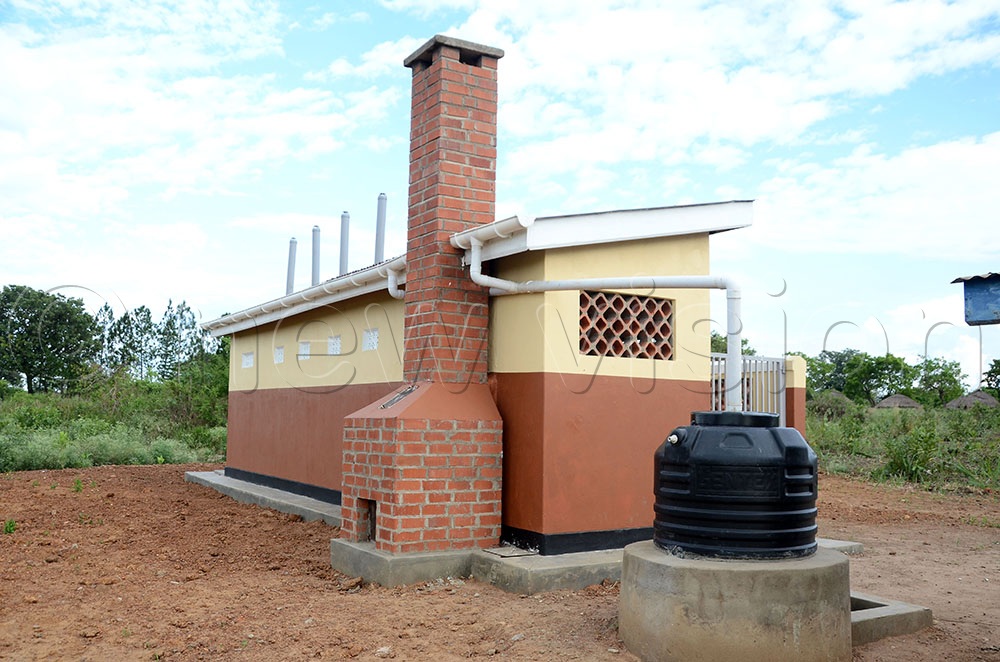
A side view of a improved latrine that was installed at Odum Primary School in Puranga sub county Pader district under the One Health Project. The latrine, one of those constructed by Amref Health Africa in Pader district schools has a changing room, an insinerator and water connected to it to improve sanitation and hygine of pupils. (Credit: Lawrence Mulondo)
Improved facilities boost attendance and confidence
Despite these gains, access remains limited. Out of 138 primary schools in Pader District, only 18 have dedicated menstrual hygiene management spaces, and just eight have running water, most of which were supported by the project.
Even so, early results are encouraging. Schools are reporting improved attendance and retention among both pupils and teachers. Cases of absenteeism linked to waterborne illnesses have declined, while handwashing facilities installed alongside latrines have strengthened hygiene practices.
Valentine Ojoro, a project officer, emphasises that the initiative views health as a complete system, linking environmental conditions, sanitation, and disease prevention.
He notes that latrines with integrated washrooms and incinerators have been particularly impactful, enabling girls to remain in school throughout their menstrual cycles.
At the district level, education officials acknowledge that menstrual hygiene remains a significant challenge, often compounded by poverty and limited parental support. Many families struggle to provide sanitary materials, and discussions about menstruation are still affected by stigma and cultural silence.
However, efforts are underway to address these barriers. Teachers, particularly senior women, have been trained to support girls, while school programmes now include training in the production of reusable sanitary pads. These initiatives also involve boys, helping to foster understanding, empathy, and respect.
As a result, more girls feel safe and supported at school. Enrolment and retention have improved, and academic performance is beginning to reflect these changes.
District Education Officer Margaret Alanyo notes that educating girls has far-reaching benefits, not only for individuals but also for families and communities. She highlights that improved sanitation facilities, especially durable and drainable latrines suited to the district’s fragile soil conditions, are critical to sustaining progress.
At Odum Primary School, the impact is already visible. Enrolment has nearly doubled, rising from about 360 pupils in 2024 to around 700 in 2026. The number of girls in upper classes has increased significantly, with more now completing Primary Seven.
Teachers report that pupils are more focused, as they no longer spend hours searching for water. Girls, in particular, attend classes with confidence, knowing they have access to safe spaces and the materials they need.
Similar improvements are being recorded across the district, where better sanitation and reliable water access are not only restoring dignity but also unlocking potential.
While challenges remain, especially in extending these services to all schools, the progress made demonstrates a clear truth: when girls are provided with safe, supportive learning environments, they stay in school, perform better, and move closer to achieving their dreams.
In Pader District, the simple addition of clean water and safe, well-designed latrines is quietly transforming lives, one girl, one classroom, and one future at a time.