
Teachers of special needs children call for regional resource centres
The Kampala School for the Physically Handicapped Children is one of the few institutions in Uganda offering both education and medical rehabilitation to children with disabilities.
(L-R): Helen Kaweesa, the former chairperson of the Chevening Alumni Association of Uganda with Loyce Maedero, the Head Teacher of the Kampala School for the Physically Handicapped children, Emma Hennessey the Head of the Scholarships Unit in the UK and Maecella Winearls, the head of public Diplomacy at the British High Commission showing the new block for the Library at the Kampala School for the Physically Handicapped children in Mengo on 9th March 2026. (Photo by Nicholas Oneal)
___________________
Joseph Ninsiima is 11 years old and lives with sickle cell disease. He also has hemiplegia on the left side of his body, which causes weakness in his arm and leg. On a recent morning at Kampala School for the Physically Handicapped Children, Ninsiima slowly inhaled and exhaled through a spirometer during a respiratory exercise aimed at strengthening his lungs.
The exercise is critical to his survival. Without regular breathing therapy, his lungs weaken, making it difficult for oxygen to reach vital organs. Whenever Ninsiima pauses, his breathing becomes laboured and loud, a reminder of the delicate balance he lives with every day. Because of these challenges, he needs a personal attendant nearby whenever he performs the therapy. Ninsiima is only one of many children requiring specialised care.
According to Hussein Ahmed Ngabo, the head of the medical rehabilitation department at the school, the number of children needing therapy is overwhelming.
On a typical day, Ngabo attends to more than 130 children with different physical disabilities, a workload he says is far beyond what one therapist should handle.
“If they can increase the number of therapists, I will feel relieved. If we had around 11 therapists here, the children would be attended to all the time,” he says.
Growing demand for specialised support
The Kampala School for the Physically Handicapped Children is one of the few institutions in Uganda offering both education and medical rehabilitation to children with disabilities. With 140 learners, all of whom require physiotherapy, occupational therapy, and assistive devices to participate in class.
Teachers and therapists say the shortage of specialised staff and learning resources continues to limit the potential of many learners.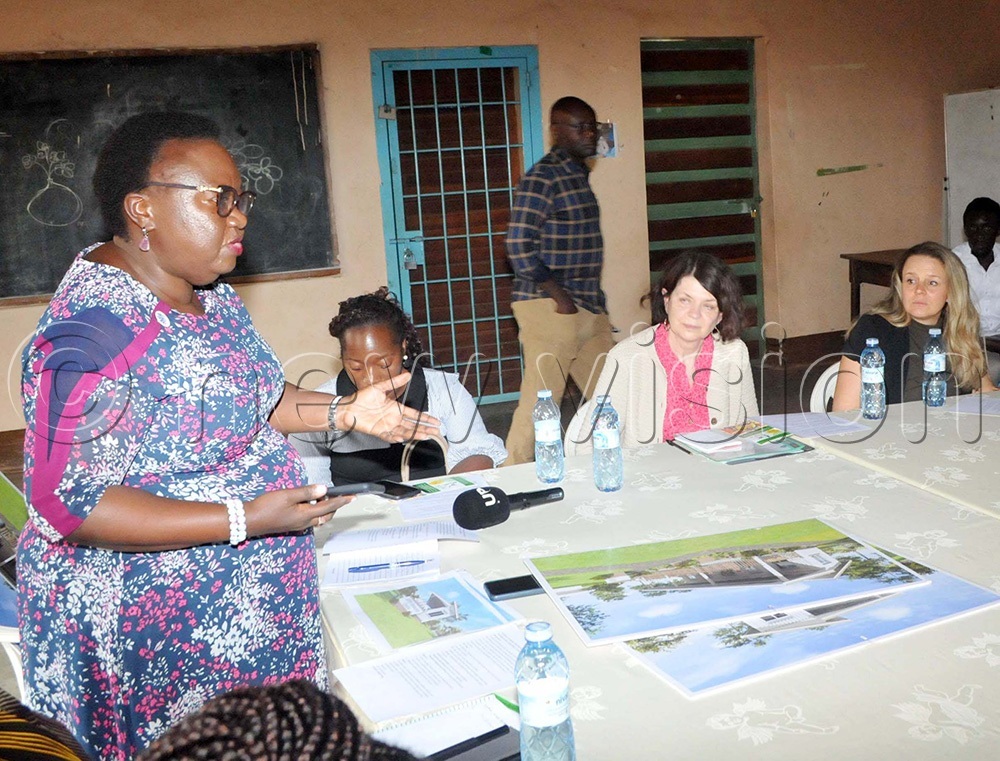
(L-R): Helen Kaweesa the former chairperson of the Chevening Alumni Association of Uganda speaks as Emma Hennessey, the Head of the Scholarships Unit in the UK looks on with Marcella Winearls, the Head of Public Diplomacy at the British High Commission at the Kampala School for the Physically Handicapped children in Mengo on 9th March 2026. (Photo by Nicholas Oneal)
For years, the school has operated without a proper library or resource centre, a gap that education experts say is critical for children with disabilities.
Joy Mwesigwa, the school’s director, says access to information and assistive technology is essential in special needs education.
“Reading is very important in the learning of every child, but when dealing with children with disabilities, there is a lot of adaptation and technology that must be developed to support their learning,” she says.
Currently, the school has only a small room functioning as a bookstore, which does not provide enough space or accessibility for students.
A fully equipped resource centre, she says, would serve as a library, ICT hub, and research space where children can read, learn, and access specialised learning materials. The centre would also support parents, teachers, and researchers seeking information on disability management and inclusive education.
“There is a big information gap in Uganda about disability. We want a place where information from around the world can be accessed so that professionals and families can learn how best to support these children,” she says.
Role of resource centres in inclusive education
Education specialists say resource centres play a critical role in supporting inclusive learning.
Such centres provide access to adaptive technologies such as communication boards for non-verbal learners, specialised seating equipment, assistive reading tools, and digital learning software designed for children with disabilities.
They also act as training hubs where teachers and therapists can learn new approaches to supporting children with complex learning needs.
Mwesigwa says biomedical engineers and therapists working with schools can design customised devices to help children sit comfortably, communicate, or participate in class.
She says some children may be unable to speak but remain highly intelligent. With assistive communication technology, they can still engage with teachers and classmates.
Without these interventions, many learners with disabilities struggle to remain in school, especially in mainstream institutions where teachers may not have the training to support them.
Push for regional centres
Education advocates are now calling for the establishment of regional resource centres across Uganda to ensure children with disabilities receive support closer to home.
Members of the Chevening Alumni Association in Uganda recently visited the school to assess its needs and support the development of a resource centre. After consultations with school management, they identified the centre as the most urgent priority.
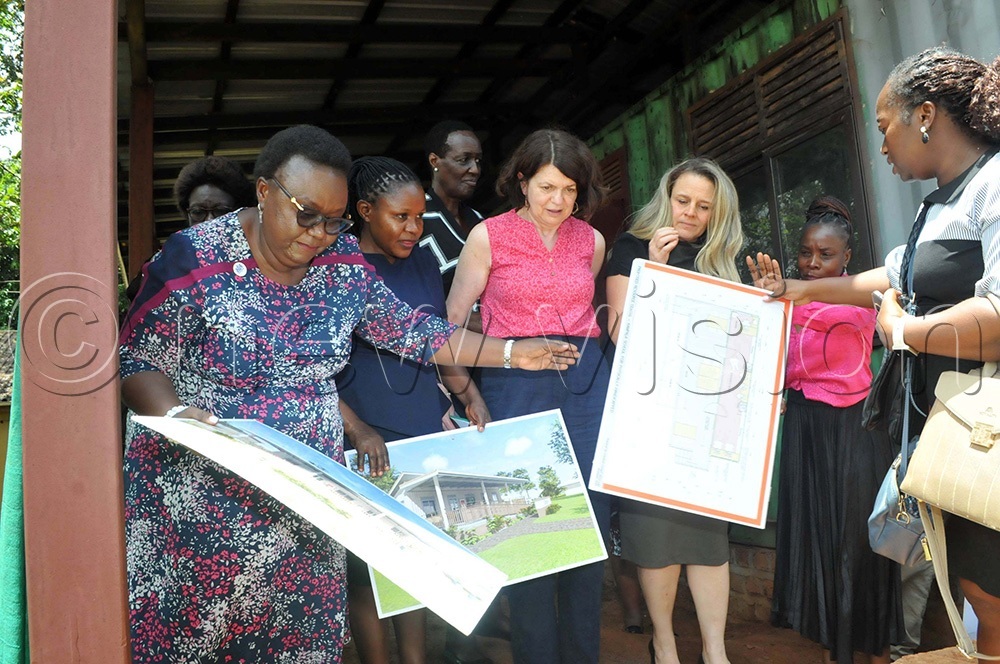
(L-R): Helen Kaweesa, the former chairperson of the Chevening Alumni Association of Uganda with Loyce Maedero, the Head Teacher of the Kampala School for the Physically Handicapped children, Emma Hennessey, the Head of the Scholarships Unit in the UK and Maecella Winearls, the head of Public Diplomacy at the British High Commission showing the new block for the Library at the Kampala School for the Physically Handicapped children in Mengo on 9th March 2026. (Photo by Nicholas Oneal)
“The resource centre is central to everything they want to achieve. It will serve as a library and ICT room for the children here, but also as a place where researchers, teachers, and the public can learn about inclusive education,” says Hellen Nanteza Kawesa, a Chevening alumnus of 2000-2001. She is also a former chairperson of the association.
The proposed centre will be developed from a shipping container that has been at the school for several years but has remained unused.
Chevening alumni with backgrounds in engineering, architecture, and electrical work have volunteered their expertise to transform the container into a functional learning facility.
The project was initially estimated to cost about sh120m to build and equip the centre.
Although some funds have already been raised, including about sh5m contributed by the alumni themselves, more support is needed to complete the facility. The group hopes the centre will be operational by the end of 2026.
Kawesa says Uganda already has policies supporting inclusive education, but the challenge lies in implementation and funding.
She believes that if the government invests in regional centres similar to the one proposed at the school, thousands of children with disabilities could gain access to education and rehabilitation services.
“When you travel across the country, these children are everywhere; some families hide them at home because they don’t know what to do,” she says.
She notes that many of these children could thrive if given access to specialised schools, trained teachers, and assistive technology.
“Education is wealth. When these children come to school, there is so much they can achieve,” she says.
The initiative has also attracted attention from international partners. Emma Hennessy, head of the scholarship unit at the United Kingdom’s Foreign, Commonwealth and Development Office, oversees the Chevening programme, a global scholarship scheme that supports emerging leaders to study in the UK.
She says Chevening scholars are expected to return to their home countries and contribute to development in their communities.
Hennessy says the involvement of Chevening alumni in supporting the resource centre reflects the programme's core mission.
“The Chevening program funds scholarships for future leaders to study in the UK and then go back home to make their countries better places,” she said during a visit to the school.
She praised the alumni for using their networks and influence to support inclusive education initiatives.
“They can help fundraise, raise awareness, and advocate for more support for schools like this,” Hennessy said.
She described the school as inspirational, noting the resilience and determination of the children despite their physical challenges.
“Seeing these students smiling, learning, and developing is incredible. Schools like this help children realise their full potential,” she says.
Hennessy says that if replicated across regions, such centres could transform inclusive education in Uganda, ensuring that children with disabilities are supported to learn, grow, and contribute to society.
Ministry responds
Dr Joyce Moriku Kaducu, the primary education state minister, commended the idea but said it should be formally presented to the ministry.
“Because if it is for the teachers, yes, something that is understandable because the teachers have to get informed, they have to get more knowledge,” she says.
“Except that the Ministry of Education, for us to come up with such information, needed to have done their research; they needed good information and a package, and then they can represent us,” she adds.
She noted that the government is doing all it can to boost inclusive education across the country.
Some of the special needs schools in Uganda include Mulago School for the Deaf, Ntinda School for the Blind, and Lubiri Secondary School for the Deaf, all located in Kampala and supporting learners with hearing and visual impairments.
Other institutions include Madera School for the Blind in Soroti, Mbale School for the Deaf in Mbale, and Wakiso Secondary School for the Deaf in Wakiso, which provide specialised education for learners with disabilities.
Additional institutions such as Saad Memorial Secondary School in Kasese, Iganga Secondary School with a special needs section, Kireka Home for Special Children, and St. Francis School for the Blind in Budaka also support children with diverse learning needs.