
Religious bodies ask education ministry to consult them on policy changes
The concern was raised during the Education Symposium, organised by Forum for Education NGOs in Uganda (FENU), in partnership with UJCC and the education ministry at Pope Paul Memorial Hotel in Kampala on December 10.
Participants who took part in the Education Symposium, organised by Forum for Education NGOs in Uganda (FENU), in partnership with UJCC and the education ministry at Pope Paul Memorial Hotel in Kampala, pose for a group photo. (Courtesy photo)
__________________
School foundation bodies under the Uganda Joint Christian Council (UJCC) have called on the Government to always extensively consult them on matters concerning the sector, especially when it comes to policies, laws and management of schools.
The concern was raised during the Education Symposium, organised by Forum for Education NGOs in Uganda (FENU), in partnership with UJCC and the education ministry at Pope Paul Memorial Hotel in Kampala on December 10.
Rev Fr Daniel Musiitwa, the UJCC secretary general, said their purpose was to harmonise and not to displace the church as a foundation body.
“We should come together to find a common ground and to work together with the Ministry of Education and Sports to further and better the education in our schools,” Fr Musiitwa, who was represented by Rev. Fr. Ronald Okello, said.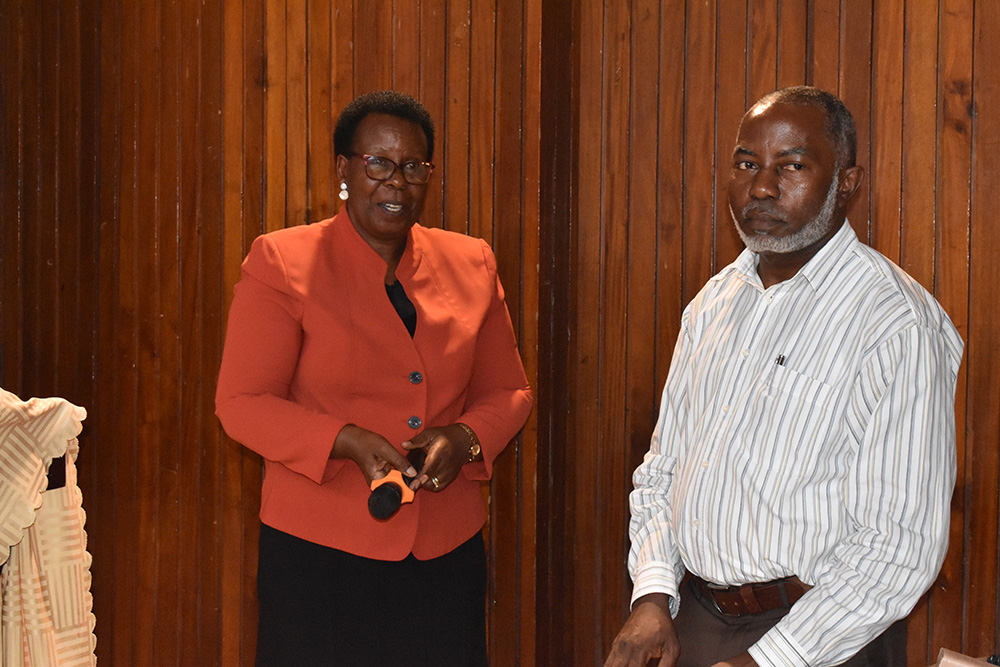
Dr Loy Muhwezi and Gordon Mukasa, officials from the Ministry of Education and Sports, participating in the Education Symposium. (Courtesy photo)
According to UJCC, over 70% of educational institutions in Uganda are founded by religious bodies.
Rev Dr Paul Kakooza, the UJCC national education co-ordinator for Church of Uganda, said the Education Review Commission report proposed to regulate the relationship between the ministry and foundation bodies, but the arguments given for this undermined the role and autonomy of these bodies and their function.
He said the lack of a well-defined agreement has resulted in issues such as interference of foundation bodies in the administration of schools, recruitment and deployment of teachers and conflict over the usage of the foundation bodies’ land for school projects.
As UJCC, he said their plea was that the Government should always consult the foundation bodies on critical policies or when provisions are to be generated. “When policies are developed without us being involved or consulted, we are scared that maybe the Government is trying to push us out as the foundation bodies,” Kakooza said.
Rev. Fr. Okello highlighted a section in the Technical, Vocational Education and Training (TVET) Act, which gives power to the ministry to prescribe the rights and responsibilities of the foundation bodies. “We request that the responsibilities of the foundation bodies be clearly spelt out in the Act for smooth running of these institutions founded and owned by the churches,” Fr. Okello said.
Education ministry responds
In response, Dr Loy Muhwezi, the TVET commissioner at the education ministry, said the Government carries out consultations on policies with church representatives on schools' boards of governors and councils, who are selected or appointed by the foundation bodies.
She, however, asked if due diligence is done when selecting representatives. “Where we have lost as a church is the way we pick people? We pick anyhow,” she said.
She advised that selections be made on merit, and not because one is a relative or an active church member. “I advise that you look for people in your churches who are good at education and can front your aspirations,” she said, warning them to be careful of the people they put on boards of governors.
“I want to tell you that for the TVET policy, the teams went to the regions, but the quality of representatives you had in those meetings mattered. If you have like 20 institutions in a region, but the quality of the board of governors at that time was so low, what did you expect? What was their input?” Muhwezi wondered.
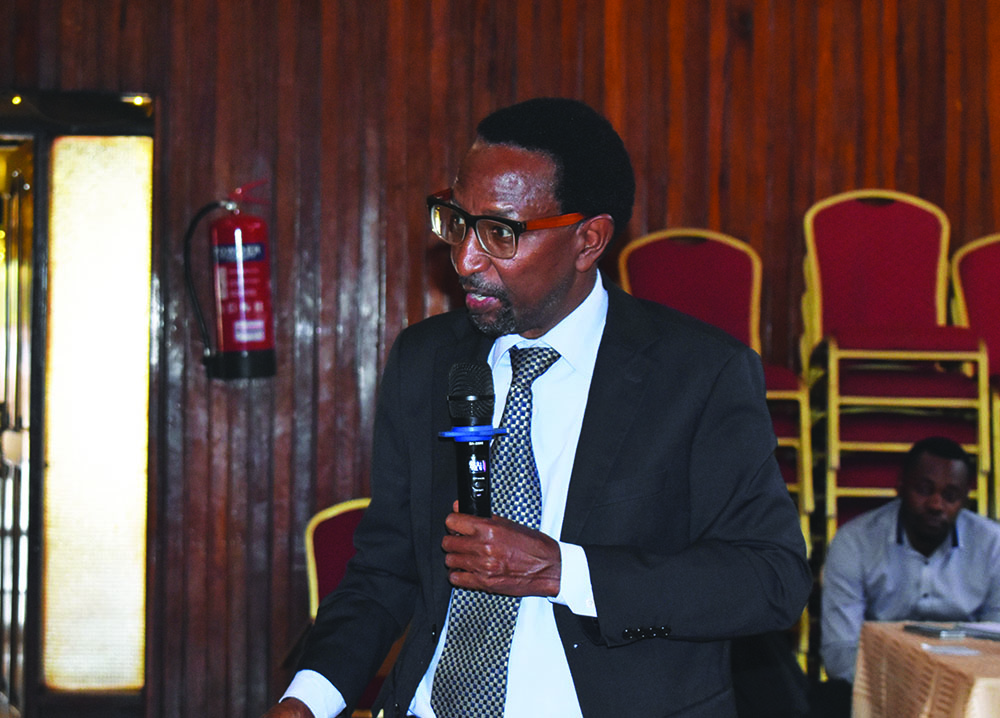
The executive director of FENU, Fred Mwesigye, appealed to the Government to recruit more teachers and improve facilities in schools. (Courtesy photo)
“Don’t think that you were not consulted, you were consulted, but your representation didn’t do much about TVET,” the commissioner added.
The executive director of FENU, Fred Mwesigye, appealed to the Government to recruit more teachers and improve facilities in schools.
“You can never have a nation rising above its institutions, and you can never have institutions rising above its education system,” he said.
Stakeholders speak out
Theodoros Kombe, the education co-ordinator of the Uganda Orthodox Church, asked why the Government should tax church schools, yet they are not-for-profit.
“Church-founded schools are key partners in education, and some of the schools are giving these services on a pro bono basis, not making profits. What is considered as profits goes back to the communities. Therefore, we are calling upon the govt to think about these taxes,” Kombe said.
Mukasa Gordon, principal education planner from the education ministry, urged school owners to embrace the Education Management Information System. “There is no compliance from private schools. Public schools’ compliance is at 99%. For better planning, private schools should enter their data into the system,” he said.
When asked about the gaps that exist in the competence-based curriculum at A’level, Mukasa said the National Curriculum Development Centre was in the best position to answer.
UJCC also opposed the proposal to have Uganda Revenue Authority collect school fees in government-aided schools, saying such a system would create unnecessary bureaucracy in the disbursement of funds. “Whereas the centralised process is intended to reduce corruption at the school level, several reports have shown a number of misappropriations and mismanagement of funds at the central level. Because these are large, complex systems which can lead to inefficiency in processing and accounting for numerous individual payments,” Kakooza said.
The ministry officials thanked the Forum for Education NGOs in Uganda (FENU) for organising the dialogue, saying there is a lot to be shared, and their input into the education reports would be needed.