
Prof. Balunywa calls for abolition of PLE and UCE
Prof. Balunywa reasoned that the current education system separates learners into classes, which later translates into the labour market in terms of high-paying jobs for the most qualified graduates and low pay for the less educated.
Prof. Juma Waswa Balunywa (left) and the vice chancellor of Metropolitan International University, Dr Julius Arinaitwe, displaying copies of entrepreneurship authored by him during the 8th graduation ceremony at the university campus in Mbarara City on Friday, Feb. 27, 2026. (Photo by Francis Emorut)
_______________
The former vice chancellor of Makerere University Business School, Prof. Waswa Balunywa, has asked the government to abolish the Primary Leaving Examinations (PLE) and the Uganda Certificate of Education (UCE), describing them as useless.
He argued that if Uganda is to develop and transform, the government must reform the education system.
“We need to reform education if the country is to change/transform. What are examinations for? PLE and UCE are useless,” Prof. Balunywa told graduates, parents and education experts, among others, during the 8th graduation ceremony of Metropolitan International University at its campus in Mbarara city on February 26, 2026.
A total of 2,535 students graduated, of whom 1,227 were female, representing 48.4 per cent, while 1,308 were male, constituting 51.6 per cent.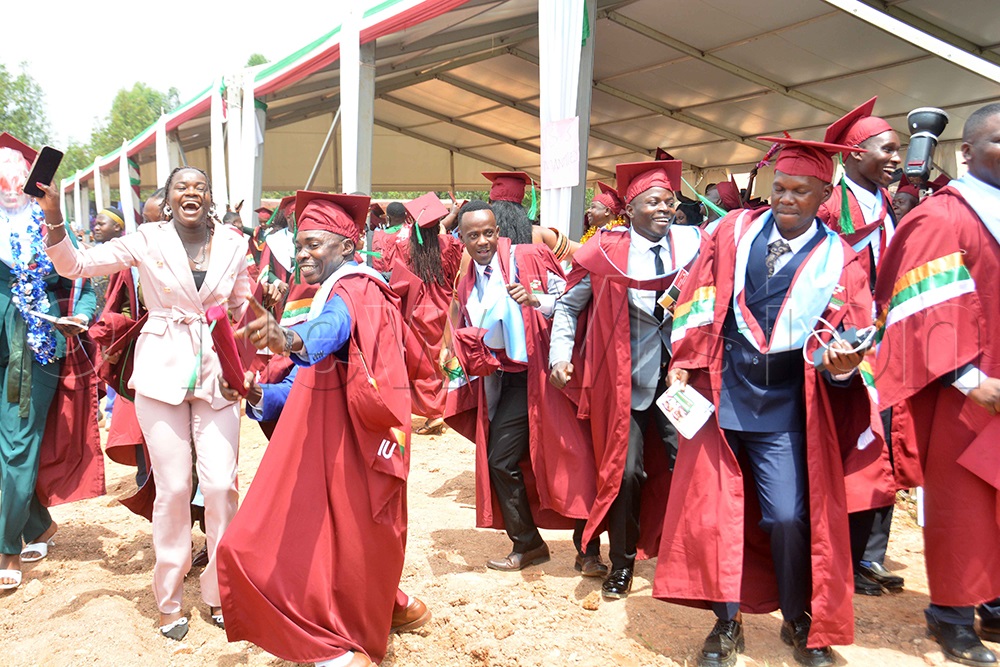
The graduates of Metropolitan International University dancing during the 8th graduation ceremony at the university campus in Mbarara City on Friday, Feb. 27, 2026. (Photo by Francis Emorut)
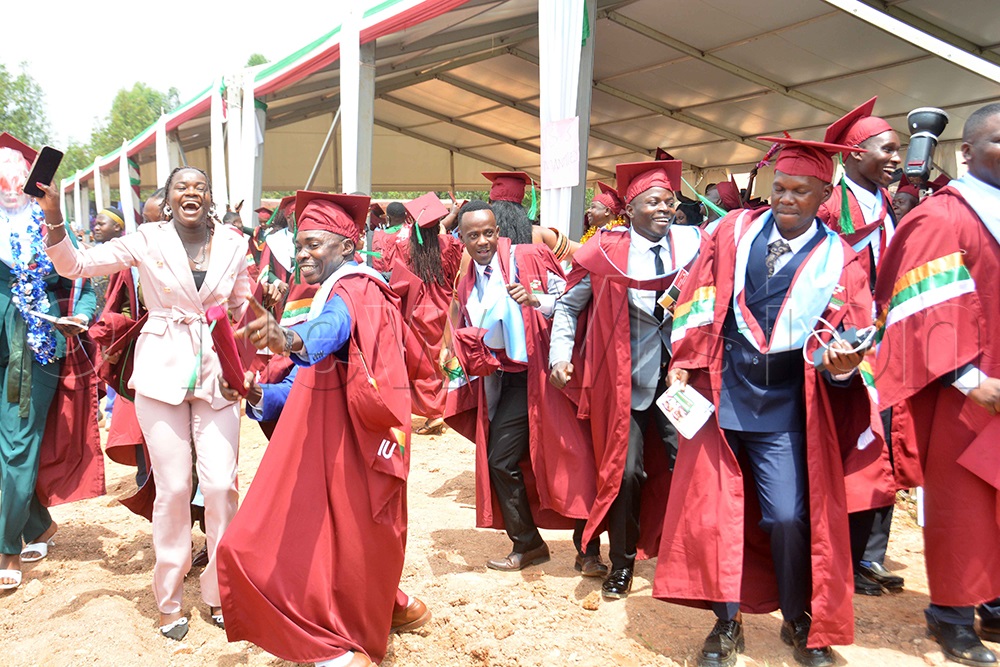
(Photo by Francis Emorut)
Although the government has introduced a competency-based curriculum for Ordinary and Advanced levels, the Uganda National Examinations Board (UNEB) still sets examinations for them.
Prof. Balunywa reasoned that the current education system separates learners into classes, which later translates into the labour market in terms of high-paying jobs for the most qualified graduates and low pay for the less educated.
“The current education system is useless, quote me on this. It is used to separate us,” he said.
Balunywa asked the government to invest more effort in sciences if the country is to realise socio-economic transformation.
He decried the high rate of Primary Seven dropouts at 70 per cent, noting that the girl child is particularly affected due to teenage pregnancy, with some girls having four to five children by the age of 18.
Balunywa added that continuous examinations at PLE and UCE levels result in poverty, as some learners end up on the streets without viable opportunities.
“The government should put a lot of effort into sciences if Uganda is to transform. Uganda will not transform when P7 dropouts are at 70%,” he stated.
Balunywa urged the government to embrace technical university training and support private universities rather than “kill” them. He also called for a research fund to enable universities to conduct research and win grants.
He likened the mushrooming of universities to the efforts of the private sector.
Balunywa advised graduates to focus on skills development and disciplined behaviour, saying those who exhibit such qualities are often head-hunted for leadership roles.
“Skills are not bought at the supermarket but are acquired over time,” he stated.
He emphasised the importance of both technical and soft skills and encouraged graduates to remain consistent in whatever they do.
He urged them to know their goals and objectives in life, discover themselves and develop a passion for their chosen careers. He also appealed to them not to fear failure, saying it is part of life and that one must rise after falling in order to succeed.
The Kampala city and metropolitan affairs state minister, Kabuye Kyofatogabye, implored the graduates to embrace the government’s four pillars of development: agro-industrialisation, tourism development, minerals development, oil and gas, and science, technology and innovation linked to information and communication technology.
He said campus life anchors graduates’ direction in economic development.
Kyofatogabye also encouraged the new graduates to pursue further education and skills development, including Master’s and Doctor of Philosophy degrees.
He cautioned them against HIV and AIDS infection, saying reckless behaviour could cost lives.
The chancellor of Metropolitan International University, Dr Philemon Mateke, urged the graduates to excel in their professions and continue growing in their careers.
The vice chancellor, Dr Julius Arinaitwe, called upon the graduates to embrace skill empowerment and charged them to build health, teach, innovate and lead.
“Use your uniquely human competencies to harness the power of Artificial Intelligence for the greater good,” Dr Arinaitwe said.
The university board secretary, Dr Gracious Ariyo, tasked the graduates to work hard and trust God in order to succeed.
A total of 18 students attained a CGPA ranging from 4.42 to 4.74. The best student, Alexander Sembalirwa, who scored a CGPA of 4.74, received one million shillings. Other top-performing students received gifts and certificates.