Newspapers are an integral part of teaching, learning in Amuru School
Every week, the school receives 25 copies of Weekend Vision and Toto magazine under the Newspapers in Education (NiE) programme implemented by Save the Children, an organisation that saves and cares for children around the world.
Teacher Sarah Ajok uses Toto magazine to teach literacy to Primary Two pupils. (Credit: Ritah Mukasa)
__________________
“New Vision newspapers have become an integral part of our teaching and learning because they have credible stories and pictures. PASS PLE also has standard questions,” John Bosco Oola, Primary Seven class teacher at Agole Primary School, located in Pabo Town Council, Amuru district in Northern Uganda, says.
Every week, the school receives 25 copies of Weekend Vision and Toto magazine under the Newspapers in Education (NiE) programme implemented by Save the Children, an organisation that saves and cares for children around the world.
The teachers use the newspapers while teaching Literacy, English, Mathematics, Science, Social Studies and Religious Education.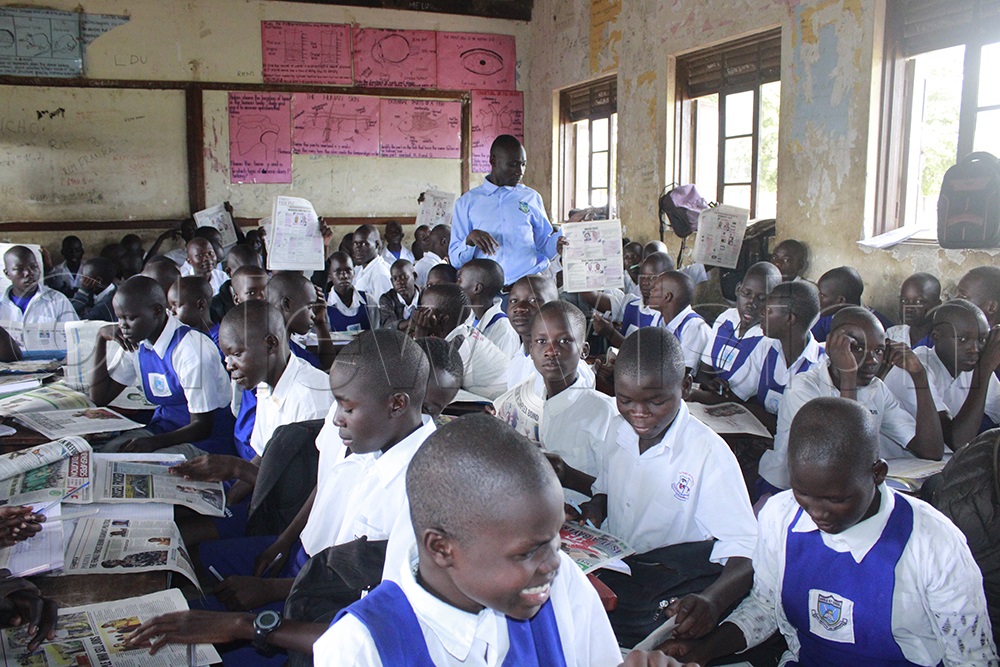
Teacher John Bosco Oola uses PASS PLE in class with candidates, saying the publication's standard questions and answers help them prepare for their examinations. (Photo by Ritah Mukasa)
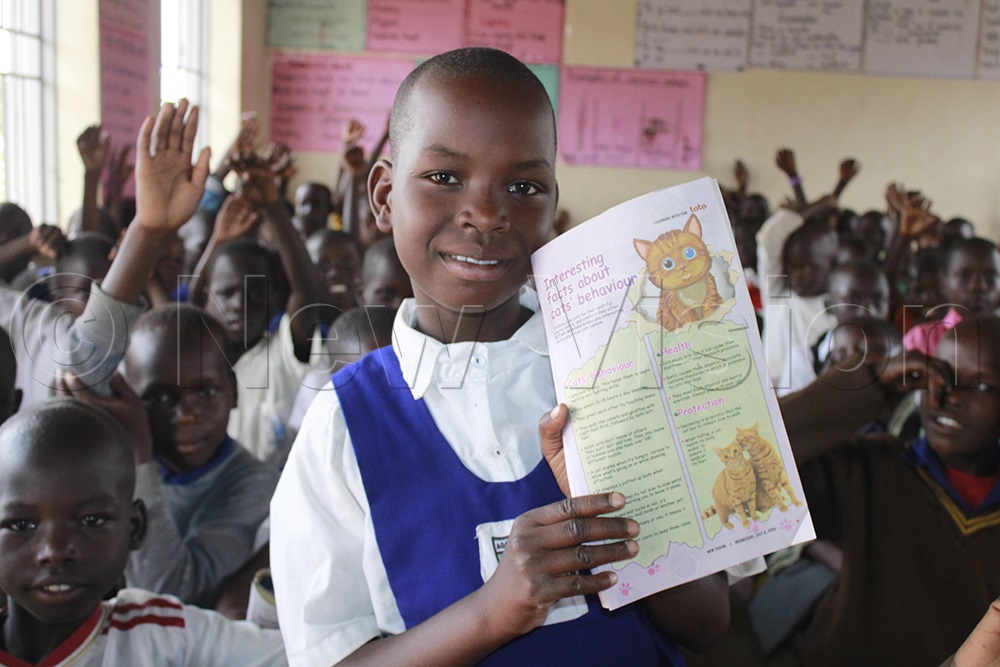
Children enjoy reading about animals in Toto Magazine. (Photo by Ritah Mukasa)
In addition, in 2025, they opened a reading club that currently has 25 members, according to Simon Obong, the patron.
“I use newspapers to train the members' reading speed, after which they compete for prizes,” he says. They practice by reading the newspaper stories every week while observing the story flow, punctuation marks and pronunciations. With time, they improve the speed at which they read articles.
That’s not all. Obong is quick to add that newspapers help the pupils in poem and essay writing as they learn new words, their meaning and proper usage. They also pick quotations and references.
“I am a big advocate for environmental conservation, and I learn a lot from the newspapers since they have relevant content on climate change and how we can protect our environment,” he says.
Relatedly, Betty Lamwaka, the deputy head teacher, thanks Save the Children, saying PASS PLE gives her 228 candidates’ confidence to pass. Whenever they attempt the questions and pass them, they are motivated to focus and read harder. In the same way, the questions help to check the teachers on syllabus coverage.
Meanwhile, Lamwaka appeals for more copies saying the 25 they receive are just a drop in the ocean given the school population of 2,170 pupils.
About the NiE programme
The Newspapers in Education (NiE) programme is being funded by the Norwegian Agency for Development Cooperation (NORAD) through Save the Children in partnership with New Vision. NORAD is implementing a five-year programme from 2024 to 2028 called “Transforming the Future-For and with Children” in Acholi and Karamoja regions. The program aims to ensure that all children enjoy their rights to survival, protection, development and participation in a safe, inclusive, accountable and resilient environment.