
New curriculum gives life skills education fresh opportunity in West Nile schools
Jovan Kaiti of Logiri Girls Secondary School in Arua district says the programme has encouraged learners to support and advise one another while developing a stronger sense of responsibility.
Participants of the benefiting schools during an engagement in Arua city. (Photos by Jonathan Driliga)
________________
Uganda’s Competency-Based Curriculum (CBC) is offering a fresh opportunity to strengthen life skills and adolescent reproductive health education in secondary schools, with teachers in West Nile reporting improvements in learners’ confidence, leadership, communication and decision-making.
The reflections emerged during an engagement in Arua city, where teachers reviewed the long-term impact of the Adolescent Reproductive Health Rights and Life Skills Education Project, three years after its implementation ended.
The project was implemented between 2022 and 2023 with funding from Grand Challenges Canada.
It involved seven secondary schools in West Nile: Adumi Secondary School, Arua Public Secondary School, Ediofe Girls Secondary School, Logiri Girls Secondary School, Muni Girls Secondary School, Mvara Secondary School and Otravu Secondary School.
The initiative was designed to equip adolescents with knowledge and practical skills in reproductive health, mental health, drug abuse prevention, responsible decision-making and healthy relationships.
However, teachers say the project has continued to influence learners well beyond its original objectives.
CBC creates opportunity
Stakeholders say the timing is particularly important as Uganda continues to address teenage pregnancies, child marriages, school dropouts and substance abuse among young people.
They observed that many adolescents still have limited access to accurate reproductive health information because conversations about sexuality and relationships remain difficult for some parents and teachers.
The Competency-Based Curriculum, introduced by the National Curriculum Development Centre (NCDC), places greater emphasis on values, communication, critical thinking, problem-solving, citizenship and practical life skills.
Left to right: Associate Professor Atcero, Ayikoru (centre) and Professor Bada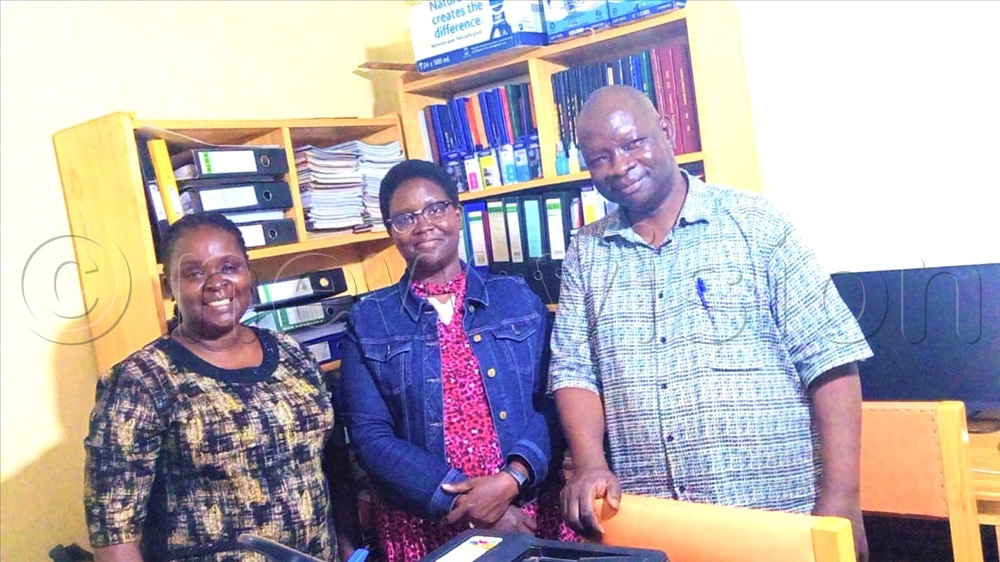
Unlike the previous content-heavy approach, CBC promotes learner-centred methods such as storytelling, debates, group discussions, role play, peer learning and practical activities.
Teachers who participated in the West Nile project say these approaches have made it easier to discuss sensitive issues with learners.
The project toolkit combines digital games, multimedia lessons, animations, cartoon stories and student manuals covering reproductive health, mental health, drug abuse prevention and life skills.
Although initially developed for school health clubs, teachers have adapted the materials for English, Christian Religious Education, guidance and counselling, leadership development and peer mentoring.
Jovan Kaiti of Logiri Girls Secondary School in Arua district says the programme has encouraged learners to support and advise one another while developing a stronger sense of responsibility.
“The adolescent reproductive health education programme has helped learners to learn to advise and counsel each other. It enhances understanding of development and growth of the human body and makes learners take care of themselves as they share experiences,” Kaiti explained.
Kaiti says the programme has also encouraged adolescents to avoid risky behaviour, including drug abuse and sexual activities that could affect their education and future.
He argues that the initiative should be expanded to reach more young people in schools and communities.
At Arua Public Secondary School, teacher Scovia Akikoli says the toolkit has particularly helped girls develop confidence and make informed decisions.
She cites the example of Josephine Anita Kasimire, who was able to aspire to a leadership position after engaging with the stories in the toolkit.
“After reading the stories, this has helped them to make informed decisions, and it has also given them courage. For example, we have a student called Kasimere Anita. When she was in Senior Three, she was able to aspire to be Assistant Head Girl at a very big school,” Akikoli says.
She adds that the learner later began reading the stories aloud to her peers, prompting discussions about early pregnancy, early marriage, drug abuse and negative peer pressure.
Students taking ownership
For Kasimire, the impact of the programme has gone beyond academic learning.
She says the stories have helped her develop courage and encouraged her friends to reconsider decisions that could jeopardise their education.
“When you are going through whatever you are going through, you need to have the courage to get out of it. However much you fall into a trap, and you get discouraged, that is not the end of you,” Kasimire noted.
She said reading the stories aloud to her friends helped them identify with the experiences of the characters and reflect on their own lives.
“When someone starts putting themselves in the shoes of what is being written, I don’t think they will want to repeat the mistake that is in the story.”
Researchers encouraged by sustainability
Associate Professor Maureen Ayikoru, one of the project leaders, says she has been encouraged by the way teachers have continued to adapt and use the toolkit three years after the formal project ended.
Ayikoru says the teachers’ experiences have strengthened her commitment to finding ways of extending the programme to more young people.
She also says future expansion should take into account the challenges identified by schools to ensure the toolkit achieves its full potential.
NCDC approval boosts prospects
The project has received further recognition following approval by the National Curriculum Development Centre of the Adolescent Reproductive Health and Life Skills Education Student Manual as an official secondary school resource.
Teachers argue that the resource fits well within the competency-based approach because it supports interactive and learner-centred teaching.
They say the materials can be integrated into several subjects and school activities rather than being restricted to health clubs.
Challenges remain
Despite the reported successes, schools say several challenges could limit the programme’s wider impact.
Participating schools initially received only two printed copies of the student manual, limiting access for both teachers and learners.
Schools also cited inadequate computer facilities, limited digital skills among some teachers and congested school timetables.
Participants also called for greater involvement of parents, religious leaders and cultural institutions in life skills education so that young people receive consistent guidance both at school and at home.
A model for national scale-up
With the NCDC reviewing the upper secondary curriculum, educators believe there is an opportunity to strengthen the place of life skills and adolescent reproductive health education beyond Senior Four.
The experience from West Nile suggests that when learners are given practical, relatable and interactive tools, sensitive issues can be addressed more openly.
Teachers say the continued use of the toolkit demonstrates that life skills education can become part of everyday learning rather than a one-off intervention.
As Uganda pursues Sustainable Development Goal 3 on Good Health and Well-being and SDG 4 on Quality Education, stakeholders argue that equipping young people with knowledge, confidence and practical decision-making skills is essential.
For West Nile teachers and learners, the Competency-Based Curriculum could provide the framework needed to take the lessons from this project beyond the seven participating schools and reach adolescents across Uganda.