
Namayingo schools to create safe environment for HIV-positive learners, teenage mothers
Data from UNICEF indicates that the teenage pregnancy rate in Namayingo, partly an island district located in eastern Uganda, has risen to 27%.
Namayingo is grappling with high rate of teenage mothers. (Photos by Ritah Mukasa)
________________
While some districts have registered progress in reducing teenage pregnancies, Namayingo’s story remains deeply concerning.
Data from UNICEF indicates that the teenage pregnancy rate in Namayingo, partly an island district located in eastern Uganda, has risen to 27%. Many girls are increasingly dropping out of school.
While some defy the odds stacked against them and return to class after childbirth, others, some as young as 14 years, give up and get married. In the process, some contract HIV/AIDS while others die during childbirth. This revelation has unsettled officials at the Ministry of
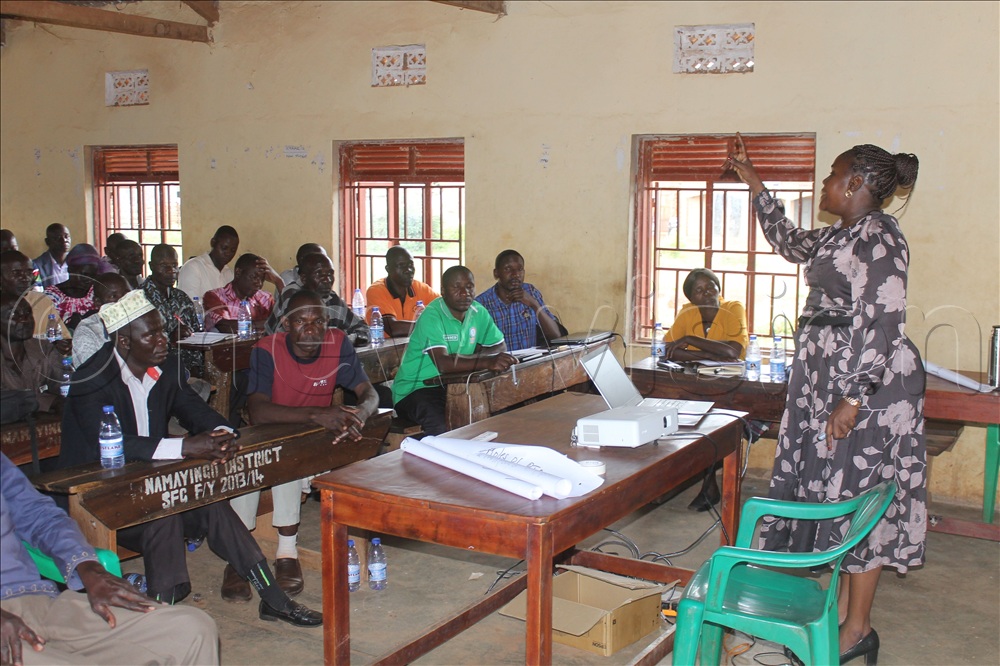
Education and Sports, local leaders, and school heads. Early Last week, 175 stakeholders converged at Namayingo Primary School to find a lasting solution before the situation spirals out of control.
They included headteachers, senior men and senior women, and representatives from school management committees and boards of governors. They came from different primary and secondary schools around the district.
Muhamadi Kasule, the technical advisor for health and HIV at the education and sports ministry, expressed concern about the increasing cases of school dropouts, teenage pregnancies, and learners at high risk of contracting HIV in Namayingo.
He urged schools to equip learners with life skills while working to end Violence Against Children (VAC). “The ministry works to ensure that all children complete their education without being discriminated against,” he said.
On why teenage pregnancies persist, Elizabeth Anyango, the education officer in charge of counselling and guidance, blamed the issue on demographics, poverty, and cultural ties, compounded by gold mining, fishing, and the long distances children walk to school.
She explained that people from different walks of life inhabit Namayingo’s landing sites and islands. Many parents disregard education and lead reckless lives. The two-day sensitisation meeting was organised by Trailblazers Mentoring Foundation (TMF) in partnership with the education ministry and UNESCO.
Joyce Atimango, TMF’s executive director, pointed out that they aim to increase knowledge and understanding of HIV, sexual and reproductive health, and mental health, as well as to emphasise the role of school managers in promoting learners’ wellbeing. In addition, they enforce the Education Act, Children’s Act, and Adolescent Health Policy. From her experience, Atimango said: “Promoting health and wellbeing requires an integrated approach implemented through strong linkages across sectors.”
What teachers say
According to Peter Putan, the deputy headteacher at Budidi Secondary School, HIV is prevalent in schools. Unfortunately, he said some children who live in remote villages cannot easily access healthcare.
“However, we have pledged to ensure these learners are safe and healthy.”
On her part, Petwa Nandudu, the senior woman teacher at Sigulu Primary School on the Sigulu islands, said: “We have been equipped with the information we need to sensitise parents and fellow teachers on how to ensure children stay in school while healthy and safe.”
Figures from the Uganda Bureau of Statistics (UBOS) indicate that by 2024, Namayingo district had 283,212 people.