
Learn how to use artificial intelligence, TVET trainers told
Akovuku warned that continued reliance on conventional paper-based assessments without adapting to the growing use of AI could undermine the purpose of training and assessment.
UVTAB Executive Secretary Onesmus Oyesigye makes a presentation during the workshop. (Photos by John Masaba(
________________
Technical Vocational and Education Training instructors have been urged to embrace artificial intelligence (AI) or risk being replaced by professionals who know how to use the technology.
Eng. Albert Akovuku, who represents the finance ministry on the Uganda Vocational and Technical Assessment Board (UVTAB), said AI is rapidly changing the skills landscape and could make some traditional skills less relevant.
Akovuku, who represented UVTAB chairperson Prof. Dorothy Okello at the board’s annual stakeholders’ feedback workshop in Kyambogo, Kampala on Tuesday, said instructors must learn to use AI while ensuring that it does not undermine the integrity of assessments.
“AI should not replace you. But if you don't use it, those who use it will replace you,” he said.
Akovuku, however, warned that the growing use of AI by students could make it difficult for instructors to determine whether learners had genuinely acquired the competencies being assessed.
The concern, he said, is particularly important under the TVET training model, where practical work accounts for a large proportion of assessment.
“Imagine a student does his practicals, then prepares a very good report using AI. If you, the instructor, are not good at AI, then the student is bound to get 100%. But you are not assessing the student; you are assessing AI."
He said the challenge also extends to theory assessments, particularly where students are allowed to take examinations home and use AI to generate answers.
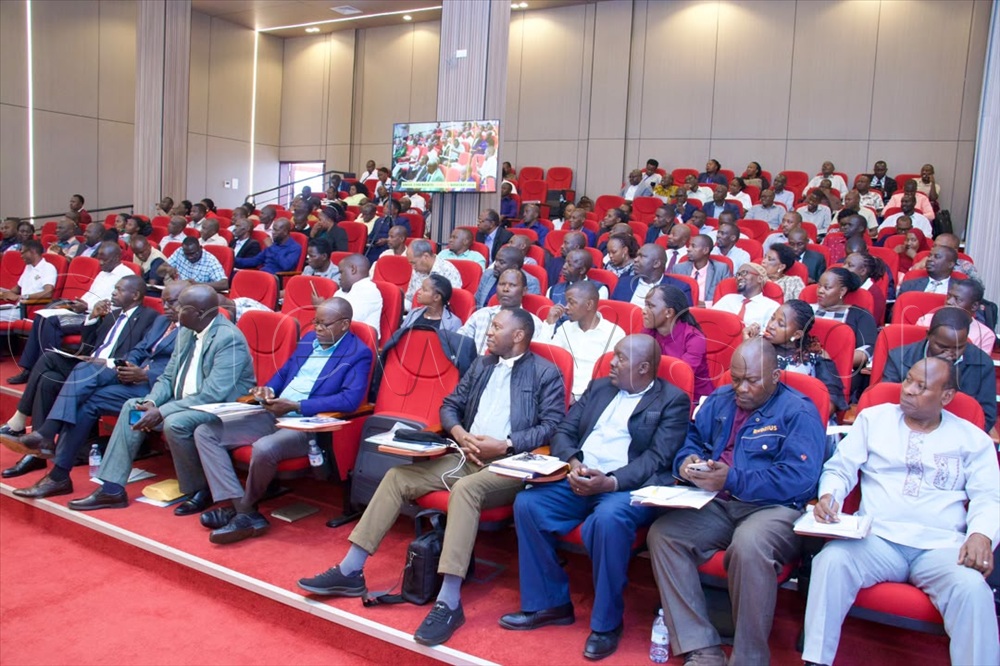
Stakeholders listen attentively during the workshop at the UVTAB Secretariat auditorium at Kyambogo Hill in Kampala on Tuesday.
“Some or most of the students take coursework home, and bring back very good answers where the solution is provided by AI, and you end up awarding full marks. You are assessing AI and not the student."
He warned that continued reliance on conventional paper-based assessments without adapting to the growing use of AI could undermine the purpose of training and assessment.
Akovuku also cautioned that AI could make some skills, such as coding, less relevant as learners increasingly turn to the technology for information, solutions and technical assistance.
He said the solution is not to reject AI but instead to equip instructors with the knowledge to use it responsibly while maintaining safeguards that ensure assessments measure learners’ actual competencies.
He recalled how Makerere University once trained professors who were unfamiliar with computers, saying a similar approach was needed as AI becomes increasingly important in education and the workplace.
He urged instructors and other TVET stakeholders to learn about AI while ensuring that it supports rather than replaces human expertise.
Julia Nasaza, the UVTAB deputy executive secretary in charge of curriculum, said AI can be useful to TVET learners for guidance and information but cannot replace the practical skills on which their training and assessment are based.
“AI is not bad. People can use AI to get direction, get some highlights and get some information. But after getting that information, how do you use it to be productive?”
Practical assessment accounts for 70% of the mark in diploma programmes while theory accounts for 30%.
“If you use your AI and you get the 30%, that is not the pass mark. You will still fail,” warned Nasaza.
The practical component is even higher at lower TVET levels, where theory accounts for 20% and practical work 80%.
The annual stakeholders’ workshop was held to review progress on issues agreed upon during the previous year’s meeting and identify areas requiring improvement.
UVTAB also presented reforms implemented over the past year, including new curricula and Assessment and Training Packages (ATPs), while collecting proposals from trainers, practitioners and other stakeholders in a bid to create a common understanding of the reforms being implemented and encourage stakeholders to identify areas that need improvement.
The board's executive secretary, Onesmus Oyesigye, said the reforms are aimed at strengthening confidence in curriculum development and management, assessment and certification, while ensuring that TVET qualifications provide meaningful opportunities for graduates and respond to the needs of the world of work.
He called for greater inclusion of people who acquired skills outside the formal education system, urging Ugandans who acquired skills through formal, non-formal or informal learning to seek assessment and certification so that their competencies can be formally recognised within the TVET system.
“For inclusivity, I call upon all Ugandans, irrespective of where they acquired their skills, to come forward, visit the nearest TVET provider, and register for skills assessment and certification."
Oyesigye said formal recognition of such skills would help strengthen the TVET system and ensure that people who acquired competencies outside conventional training institutions can also have them assessed and certified.
The stakeholders’ workshop brought together trainers, practitioners and other stakeholders to review the reforms, assess progress and discuss measures for improving implementation.