
Health services depend on having right workers in place — researcher Kaddu
Kaddu says his background in public administration and management inspired him to undertake the research. His experience as a university lecturer and his desire to understand how institutions can perform better also influenced his choice.
Kaddu says workforce challenges in the health sector can affect the services ordinary people receive, particularly those who depend on public health facilities.
While Uganda’s health sector continues to register milestones, especially in disease diagnosis and treatment, challenges in service delivery persist.
Peter Kaddu, an academic, researcher and lecturer, believes that good infrastructure and modern medical equipment are vital to a robust health sector, but effective service delivery ultimately depends on having the right health workers in the right places at the right time.
Kaddu bases this view on research he conducted while pursuing a Doctor of Philosophy (PhD) in Public Administration, specialising in human resource planning, at Nkumba University, with graduation taking place on October 24, 2026.
His research, titled Human Resource Planning Practices and Perceived Health Service Delivery in Public Health Facilities in Central Uganda, examines workforce alignment, human resource forecasting and succession planning, and how these practices relate to health service delivery.
Kaddu says workforce challenges in the health sector can affect the services ordinary people receive, particularly those who depend on public health facilities.
He hopes his findings will help decision-makers and health facility managers make better workforce decisions.
“I believe research should not remain on library shelves but help us understand real problems and identify practical solutions,” he says
Why he chose the subject
Kaddu says his background in public administration and management inspired him to undertake the research. His experience as a university lecturer and his desire to understand how institutions can perform better also influenced his choice.
He wanted to contribute knowledge that could improve workforce planning and health service delivery in Uganda.
“I realised that people are the most important resource in any organisation,” he says.
Kaddu argues that even institutions with good policies, infrastructure, equipment and financial resources may struggle to achieve their objectives if their employees are not properly planned for, supported or distributed.
To him, earning a PhD is not simply about acquiring another qualification. It is an opportunity to generate knowledge that can make a practical difference in society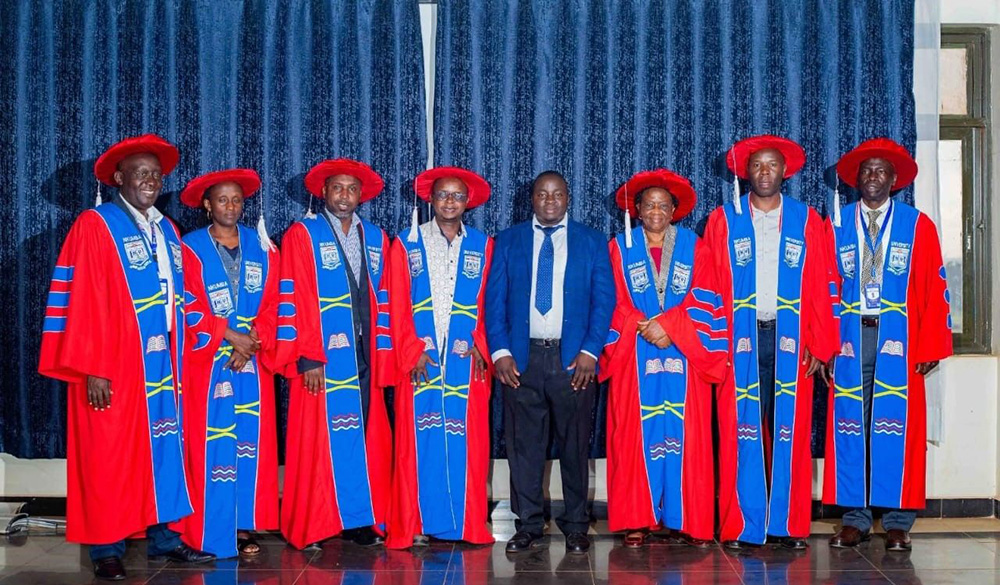
Peter Kaddu (Center) roots for better health service delivery.
A demanding journey to the finish line
Kaddu describes his PhD journey as one of learning, sacrifice, patience and personal growth.
He initially hoped to complete the programme within the expected three years, but the journey proved more demanding than he had anticipated. Balancing work with reading, data collection, analysis and thesis writing required considerable commitment.
There were times when he made encouraging progress and others when he had to rethink his approach, make corrections and revise his work.
“In hindsight, this taught me that academic success does not always follow the timetable we set,” he says.
Looking back, Kaddu says the experience has made him more patient, more critical in his thinking and more determined to complete what he begins. It has also helped him understand that pursuing a PhD is not only about earning a title, but also about becoming a better thinker, researcher and problem-solver.
“I remained committed, seeking guidance from my supervisors and revising whenever necessary,” he recalls.
Whenever progress slowed, Kaddu reflected on the reasons that had compelled him to undertake the PhD and concentrated on taking one step at a time.
“This journey taught me that perseverance does not mean having a trouble-free experience, but continuing even when circumstances become difficult and treating challenges as opportunities to grow,” he says.
From village hardship to a doctorate
Kaddu’s academic journey began in a village, where he attended primary and secondary school under difficult financial circumstances.
Finding school fees was a constant struggle. He worked in other people’s gardens and performed manual labour to remain in school. Despite the uncertainty, he held on to the belief that education could open doors to a better future.
“Losing my father while in secondary school hit me hard,” Kaddu says.
To Kaddu, therefore, the PhD represents more than an academic achievement.
“It reminds me that where we begin does not have to determine where we end,” he says. “I hope my story encourages others facing difficulties to continue believing in a better future.”
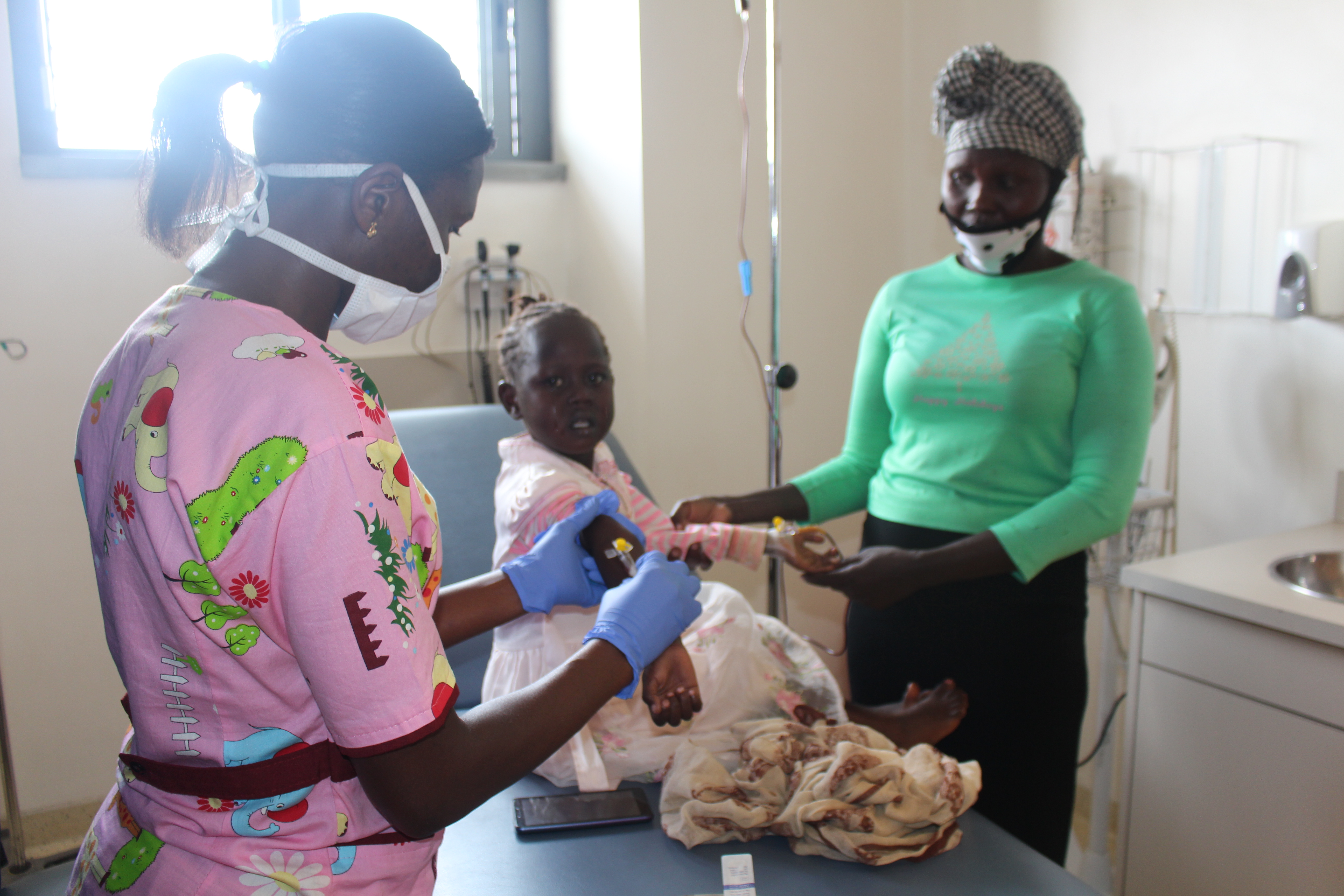
Child getting treatment at cancer institute. Kaddu says workforce alignment will improve service delivery.
Looking beyond graduation
Over the next 10 years, Kaddu envisions himself contributing to Uganda as an experienced academic, researcher and mentor in higher education and public sector development.
He hopes to publish more research, supervise postgraduate students, participate in academic leadership and collaborate with scholars and institutions to address challenges facing Uganda and Africa.
Kaddu also hopes to inspire young people, particularly those from difficult backgrounds, to believe in themselves and pursue their dreams.
His message to those planning to pursue a PhD is to believe in their dreams, prepare for the challenges ahead and remain committed even when the journey becomes difficult.
He advises prospective doctoral candidates to choose research topics that genuinely interest them and address meaningful problems. They should manage their time, read regularly, write consistently and appreciate small achievements along the way.
Kaddu also urges them to maintain good relationships with their supervisors, seek guidance, accept constructive criticism and remain patient when revisions become necessary.
Above all, he says, doctoral students should uphold academic integrity, seek support when needed and take care of their well-being.
“A PhD is a marathon, not a sprint. What matters is not how quickly you finish, but what you learn, the integrity you maintain and the contribution you make through your research,” he says.
Kaddu is grateful to his supervisors and everyone who encouraged and supported him throughout the journey.
His final message is simple: “Never be ashamed of where you come from, never underestimate the power of education, and never give up on a dream simply because the journey is difficult.”