
Career options after senior four
The conventional academic pathway — from nursery through primary, secondary, and university — can take up to 25 years before one secures decent employment. In contrast, he notes that learners in technical education can be employable by the age of 16.
TVET students at an institute in Kampala examining car parts during training. One can enrol for such a course after completing Senior Four. (Photo by Umar Nsubuga)
_______________
After completing Senior Four at Nile College, Kawempe, in 2004, Henry Bukenya did not proceed to A’level because his grades were not good enough. Apart from the grades, he was from a humble background and also struggled to raise school fees. For four years, he survived by selling matooke and chapatti in Matugga, Wakiso district.
In 2010, he enrolled at a vocational institute in Wakiso district to acquire practical skills in catering. That decision changed everything. Today, he owns two mini-supermarkets, employs 10 permanent staff and four casual workers, and runs a carpentry workshop.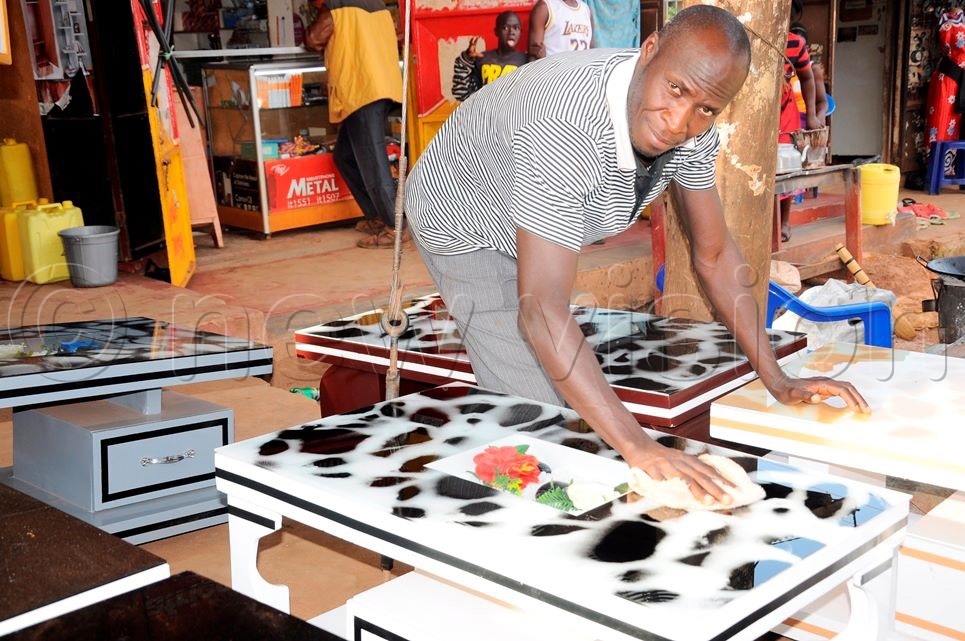
Henry Bukenya at work in his workshop. (Photo by Umar Nsubuga)
For Shafik Nsubuga, a resident of Kisaasi in Kampala, enrolling in a vocational institute for a certificate in automotive mechanics after completing Senior Four at Kisaasi College in Kampala is a decision he does not regret.
He trained in motor vehicle mechanics through a presidential skilling initiative and went on to pursue a professional diploma in the field.
During training at the presidential skilling initiative, Nsubuga discovered what he had missed in secondary school — real practical immersion. He handled engines daily, mastered diagnostics, observed safety standards, and understood mechanical design principles. His instructors emphasised discipline, accuracy and professionalism.
After one year, he graduated with a certificate in automotive mechanics. Unlike many university graduates who look for jobs after graduation, Nsubuga started earning immediately at a local garage, while saving for further studies.
Determined to grow, he later enrolled for a diploma in mechanical engineering at an institution registered by Uganda Business and Technical Examinations Board. He also attended government-supported youth entrepreneurship workshops, shifting his mindset from employment to future ownership. Today, Nsubuga is a flourishing mechanic, serving many clients in Kampala.
Janet Namukwaya, a resident of Matugga in Wakiso district, is another living testimony of how one can succeed without attaining A’level education.
After Senior Four, she pursued a certificate in fashion and design at Lady Valeria Vocational and Business College in Matugga, Wakiso district.
Today, she owns multi-million businesses in Matugga Township and plans to upgrade to a diploma. For Dr Morris Odoch Odrua, the story is different. He is a living testament to the fact that you can rise from a Technical and Vocational Education and Training (TVET) student to PhD level.
Despite attaining strong results at primary level, Dr Odoch says he deliberately chose technical education and never sat in a secondary school classroom.
Today, he is a celebrated civil and structural engineer, holding a PhD alongside several master’s degrees, undergraduate degrees, and professional certificates.
Dr Odoch was among the experts involved in the construction of the iconic Nile Bridge in Jinja. He began his TVET journey immediately after Primary Seven and says he has no regrets about the decision.
He argues that the conventional academic pathway — from nursery through primary, secondary, and university — can take up to 25 years before one secures decent employment.
In contrast, he notes that learners in technical education can be employable by the age of 16.
“Even when challenges arise, it is easier for a technically trained person to sponsor themselves or benefit from the many government scholarships available in technical institutions, which are often more accessible than those in secondary schools,” he said.
Dr Odoch further observed that many university graduates who pass through the traditional academic system have limited time to acquire industrial, employable skills.
“At 25 years, many people already face serious social and financial pressures,” he notes.
“This partly explains why corruption and pseudo work persist — many people do not fully understand quality standards or the consequences of poor workmanship.”
OPPORTUNITIES
With O’level results, students can enrol in vocational institutes for programmes such as electrical installation, plumbing, carpentry, tailoring, welding, ICT, hairdressing, catering, agro-processing, and motor vehicle mechanics, which are in high demand.
These skills provide immediate income opportunities, and one can still upgrade from a certificate to a PhD level while earning.
These skills are directly linked to the job market, and in many cases, they allow graduates to create their own jobs.
It is against this background that the Government is emphasising skilling as the future, especially now that youth unemployment is at an unprecedented level.
To enhance skills training, the Government is upgrading six BTVET institutes into centres of excellence that will offer training with internationally recognised certificates.
They include the Uganda Technical College Kichwamba, which has been designated to focus on construction; Uganda Petroleum Institute Kigumba on oil and gas sector.
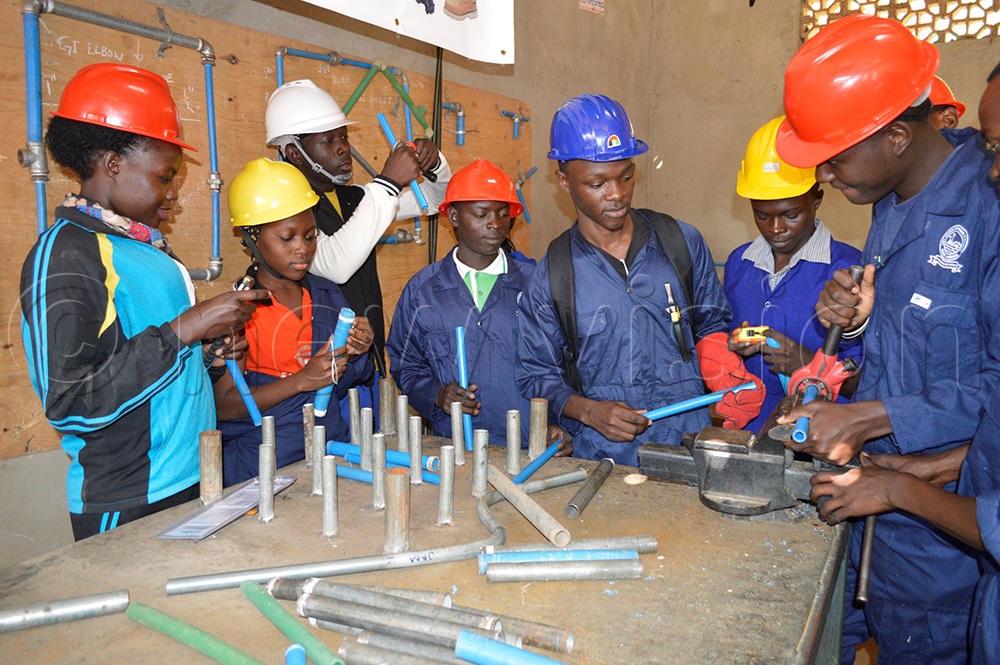
Students of plumbing listening to their instructor at an institute in Wakiso district. (Photo by Umar Nsubuga)
Technical College Elgon on technology and Bukalasa Agricultural College on crop and animal husbandry.
Uganda Technical College Bushenyi, will focus on food processing. To enrol in these institutions, a student must obtain at least a D in English and the relevant subjects.
By enrolling in these institutes, an O’level graduate can gain practical industry-specific knowledge and position themselves for employment, entrepreneurship, and long-term career growth, experts note.
Viola Naluwooza, the director of Lady Valeria Vocational and Business College in Matugga, Wakiso district, encourages O’level leavers to try vocational skills training, saying career success does not follow a single academic path.
She explains that although most Ugandans are accustomed to the A’level university path, technical institutes, apprenticeships and professional certifications offer strong and credible routes to quicker entrepreneurship and career achievements.
“In today’s competitive economy, practical skills often generate income faster than academic certificates alone. Many successful entrepreneurs started with hands-on technical training and later built thriving companies,” she says.
NEW CURRICULUM HELPING
Grace Munyambabazi, the Kabale district principal education officer, explains that the emphasis on skills is one of the reasons why the Government rolled out the competence-based curriculum at secondary level.
He notes that the curriculum prepares students to become employable and start enterprises, making the transition from school to work smooth and effective.
Abraham Akampurira, the headteacher of Kigezi High School in Kabale district, says schools are playing a central role in turning preparing students for the work world.
“Even students who are not directly involved get inspired by their peers. I believe many of them will become great business people in future. Many have already benefited from their O’level certificates because they believe in themselves, and today they are progressing well,” he notes.
He emphasises that parents must continue nurturing this [entrepreneurial) mindset during holidays, so the spirit grows beyond the classroom.
APPRENTICESHIPS
Learning under experienced professionals allows a young person to gain practical, hands-on knowledge.
Apprenticeships in trades or businesses like mechanics, construction, or farming build confidence, discipline, and professional networks.
AGRIBUSINESS OPPORTUNITIES
Agriculture remains a viable and profitable sector in Uganda. An O’level graduate can enrol in an agriculture training institute such as Bukalasa Agricultural College for courses in animal husbandry, aquaculture, and horticulture, among others. Graduates of such institutions can easily get hired or start their own projects and prosper.
SHORT COURSES
Other short professional courses that Senior Four leavers can opt for are emerging in the digital/ICT sector. They include graphics design, video editing, mobile phone repair, book-keeping, or social media management, and can open freelance, online, or local business opportunities
GOVERNMENT STRATEGY
The Ministry of Education and Sports has consistently emphasised Technical and Vocational Education and Training (TVET) as a key pillar of national development. According to the new ministry policy, education must meet labour market demands and support national transformation goals, aligning with Uganda Vision 2040’s aim to build a skilled, innovative, and globally competitive workforce.
As part of a 10-year national programme, the Government seeks to ensure that every O’level graduate has the opportunity to gain practical skills, pursue meaningful careers, and contribute to Uganda’s economic growth through entrepreneurship and skilled employment. In an earlier interview with Mwalimu, the higher education state minister, Dr John Chrysostom Muyingo, emphasised technical and vocational skilling to meet the growing demand for skilled labour.
“We have constructed more technical schools and will soon provide additional funding,” he said. Muyingo explained that the Government plans to increase funding for the Uganda Business and Technical Examinations Board, raise capitation grants, expand non-formal training programmes and provide instructional materials for technical colleges so students can complete real-life projects as part of their examinations.