
Alex Mukulu: The curtain falls on a Ugandan theatre giant
Mukulu’s legacy is not simply in the plays he directed or the performances he staged, but in the standard he demanded: that theatre should entertain, provoke and leave audiences with something to think about.
Alex Mukulu in action with Concern International in ‘Wounds of Africa' during their tour in the US, on May 15, 1994. (New Vision archives)
_______________________
OBITUARY
Alex Mukulu’s voice was first heard on earth in 1954, the year Uganda was commissioning the Owen Falls Dam in Jinja. Seventy-two years later, on August 15, 2026, that voice fell silent, leaving Uganda’s arts industry in collective mourning.
Born in Misebe, in Ssingo county in central Uganda, Mukulu grew into one of country’s most distinctive theatre voices and faces.
He came of age in the years after independence, studying at Kololo Secondary School, before joining Makerere University, where he studied Film and Drama and honed the skills that would make him a formidable force on the stage.
In 1977, while Idi Amin Dada was president, Mukulu treated theatre lovers to Muzukulu wa Kabangala. It was an early indication of a creative mind unwilling to simply entertain. He wanted theatre to provoke, challenge and hold a mirror to society.
Mukulu lived through some of Uganda’s most turbulent political chapters. He witnessed the desecration of the Lubiri, Amin’s overthrow of Milton Obote, the expulsion of Asians and the rapid succession of coups, governments and upheavals that followed.
But while politics transformed the country around him, theatre became Mukulu’s way of interpreting Uganda and communicating its realities.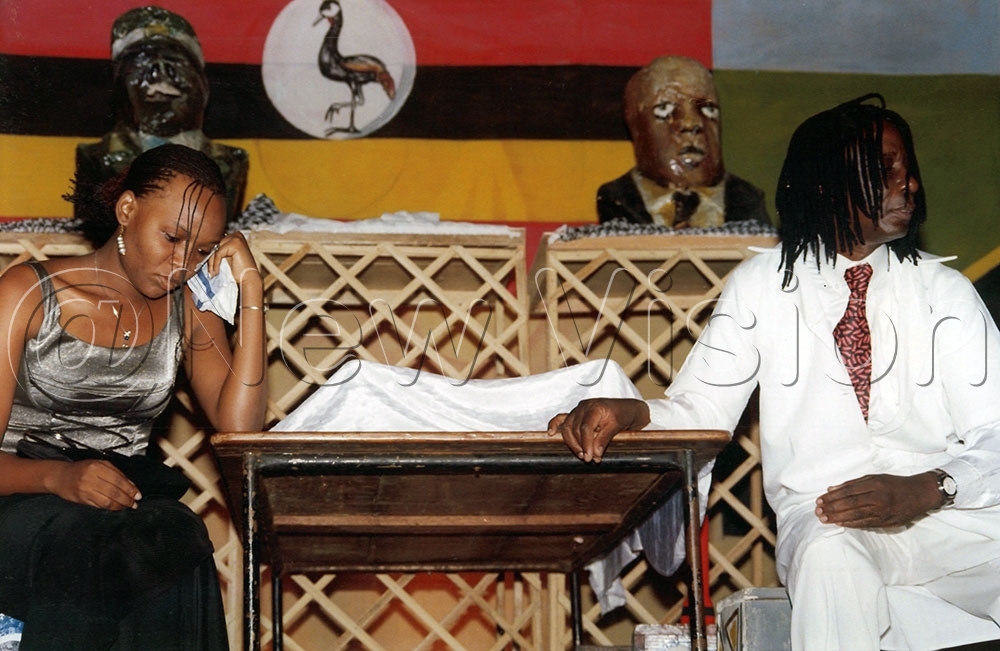
Alex Mukulu and Sarah Male in the play 'Ancestors of Sense and Nonsense' at the National Theatre in Kampala, in January 2001. (New Vision archives)
Mukulu's creativity blossomed with 30 Years of Bananas, first staged in 1992 as Uganda marked 30 years of independence, and published the following year. The play generated debate, with some audiences interpreting it as a satire of the achievements — or failures — of the post-independence era.
At the time, Bakayimbira Dramactors dominated the stage with popular Luganda productions. Mukulu carved out his own space with theatre that demanded more from actors, audiences and the story itself.
He was a perfectionist.
For Mukulu, theatre was not about actors merely reciting lines beneath stage lights. He wanted real life brought onto the stage. He wanted audiences to see it, hear it and feel it.
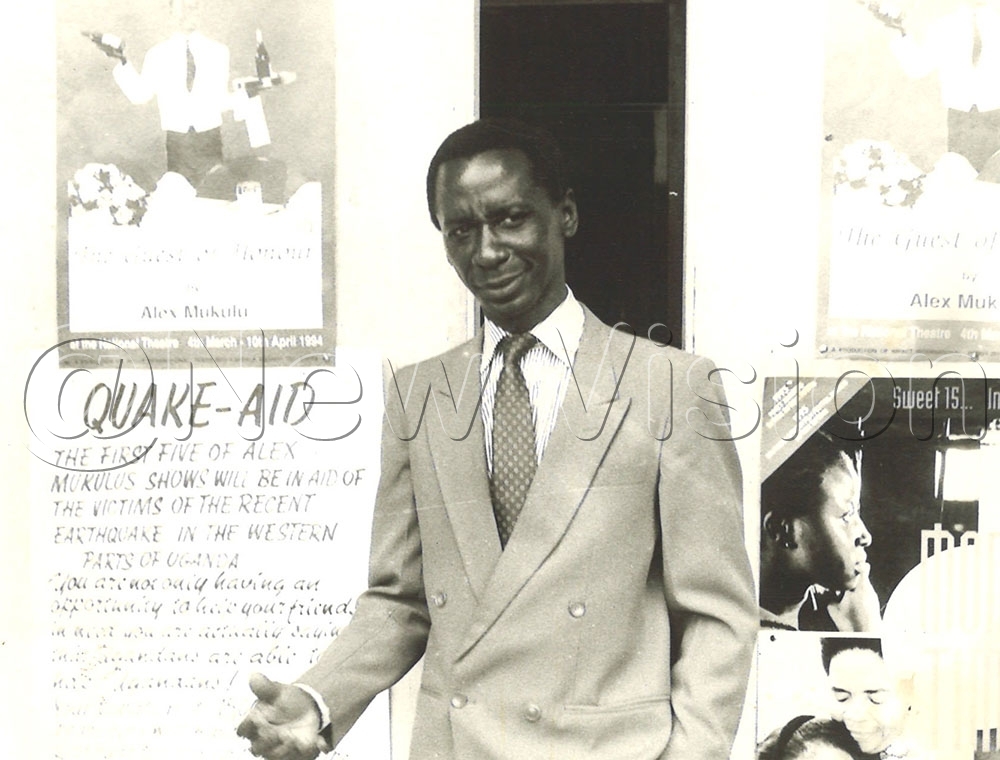
Alex Mukulu promoting his new production in Kampala on March 4, 1994. (New Vision archives)
If an actor was hated, Mukulu considered that a compliment to the performance. If a sad scene made the audience cry, he knew the theatre had done its job.
He wanted audiences to laugh, cry, get angry and think — and perhaps leave the theatre arguing about what they had just witnessed. Stirring the audience was almost a hobby.
The same philosophy applied to music and dance. They were never decorations inserted to fill time. They had to advance the story, deepen the emotion and drive the message home.
That attention to detail made Mukulu not merely a director, but a craftsman of the stage. He understood something some of his counterparts spend a lifetime mastering: the audience may forget the dialogue, but they rarely forget how a performance made them feel.
His creativity was not confined to the theatre. In 2007, when Uganda hosted the Commonwealth Heads of Government Meeting (CHOGM), Mukulu presented Journey to Self-Realization at the opening ceremony, placing his work before an international audience.
His work also reached television, giving audiences another platform through which to experience his distinctive creative voice.
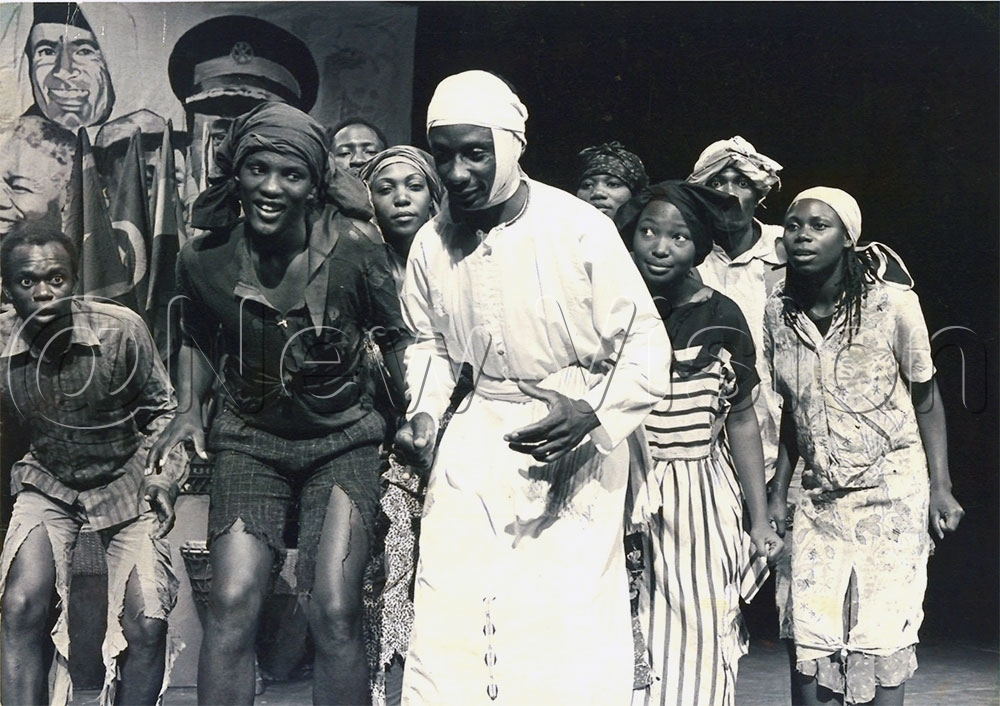
Alex Mukulu in action with Concern International in ‘Wounds of Africa' during their tour in the US, on May 15, 1994. (New Vision archives)
James Tumusiime, the managing director of Fountain Publishers, said Mukulu added creativity, colour and life to Uganda’s creative industry.
“He left one with something to think about, reflect on and take a close look at their values and extremes,” he said.
Celebrated artist Abby Mukiibi said Mukulu has left a lasting legacy in the creative industry.
For Hannington Bugingo, a longtime admirer of Mukulu’s work, there was more to what most Ugandans saw on television. “What audiences saw Mukulu do on TV is less than 10 percent of his contribution to the arts."
That perhaps best captures the scale of the man.
Mukulu’s career mirrored much of Uganda’s own story. He came of age in the years after independence, created through periods of political turbulence and helped shape an arts industry that evolved with the country.
His legacy is not simply in the plays he directed or the performances he staged, but in the standard he demanded: that theatre should entertain, provoke and leave audiences with something to think about.
The curtain may have fallen on Alex Mukulu, but the stage he helped shape remains—and the echoes of his work will continue to be heard.