
Uganda seeks new IMF loans to improve credit rating
A statement by the finance ministry said the discussions focused on the new Extended Credit Facility Program, which Musasizi said Uganda was ready to implement based on the agreed prior actions.
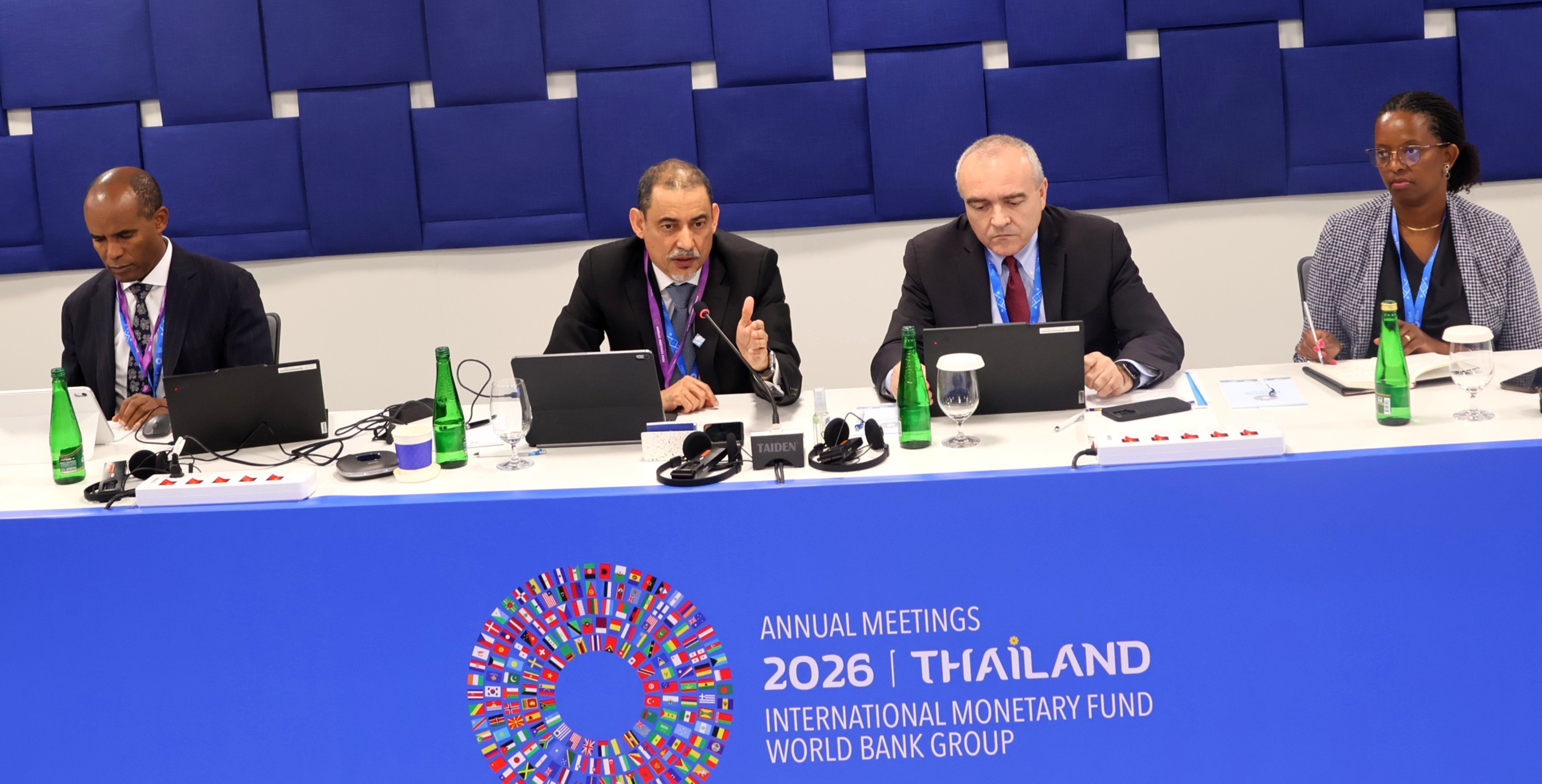
On Friday (October 16), finance minister Henry Musasizi met the Fund’s director of the African Department, Zeine Zeidane, at the ongoing 2026 IMF-World Bank annual meetings in Bangkok, Thailand. (Courtesy photos)
________________
The Ugandan government is seeking more International Monetary Fund (IMF) concessional financing offered at low or zero interest rates to improve its credit rating.
On Friday (October 16), finance minister Henry Musasizi met the Fund’s director of the African Department, Zeine Zeidane, at the ongoing 2026 IMF-World Bank annual meetings in Bangkok, Thailand.
A statement by the finance ministry said the discussions focused on the new Extended Credit Facility Program, which Musasizi said Uganda was ready to implement based on the agreed prior actions.
The minister was also quoted as saying Uganda needs to secure more concessional financing, adding that the program will not only strengthen confidence in the country’s policies but will also improve its credit rating.
The country’s credit rating is a marker of how likely it is to pay back debts - from “stable” to “negative”.
In August this year, Fitch, an American credit rating agency, affirmed Uganda’s Long-Term Issuer Default Ratings at ‘B’ with a stable outlook.
The issues included fiscal consolidation, monetary policy, domestic revenue mobilisation strategy and tax policy measures, expenditure and budgetary discipline, including supplementary budgets, expenditure composition, governance and structural reforms.
Ggoobi said the Government is committed to undertaking all the necessary reforms to increase the tax to gross domestic product ratio from the current 14% to at least 20%, adding that any necessary tax measures will be incorporated in the budget framework paper for the next financial year of 2027/28.
During the IMF Africa Group 3 Constituency meeting where Uganda belongs, discussions focused on global economic challenges, debt and fiscal adjustment, exchange rate flexibility, subsidy reforms and strengthening of Africa’s voice in global financial governance.
Zeidane asked policy makers to protect vulnerable households, ensure economic stability and unlock investment and jobs.
“Policy makers should not lose sight of growth and reforms that make economies more resilient to future shocks,” he said.
The key focus areas agreed upon at the Constituency level meeting include: reliable electricity, better digital connectivity, stronger skills, a predictable business environment, private sector growth and job creation.