
UDC creates over 5,700 jobs through strategic investments
The supported enterprises collectively purchase more than 35,000 tonnes of agricultural produce annually, with approximately sh138b paid to farmers and local suppliers.
(L-R) Ezra Muhumuza, Executive Director of the Uganda Manufacturers Association (UMA); Patrick Birungi, Executive Director of the Uganda Development Corporation; Sanjay Tanna, Minister of Trade, Industry and Cooperatives; Bruno Otto Tokwiny, Country Representative of the United Nations Industrial Development Organization (UNIDO); Denis Ainebyona, Commissioner for Industry, and other officials pose for a group photo during a press conference at the Uganda Media Centre on November 4, 2026. (Photo by Nancy Nanyonga).
____________________ Patrick Birungi, Executive Director of the Uganda Development Corporation (UDC), addresses journalists during a press conference at the Uganda Media Centre on November 4, 2026. (Photo by Nancy Nanyonga).
The Uganda Development Corporation (UDC) has celebrated the creation of more than 5,790 direct jobs through investments in 28 companies over the past decade.
The news was revealed by the corporation while providing its decade-long investment outlook to the media at Uganda Media Centre in Kampala today (November 4).
UDC also used the platform to unveil an ambitious plan to accelerate industrialisation, expand local manufacturing and strengthen Uganda's export capacity.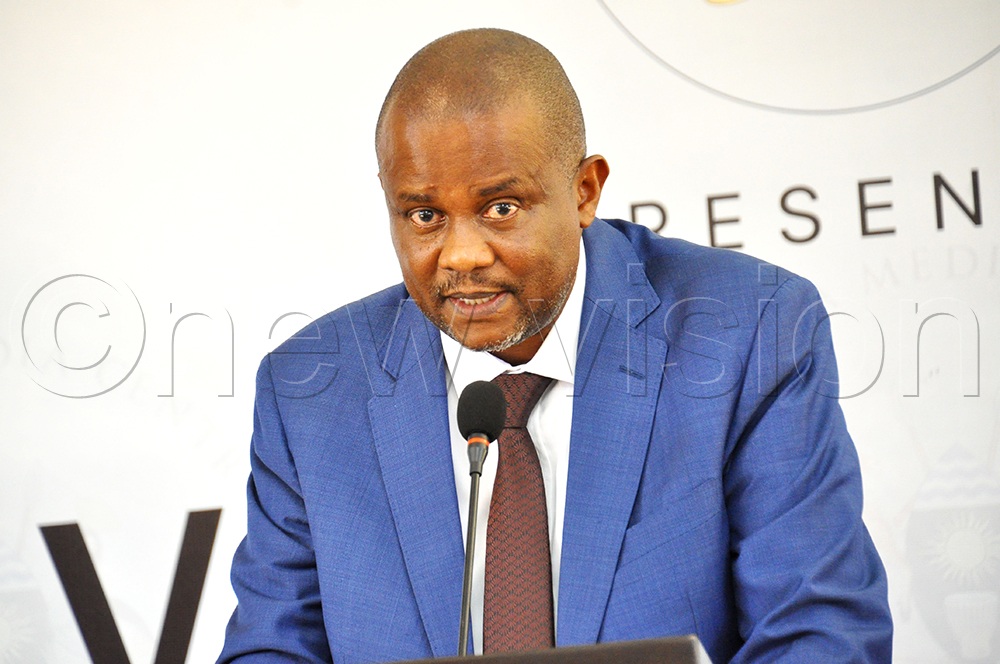
The UDC executive director, Patrick Birungi, said the corporation has, over the past 10 years invested in 28 companies, supporting the creation of 5,790 direct jobs and thousands of indirect employment opportunities. He said the corporation targets creating over 16,300 new jobs.
He added that the supported enterprises collectively purchase more than 35,000 tonnes of agricultural produce annually, with approximately sh138b paid to farmers and local suppliers.
The investments also generate about $14m (sh57.4b) in export earnings and contribute more than sh30b in annual tax revenue to the Government.
"In the next decade, UDC will aspire to be the anchor of Uganda's industrialisation agenda," Birungi said.
The corporation's anniversary celebrations will culminate into the Uganda National Industrialisation Conference 2026, scheduled for November 18–20, at Speke Resort Convention Centre, Munyonyo.
The conference, organised by the Ministry of Trade, Industry and Cooperatives, UDC and the United Nations Industrial Development Organisation (UNIDO), among other partners, will bring together government officials, manufacturers, investors, development partners and researchers to discuss practical measures for accelerating industrial growth.
It will coincide with the Africa Industrialisation Day on November 20, and will run under the theme, "Celebrating Uganda's Industrial Growth."
He added that the corporation was prioritising investments in animal and fish feeds, packaging manufacturing, ethanol-based fuel blending, medical supplies and industrial infrastructure.
Birungi said the initiatives are intended to address gaps in Uganda's manufacturing value chains while providing opportunities for investors, farmers and local enterprises.
He said the animal and fish feeds sector presents significant investment opportunities, given the country's expanding livestock and fisheries industries.
"UDC is also prioritising local packaging and manufacturing through initiatives such as Pamoja Packaging and Industrial Solutions in Mukono. The investment is intended to strengthen domestic packaging capacity and reduce dependence on imported packaging materials, benefiting manufacturers across the food, beverage, pharmaceutical and consumer goods sectors," Birungi said.
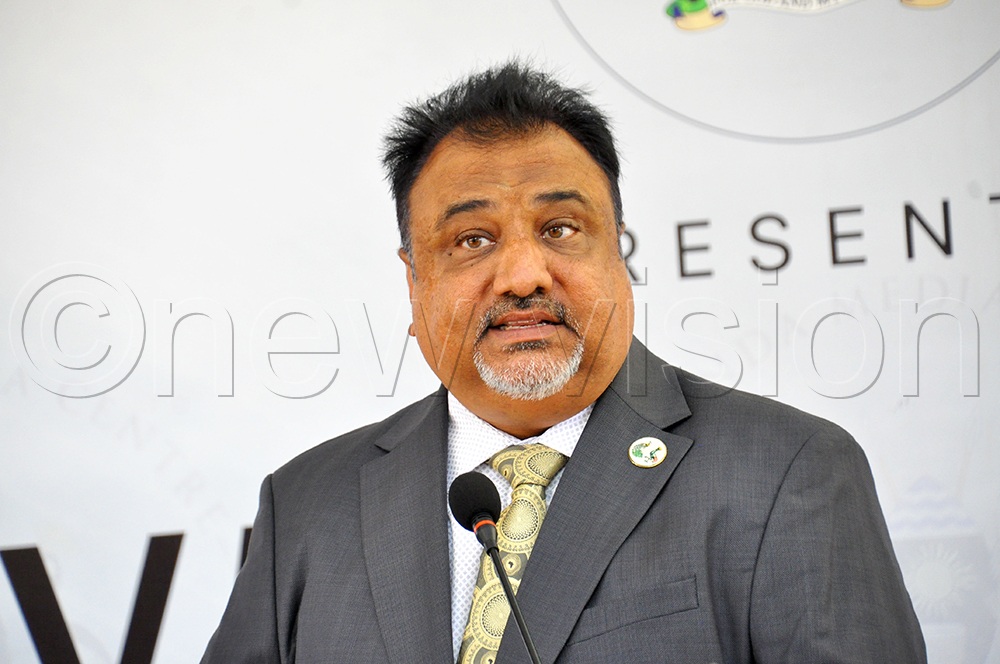
Sanjay Tanna, Minister of Trade, Industry and Cooperatives, addresses journalists during a press conference at the Uganda Media Centre on November 4, 2026. (Photo by Nancy Nanyonga).
Trade minister Sanjay Tanna said Uganda's manufacturing sector has undergone significant transformation since 1986, when the country had approximately 81 largely non-functional industries.
Today, he said, Uganda has more than 12,000 formal manufacturing industries employing approximately 1.8 million people.
Tanna said the industrial sector contributed about 25% of gross domestic product in 2025, registering average annual growth of approximately 6.4%.
He added that manufactured exports accounted for approximately 24.6% of Uganda's total merchandise exports in 2025, reflecting the growing contribution of local industries to the economy.
Uganda's economy, he said, has expanded from approximately $3.9b in 1986 to $61.9b in 2025, while foreign direct investment has reached an estimated $3.2b.
Tanna described UDC's achievements as an important contribution to the country's industrial development, saying the corporation's investments demonstrate the value of sustained government support for productive enterprises.
He said industrialisation remains central to the Government's ambition of growing the economy to $500b under the National Development Plan IV and the Tenfold Growth Strategy.
The minister also urged investors to look beyond Uganda's domestic market and take advantage of the country's strategic geographical position to serve regional and continental markets.
"Uganda is actually land-linked, we have an advantage, we sit right at the middle," Tanna said.
He noted that Uganda has access to more than 150 million people within the East African Community and a potential continental market of approximately 1.5 billion people.
UNIDO head of operations in Uganda Bruno Otto said industrialisation remains one of Africa's most reliable pathways to sustainable economic development through productive employment, stronger value chains and improved livelihoods.
He said Uganda's expanding manufacturing base, investments in industrial parks, growing agro-industrial activities and access to regional markets provide a strong foundation for further industrial expansion.
"Across Africa, industrialisation remains the most reliable pathway for creating productive jobs, increasing value chains, enhancing economic resilience, and improving livelihoods," Otto said.
Meanwhile, Uganda Manufacturers Association executive director Dr Ezra Burungi called for stronger collaboration between government and the private sector to address challenges constraining manufacturers.
He said the forthcoming industrialisation conference should deliver practical solutions to issues, including high electricity costs, taxation, limited access to industrial financing, raw-material shortages, labour constraints, market access and trade facilitation.
Birungi urged manufacturers, including small-scale and cottage industries, to participate in the conference, saying industrialisation must accommodate enterprises of all sizes and from all regions.
"Every other person, so long as you are producing something, regardless of the quantity and quality, you are expected to be in the conference to dialogue and see how we move to the next level," he said.
He also highlighted manufacturers' commitment to buying agricultural produce generated under the Parish Development Model and processing it into higher-value products.