
Tayebwa wants EAC-EU trade deal fast-tracked
Tayebwa warned that further delays could expose local industries to unfair competition and undermine Uganda's growing regional industrialisation drive as locally manufactured products seek access to international markets.
The Deputy Speaker of Parliament, Thomas Tayebwa, speaking at the opening of the Uganda Industrialisation Conference 2026 at Speke Resort Munyonyo in Kampala, where he represented the Speaker of Parliament, Jacob Marksons Oboth. (Courtesy)
__________________ The Deputy Speaker of Parliament, Thomas Tayebwa, looking at some exhibited products. (Courtesy)
The Deputy Speaker of Parliament, Thomas Tayebwa, wants the conclusion of the Economic Partnership Agreement (EPA) between the East African Community (EAC) and the European Union (EU) fast-tracked.
He warned on November 18, 2026, that further delays could expose local industries to unfair competition and undermine Uganda's growing regional industrialisation drive as locally manufactured products seek access to international markets.
Tayebwa was speaking at the opening of the Uganda Industrialisation Conference 2026 at Speke Resort Munyonyo in Kampala, where he represented the Speaker of Parliament, Jacob Marksons Oboth.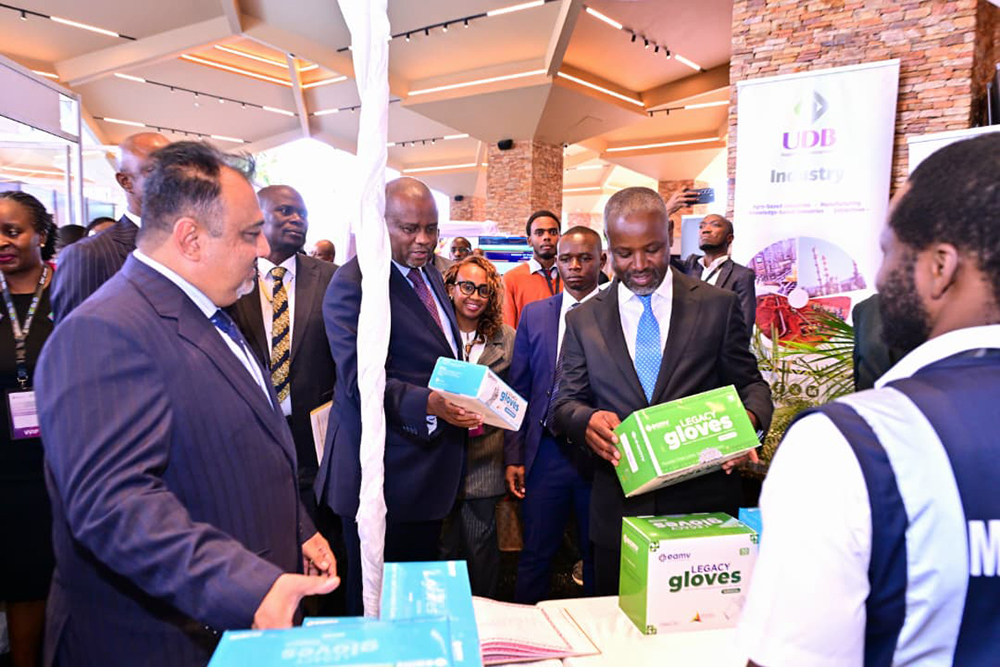
The conference, which brought together policymakers, investors and industry leaders to strengthen partnerships, promote local enterprises and address barriers to industrial development, was held under the theme “Celebrating Uganda’s Industrial Growth”.
The event also marked the 10th anniversary of the Uganda Development Corporation (UDC).
In a statement released by his press team, Tayebwa said the EAC region needed to urgently address outstanding issues in its trade negotiations with the EU.
He noted that the failure to conclude the agreement was already creating trade distortions as individual EAC countries pursued separate trade arrangements with the EU.
Tayebwa cited Kenya's pursuit of a bilateral trade agreement with the EU as an example of the potential challenges arising from the region's delayed negotiations.
If properly negotiated, Tayebwa noted, a regional agreement would be critical in safeguarding the interests of East African manufacturers while ensuring that the benefits of international trade were shared across partner states.
Without such an agreement, he warned, goods from the region could face tariffs that discourage value addition and undermine the competitiveness of African products in European markets.
Using coffee as an example, he noted that Ugandan coffee exported as a value-added product attracts higher tariffs in the EU market than unprocessed green coffee beans, making it difficult for local manufacturers to compete internationally.
“If we add value from here, they add a tax of 15 percent. But if it goes as a green bean, then no tax,” he said.
The EPA aims to contribute to economic growth and development through a strengthened strategic trade and development partnership consistent with the objective of sustainable development.
It also seeks to strengthen existing relations between the parties on the basis of solidarity and mutual interest.
OACPS opportunities
Tayebwa also highlighted discussions between African, Caribbean and Pacific countries and the European Union under the Organisation of African, Caribbean and Pacific States (OACPS)-EU Parliamentary Assembly.
The latest round of discussions took place in Brussels last week, with Tayebwa leading the African, Caribbean and Pacific side, according to the statement.
Despite the challenges, Tayebwa expressed optimism that the next round of talks, scheduled to take place in Kampala next year, would help build consensus on key issues.
“We couldn't agree, especially on the issue of critical raw materials, where we want critical raw materials to benefit more the producing countries than the extracting companies,” he said.
Tapping AfCFTA opportunities
The statement also said Tayebwa tasked Tanna with intensifying awareness among Ugandan manufacturers and investors about the opportunities available under the African Continental Free Trade Area (AfCFTA).
He observed that despite the enormous market opportunities created by the continental trade agreement, many Ugandan businesses remained unaware of its benefits, including access to new markets, reduced tariffs and expanded export opportunities.
“Your people are not benefiting what they are supposed to be benefiting from. This is an agreement that gives us access to more duty-free and quota-free goods,” he said.
Tayebwa noted that Africa's market of approximately 1.4 billion people, with a combined gross domestic product (GDP) of about $3.4 trillion, offered enormous opportunities for Ugandan manufacturers.
“With the potential for a market of around 1.4 billion people in Africa that has a GDP of around $3.4 trillion combined, I think that's a huge opportunity,” he said.
In a speech delivered on Oboth's behalf, Tayebwa said the Speaker had pledged Parliament's commitment to enacting legislation that supports value addition, strengthens production infrastructure and enhances oversight.
He added that Oboth had also pledged that legislators would visit factories to interact with Ugandans working in these industries and better understand their experiences and challenges.