
Sh19.9 trillion current account deficit puts shilling under pressure
The shilling has lost about 12% of its value against the US dollar since early May, weakening from about sh3,788 to between sh4,251 and sh4,254 on November 24, reflecting pressure on the country's foreign exchange market.
Augustus Nuwagaba, Bank of Uganda (BOU) Deputy Governor, explains why the shilling is facing turbulence during the 2026 URSB conference at the Uganda Registration Services Bureau in Kololo on 24th November 2026. (Photo by Juliet Kasirye)
_________________
Uganda's current account deficit of $4.7b (sh19.9 trillion) is putting pressure on the shilling as the country spends more foreign currency on imports than it earns from exports, Bank of Uganda deputy governor Prof Augustus Nuwagaba has said.
The shilling has lost about 12% of its value against the US dollar since early May, weakening from about sh3,788 to between sh4,251 and sh4,254 on November 24, reflecting pressure on the country's foreign exchange market.
The currency fell to its weakest level of the year on October 27, when it traded at about sh4,505 per dollar, before recovering partially in November.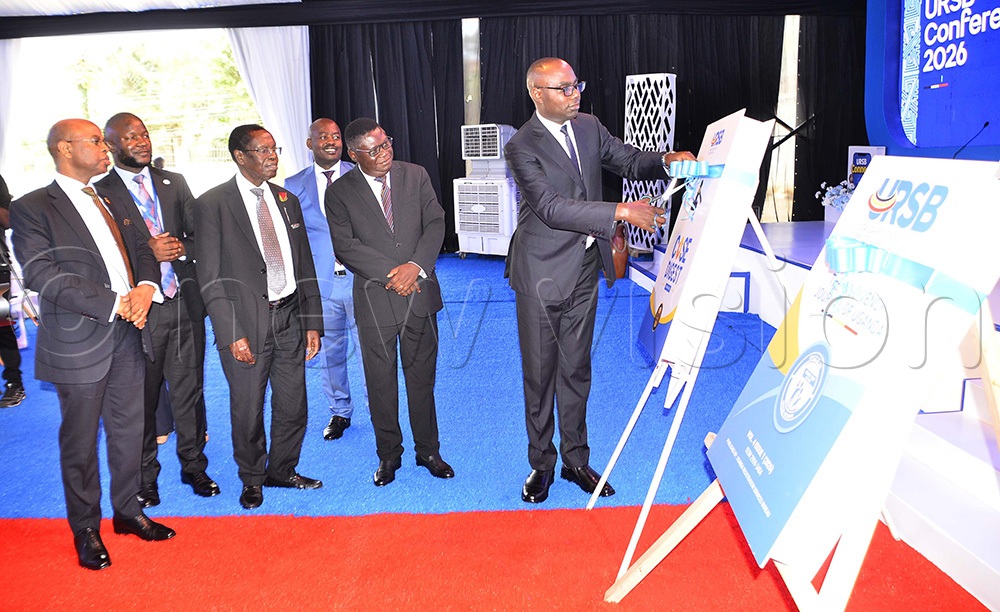
Henry Musasizi, Finance, Planning and Economic Development Minister, launches the URSB Connect mobile app during the 2026 URSB at the Uganda Registration Services Bureau in Kololo on 24th November 2026. Looking on the left is Augustus Nuwagaba, BOU Deputy Governor, Mustapher Ntale, Ag Registrar General, Canon Francis Butagira, URSB Board Chairman, Norbert Mao, Justice and Constitutional Affairs Minister. (Photo by Juliet Kasirye)
Nuwagaba attributed the pressure on the shilling largely to the imbalance between Uganda's export earnings and import payments, saying the country spends more foreign currency on imports than it receives from exports.
“The reason why the Uganda shilling has turbulence is our problem with the current account. The money coming in, which in economics we call export receipts, is usually smaller than import invoices,” he said.
He was speaking at the URSB Annual Conference 2026 held at the bureau's headquarters in Kampala on November 24 under the theme, Driving Inclusive Growth through Innovation, Formalisation and Resilient Insolvency and Service Delivery Systems.
He said Uganda earned foreign exchange from commodities such as coffee, cocoa and gold, as well as tourism and remittances from Ugandans working abroad. However, these inflows remain insufficient to meet the country's import requirements.
He cited coffee exports, which he said generated about $2.5b, cocoa earnings of $873m and tourism receipts of about $1.7b in the past year. Remittances from Ugandans abroad were estimated at about $900m.
He said the foreign exchange shortage had been compounded by external developments, including conflicts in the Middle East and increases in US interest rates, which have affected investment decisions and the movement of capital between markets.
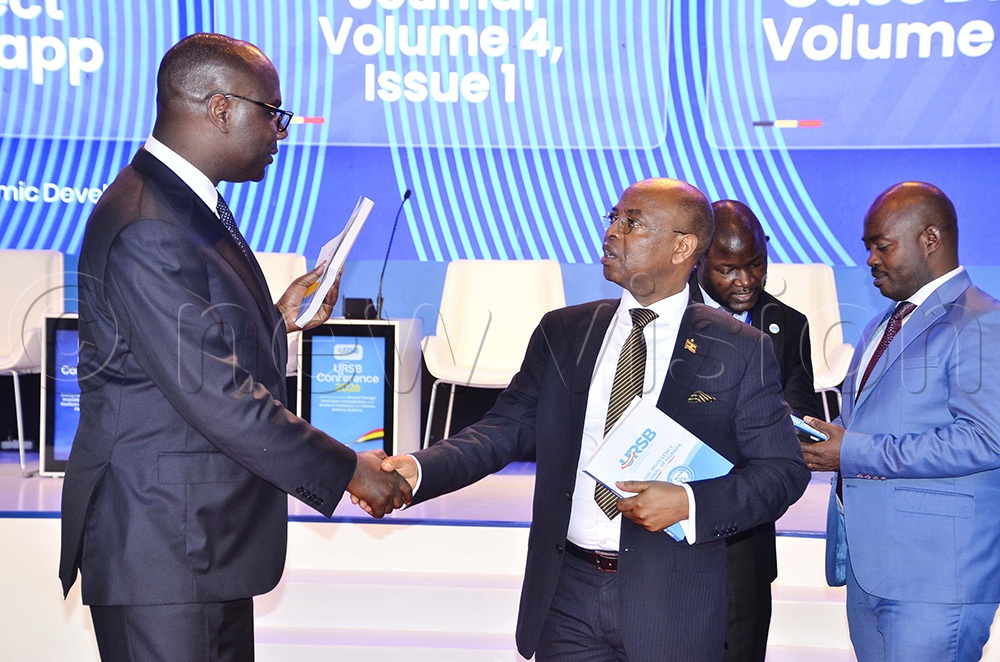
Henry Musasizi, Finance, Planning and Economic Development Minister, interacts with Augustus Nuwagaba, BOU Deputy Governor, during the 2026 URSB conference at the Uganda Registration Services Bureau in Kololo on 24th November 2026. (Photo by Juliet Kasirye)
Nuwagaba argued that Uganda could reduce its vulnerability to such external pressures by developing stronger domestic sources of foreign exchange rather than relying heavily on external capital.
He proposed greater investment in businesses that could generate export earnings and called for better information to help Ugandans, particularly those in the diaspora, identify viable investment opportunities back home.
He said many Ugandans living abroad were willing to invest but lacked reliable information about businesses and feared losing their money through poorly managed family investments.
As one possible intervention, he suggested that the central bank could help underwrite diaspora bonds to mobilise savings from Ugandans abroad and channel the funds into productive investments.
He said Uganda's large informal sector was limiting productivity, tax collection, access to finance and protection of property rights.
He identified poor record-keeping and lack of proper legal registration as major obstacles facing businesses, particularly small enterprises.
The Deputy Governor urged URSB to work more closely with the central bank to help small and medium enterprises formalise and benefit from financing programmes, including the Agricultural Credit Facility and the Small Business Fund.
Nuwagaba also said Uganda needed to diversify its sources of foreign exchange by improving the skills of migrant workers and strengthening institutions responsible for preparing them for overseas employment.
Citing the Philippines, which he said receives about $40b annually in remittances, compared with Uganda's estimated $900m, he called for better training, regulation and monitoring of Ugandans working abroad.
He said training in nursing, customer care and construction-site management could help Ugandans secure better-paying jobs in international labour markets.
The conference also saw URSB launch four products aimed at improving access to registration and legal information services. They include the Non-Individual Register, a central registry for non-individual entities, the URSB Connect mobile application, Insolvency Journal Volume 4, Issue 1, and Case Digest Volume 2026.
Nuwagaba said stronger exports, increased diaspora investment, improved business formalisation and skilled labour migration would help Uganda generate more foreign exchange and reduce pressure on the shilling.