
MUK hosts Oil & Gas Skills Expo as experts call for practical, transferable skills
Representatives from Makerere University, the Petroleum Authority of Uganda (PAU), the Ministry of Energy and Mineral Development, and Victoria University emphasised the need for practical, transferable skills that can support Uganda’s transition into commercial oil production.
Professor Juma Kasozi, speaking on behalf of MUK. (Credit: Moses Kigongo)
____________
The two-day 3rd Oil and Gas Skills Expo 2026 has officially opened at Makerere University under the theme, “From Oil and Gas to the Wider Economy: Transferable Skills Driving Sustainable Growth.” The event has brought together government officials, academia, industry players, students, and training institutions to discuss how Uganda’s oil and gas sector can create skills that benefit the wider economy.
Speaking during the opening ceremony, representatives from Makerere University, the Petroleum Authority of Uganda (PAU), the Ministry of Energy and Mineral Development, and Victoria University emphasised the need for practical, transferable skills that can support Uganda’s transition into commercial oil production.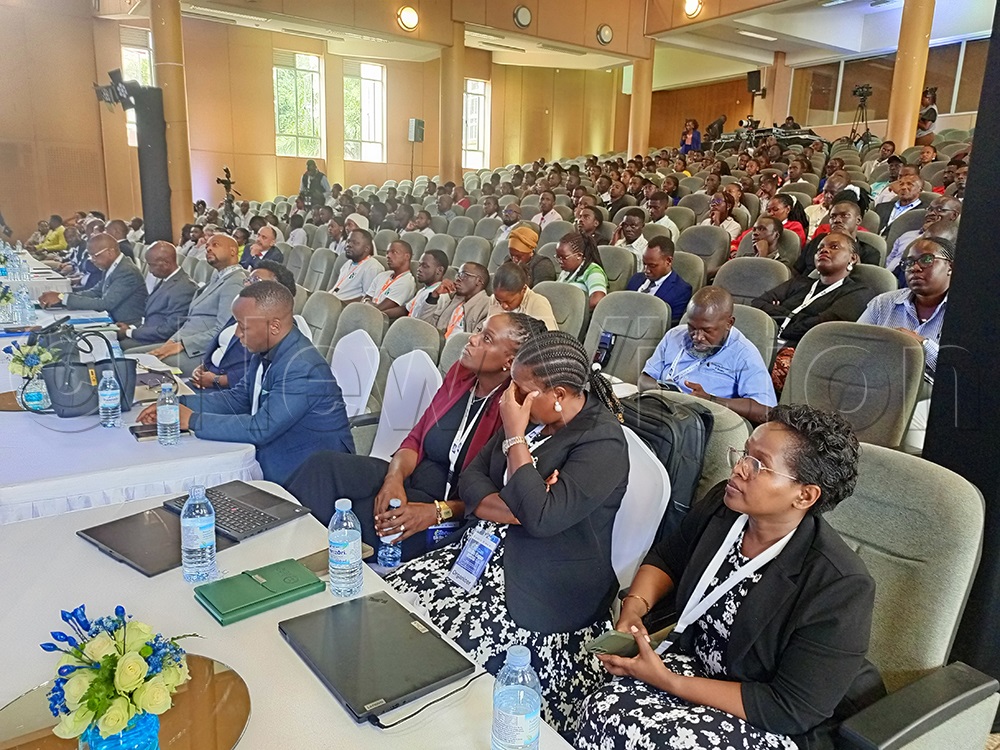
Some of the officials and participants listening to the proceedings at the event. (Credit: Moses Kigongo)
Professor Juma Kasozi, from the Department of Mathematics, who represented the vice chancellor, and the Department of Geology, noted that the department has trained over 500 graduates since 2009, many of whom are already contributing to Uganda’s oil and gas sector. He highlighted achievements, including internationally accredited courses, specialised laboratories, partnerships with companies such as TotalEnergies, and student success in international competitions. He encouraged students to embrace opportunities in the sector and acquire practical skills needed for national development.
Delivering remarks on behalf of the Vice Chancellor, Professor Barnabas Nawangwe, university representatives stressed that Makerere is transforming its curriculum to align with industrial demands. They said Uganda needs grounded and enterprising graduates who can innovate and create opportunities instead of only seeking jobs.
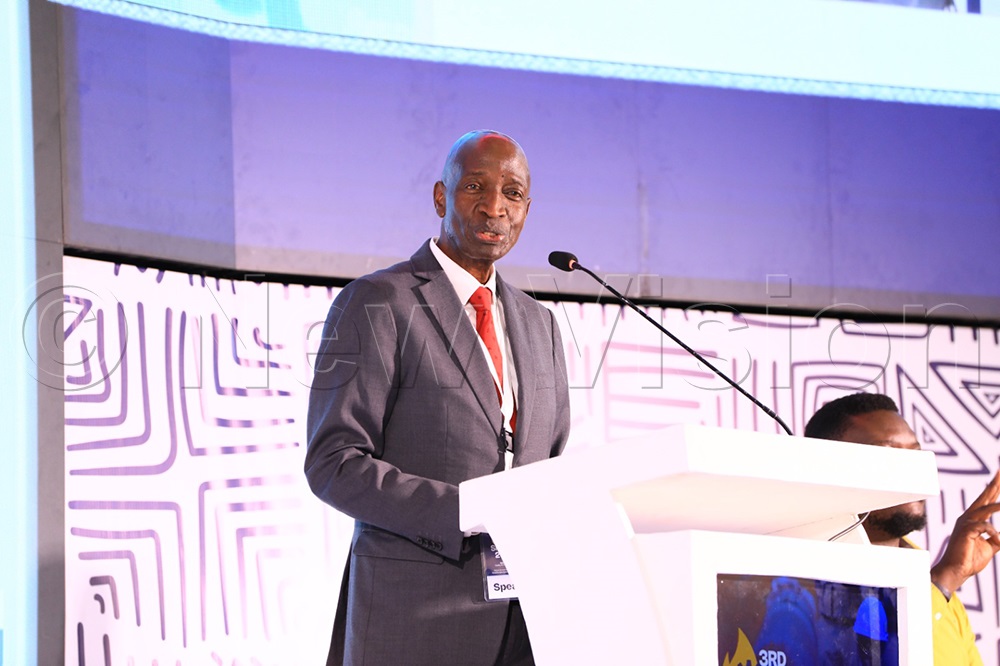
Ernest Rubondo, giving his opening remarks at the event. (Credit: Moses Kigongo)
PAU Executive Director Ernest Rubondo said the oil and gas industry is now transitioning from exploration to production, a stage that requires fewer workers but more specialised and transferable skills. He explained that Uganda has already trained thousands of young people in areas such as welding, pipefitting, transportation, and construction through partnerships with institutions including Makerere University, Uganda Petroleum Institute Kigumba (UPIK), and other technical colleges.
Representing the Minister of Energy and Mineral Development, undersecretary Grace Tusiime said the government has already attracted over $15 billion (sh55.5 trillion) in investments into the oil and gas sector, boosting infrastructure, agriculture, and education. She urged young people to embrace professionalism, discipline, and innovation while acquiring skills that can be applied across different industries.
The keynote address was delivered by Professor Augustine Ifelebuegu, Deputy Vice Chancellor for Academic Affairs at Victoria University, Kampala. He challenged universities to rethink how they train students, arguing that industries today value practical competence more than theoretical knowledge. “Universities must change. Graduates know theory, but know nothing about practicals. There is a missing link between theory and practice,” he said.
Professor Augustine added that institutions must work closely with industries to understand current market demands and produce adaptive problem-solvers rather than certificate holders.“The industry no longer cares about what you know, but what you can do,” he noted, while urging universities to focus on innovation, practical training, and transferable skills that can strengthen every sector of the economy.
The expo attracted participation from several universities and institutions, including Kyambogo University, Victoria University, Busoga International Polytechnic, Mbarara University of Science and Technology, Nkumba University, King Ceasor University, International University of East Africa, Kichwamba Technical Institute, and Makerere University.