National Budget reading FY2026/27: As it happened
Finance Minister Henry Musasizi said Uganda’s economy has grown to $69 billion and is set for further expansion driven by exports, First Oil, and wealth creation programmes, with rising investor confidence and diaspora participation.
Minister of Finance, Planning and Economic Development, Henry Musasizi, presenting the National Budget FY2026/27. (Credit: Miriam Namutebi)
_______________
NATIONAL BUDGET READING 2026
Edited and presented by Derrick Otim
(Scroll down for earlier updates)
_________________
House adjourned
Speaker of Parliament Jacob Marksons Oboth adjourned the House to Tuesday, June 30, 2026. 🏛️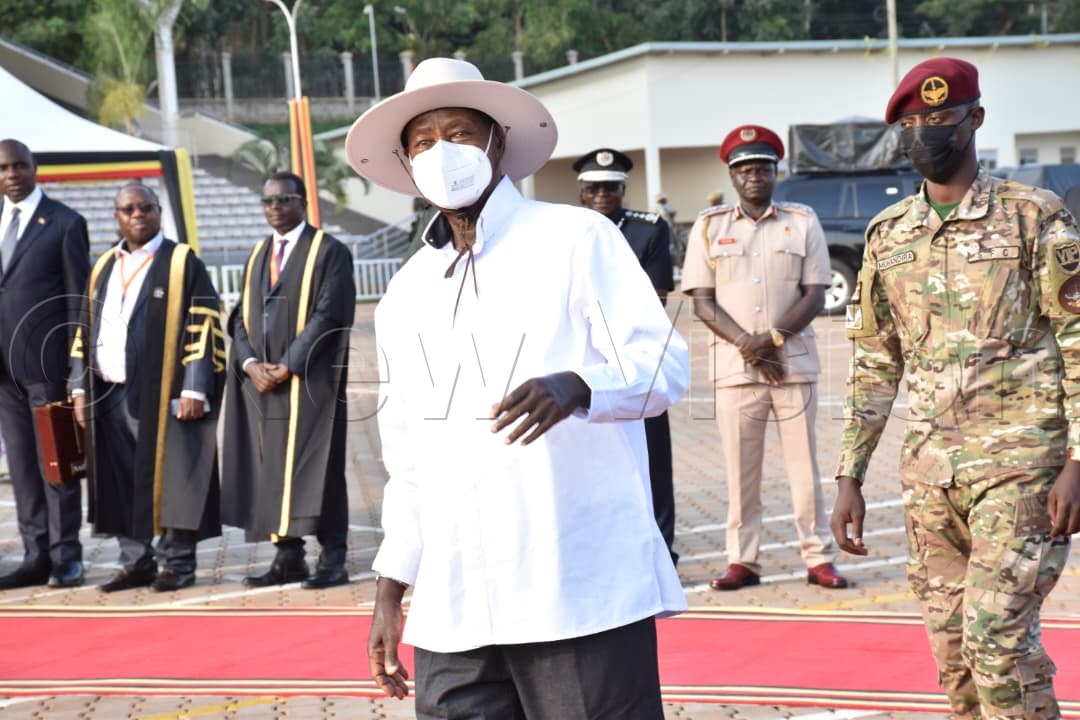
__________________
President calls for accountability in service delivery
The President raised concerns over gaps in service delivery, especially in health centres, questioning why some facilities lack medicines despite government provision of Health Centre III units in every sub-county.
He called on leaders at all levels, including MPs, local government officials, and security personnel, to take stronger oversight roles to prevent theft and mismanagement of public resources. He specifically cited cases of drug theft and misuse of programmes like the Parish Development Model (PDM), stressing that such practices must not be tolerated as government resources have significantly increased.
__________________
President calls for leadership oversight and economic participation
“All the leaders, starting with all ministers, must take the lead in checking parish by parish what is happening to ensure that people stop ‘kukongola’, stop cheating us,” the President said.
He emphasised the need for citizens to actively engage in the money economy, noting that it is unsustainable for people to expect services such as medicine, education, and security without contributing through productive work. He urged leaders to ensure communities are actively participating in wealth creation.
_________________
President cautions on Ebola
The President cautioned against Ebola, noting that while it is serious, it is manageable compared to COVID-19, which was highly infectious and spread through respiratory transmission. He assured the public that with proper health measures, Ebola can be effectively contained.
“The other time I saw you Members of Parliament shaking hands and hugging, setting a bad example for all these people to get sick,” the President said, cautioning against practices that could increase the risk of Ebola transmission.
He appealed to all Ugandans to observe preventive measures and work collectively to ensure the Ebola situation is effectively controlled.
__________________
President highlights strong economic performance
The President noted that Uganda’s economy is performing strongly, attributing this progress to the country’s abundant natural resources and overall economic potential.
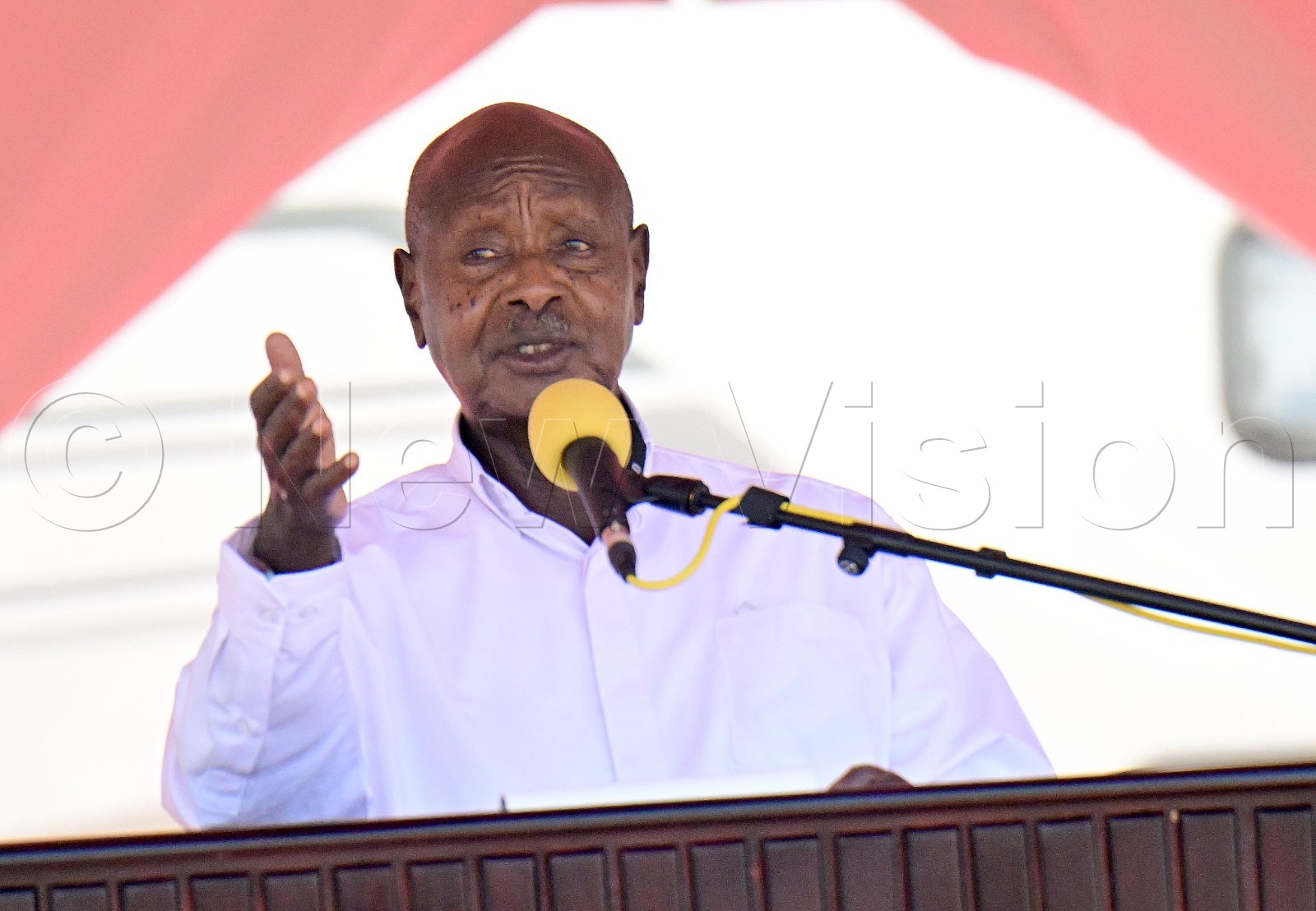
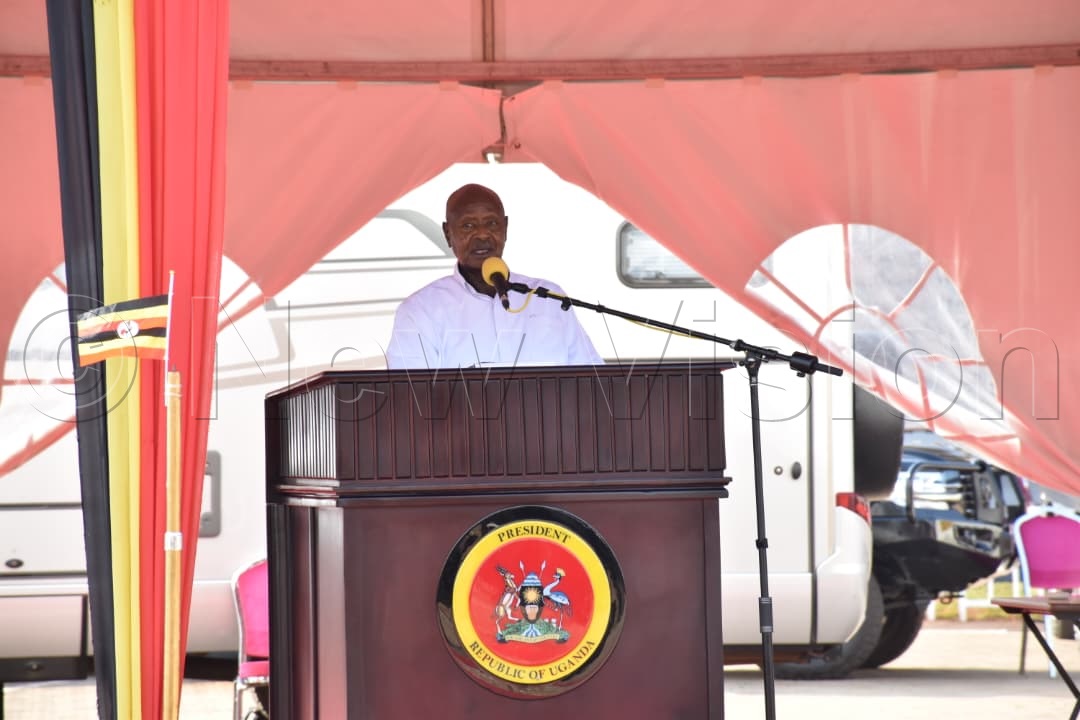
President Museveni delivering his speech. (Credit: Maria Wamala)
__________________
Budget to accelerate tenfold growth
Finance Minister Henry Musasizi said Uganda’s economy has grown to $69 billion and is set for further expansion driven by exports, First Oil, and wealth creation programmes, with rising investor confidence and diaspora participation.
He said the Budget is aligned to the Tenfold Growth Strategy, with 99% of discretionary resources directed to ATMS sectors to boost production, value addition, exports, and jobs.
The Minister emphasised a shift to full implementation under the “Kisanja No More Sleep” agenda, urging all Ugandans to actively engage in wealth creation. He dedicated the Budget to wealth creators, especially the youth, as key drivers of Uganda’s transformation into a $500 billion economy
___________________
New tax measures to boost revenue and compliance
Finance Minister Henry Musasizi said Parliament approved a range of tax policy measures aimed at strengthening domestic revenue mobilisation, supporting investment, and promoting equity and compliance.
The reforms include income tax adjustments such as raising the PAYE threshold, extending exemptions, introducing a withholding tax on foreign interest, and improving rental tax compliance, alongside VAT reforms and incentives for industrialisation.
Excise duty changes include increases on fuel, alcohol, sugar, cement, cooking oil, plastics, and motor vehicles, as well as new taxes on paints and cooking fat. Additional measures include a modest stamp duty on vehicle registration, tax waivers to clear arrears, higher levies on imported used clothing, and increased taxation on betting activities. 🚗
__________________
FY2026/27 Expenditure Breakdown
Finance Minister Henry Musasizi said the sh84.39 trillion Budget will be allocated to wages and salaries (sh9.709 trillion), non-wage recurrent spending (sh33.276 trillion), and development expenditure (sh22.054 trillion).
Additional allocations include debt servicing, arrears clearance, and local government spending, alongside major investments in services, infrastructure, and wealth creation programmes. The Budget represents an increase of sh2.78 trillion from FY2025/26. 💰
__________________
Sh84.39 trillion resource envelope
Finance Minister Henry Musasizi said the FY2026/27 resource envelope stands at sh84.39 trillion, comprising domestic revenue, borrowing, and external financing.
Domestic revenues are projected at sh45.96 trillion, alongside sh11.97 trillion in domestic borrowing, sh13.97 trillion in debt refinancing, sh1.22 trillion in external budget support, and sh11.27 trillion in project financing. 💰
__________________
Financing Strategy for FY2026/27
Government will widen fiscal space while maintaining debt sustainability through improved tax administration and compliance, targeted tax policy measures, concessional financing, and alternative funding sources.
These include Public-Private Partnerships, venture capital, Sukuk instruments, and listing viable public enterprises on the stock exchange. 💰
__________________
Key implementation reforms
Government will roll out a comprehensive reforms agenda to improve efficiency, accountability, and service delivery in line with the Tenfold Growth Strategy.
The reforms will focus on enforcing budget discipline, strengthening anti-corruption measures, improving procurement systems, enhancing SOE governance, and eliminating wasteful expenditure. Government will also centralise counterpart funding, enforce trade and traffic discipline, and implement a contributory public service pension scheme to ensure fiscal sustainability.
___________________
Sh1.23 trillion for Parliament
Finance Minister Henry Musasizi said Parliament made notable progress in FY2025/26, passing 18 Bills, 29 resolutions, and reducing the turnaround time for legislation.
He added that sh1.23 trillion has been allocated in FY2026/27 to support Parliament’s core roles of legislation, oversight, appropriation, and representation.
__________________
Sh665.55 billion for justice sector
Finance Minister Henry Musasizi announced that Government has allocated sh665.55 billion to the Administration of Justice in FY2026/27.
Priorities include expanding access to justice, recruiting judicial officers, reducing case backlog through ADR and mobile courts, digitising court systems, strengthening prosecution and anti-corruption efforts, and upgrading court infrastructure. ⚖️
___________________
Improved access to justice
Finance Minister Henry Musasizi said Government has expanded access to justice, increasing coverage of justice service points to 89% of districts, alongside new High Court circuits, additional Magistrates’ Courts, and decentralised appellate courts in Mbarara and Gulu.
He noted strengthened judicial capacity, improved disposal of commercial and land cases worth sh14.47 trillion, and expanded use of Alternative Dispute Resolution and mobile courts, all aimed at reducing case backlog and improving efficiency in justice delivery. ⚖️
___________________
Sh494b for environment and climate protection
Government has allocated sh494.08 billion to environmental protection and climate change adaptation in FY2026/27, focusing on conserving forests and wetlands, restoring degraded ecosystems, and improving early warning and meteorological systems.
Sh361.88 billion has been set aside for the Contingency Fund to strengthen national disaster preparedness and response. 🌍
__________________
Sh1.03 trillion for industrial growth
Finance Minister Henry Musasizi said Government has allocated sh1.03 trillion to support manufacturing and industrial development in FY2026/27.
Key priorities include capitalising the Uganda Development Corporation (UDC), developing industrial parks and Special Economic Zones, promoting value addition to agriculture and minerals, expanding market access for local products, and strengthening industrial research and incubation hubs. 🏭
___________________
Sh173.55 billion for social protection
Government continues to promote inclusive growth through targeted social protection programmes supporting older persons, persons with disabilities, youth, and women.
Achievements include the SAGE programme, youth livelihood initiatives, UWEP, and the GROW project, which have expanded economic participation and empowerment nationwide.
For FY2026/27, sh173.55 billion has been allocated to strengthen social protection systems, boost youth employment, support women’s economic empowerment, improve labour standards, and enhance labour market information systems. Sh13.56 trillion will be invested overall in people-centred sectors including health, education, water, and social protection.
___________________
Sh6.66 trillion for education, skills and sports
Finance Minister Henry Musasizi announced that Government has allocated sh6.66 trillion to the education, skills and sports sector in FY2026/27.
He noted continued expansion of UPE and USE, improved access to secondary education through seed schools, and ongoing investment in STEM, vocational training, and digital skills. Key sports infrastructure for AFCON 2027, including stadium developments, is also progressing.
Priorities for the new financial year include expanding access to quality education, strengthening STEM and vocational training, curriculum reforms, improving teacher welfare, enhancing public universities, and completing key sports facilities. An additional sh568.65 billion has been set aside for enhanced salaries for primary and arts teachers. 🎓
___________________
Sh1.013 trillion for water and sanitation
Government has allocated sh1.013 trillion in FY2026/27 to expand access to safe water and sanitation services nationwide, with the goal of achieving universal coverage. 💧
___________________
Sh5.23 trillion for health sector
Finance Minister Henry Musasizi said Government has allocated sh5.23 trillion to the health sector in FY2026/27.
The funding will prioritise maternal and child health, nutrition, expanded immunisation, prevention and treatment of non-communicable diseases, supply of essential medicines, strengthened specialised care, improved emergency response systems, and progress towards Universal Health Coverage. 🏥
___________________
Sh2.07 trillion for energy expansion
Government has allocated sh2.07 trillion for energy development in FY2026/27.
Key priorities include expanding electricity generation through the Kiba Hydropower Project, solar power developments in Isimba, Elgon and Acholi regions, preparatory work for nuclear energy at Buyende, as well as strengthening transmission networks, rural electrification, and industrial power connections.
___________________
Sh8.79 trillion for transport infrastructure
Government has allocated sh8.79 trillion for transport infrastructure development in FY2026/27.
Key priorities include construction of the Malaba–Kampala Standard Gauge Railway, rehabilitation of the metre gauge railway, upgrading and maintenance of roads across all levels, development of bridges and water transport systems, operationalisation of Kabalega International Airport, and expansion of Uganda Airlines. 🚆✈️
__________________
Major infrastructure milestones recorded
Finance Minister Henry Musasizi noted that Government made significant progress in infrastructure development during FY2025/26, including the construction and rehabilitation of over 2,000 kilometres of roads, development of strategic bridges, and upgrades to roads in the Greater Kampala Metropolitan Area.
Progress was highlighted in transport connectivity through ferry services, commencement of the 273-kilometre Standard Gauge Railway (SGR) from Malaba to Kampala, and ongoing railway rehabilitation works.
In the aviation sector, Kabalega International Airport neared operational readiness, Kidepo International Airport remained under construction, and Entebbe International Airport expanded its passenger capacity from 2 million to 3.5 million travellers annually. Government is also strengthening Uganda Airlines through fleet expansion to boost tourism, trade, and investment. 🇺🇬🚧✈️🚆
___________________
Sh10.21 trillion for security and governance
Finance Minister Henry Musasizi said Government has allocated sh10.21 trillion to security, governance, and rule of law institutions in FY2026/27.
Key priorities include modernising the UPDF, strengthening border and cyber security, enhancing crime prevention and surveillance, improving immigration services, fighting corruption, and supporting cattle restocking in the Acholi, Lango, and Teso sub-regions.
___________________
Crime rate declines amid stability
Musasizi said Uganda remains one of the region’s most stable countries, with reported crime cases falling by 10.2% from 218,715 in 2024 to 196,405 in 2025.
He noted that this reduced the national crime rate from 502 to 427 cases per 100,000 people, despite the country being in an election year.
___________________
Sh1.14 Trillion for innovation and digital growth
Finance Minister Henry Musasizi said Government has allocated sh1.14 trillion to Science, Technology and Innovation (STI), ICT, and the creative industries in FY2026/27.
Key priorities include commercialising local innovations, establishing a Hi-Tech City, expanding digital infrastructure, supporting scientific research, growing Business Process Outsourcing (BPO) jobs, widening free-to-air TV coverage, and strengthening intellectual property protection. 🚀💻
___________________
Uganda advances Space Science
Musasizi said Government has strengthened Uganda’s space science capabilities through the establishment of modern satellite infrastructure at the Uganda National Space Centre in Mpoma, Mukono.
Ugandan scientists have successfully deployed a climate camera to the International Space Station, enhancing the country’s capacity for climate monitoring, environmental management, and disaster preparedness. 🛰️
___________________
Growth in E-Mobility
Musasizi said Uganda has locally produced over 25,000 electric vehicles, including buses, motorcycles, and bicycles, with up to 40% local content. He added that the completion of East Africa’s first production-scale lithium-ion battery assembly plant by Soleil Power strengthens Uganda’s position as a regional hub for e-mobility and clean energy technologies. 🚍⚡
___________________
Kiira Motors expands local manufacturing
The Minister highlighted the commissioning of the Kiira Vehicle Plant in Jinja as a major industrial milestone. The plant can produce up to 2,500 buses annually, has already recorded sh21.6 billion in sales, and secured orders for 450 buses from Uganda and the region.
___________________
Sh473bn for Minerals and Oil Sector
Finance Minister Henry Musasizi said Government has allocated sh473.51 billion to mineral-based industrial development, mining, and the oil and gas sector in FY2026/27.
Key priorities include mineral exploration and certification, capitalising the Uganda National Mining Company, establishing mineral markets and buying centres, operationalising the East African Crude Oil Pipeline (EACOP), and advancing development of the oil refinery. ⛏️🛢️🇺🇬
____________________
Sh567bn boost for tourism
Musasizi said Government has allocated sh567.32 billion to tourism in FY2026/27, focusing on destination marketing, tourism infrastructure, hospitality standards, wildlife conservation, health tourism, and economic diplomacy. 🇺🇬🌍✈️
___________________
Tourism gains global recognition
Finance Minister Henry Musasizi said Uganda’s tourism sector continues to gain global recognition through the “Explore Uganda, the Pearl of Africa” campaign, winning international awards and increasing its presence in key tourism markets.
He noted that aggressive destination marketing, participation in major global events, and efforts to attract conferences and investment are boosting tourist arrivals, foreign investment, and export earnings. 🌍🇺🇬✈️
___________________
Boosting Agro-Industrialisation
Finance Minister Henry Musasizi said agriculture remains the backbone of Uganda’s economy, supporting livelihoods, exports, and industrial growth.
He noted that Government’s focus is now on increasing productivity, expanding value addition, strengthening agro-processing, and improving market access through continued investment across the agricultural value chain. 🌾
____________________
ATMS driving tenfold growth
Finance Minister Henry Musasizi said Government is intensifying investment in the ATMS sectors, Agro-Industrialisation, Tourism, Mineral-Based Industrial Development (including Oil and Gas), and Science, Technology and Innovation (including ICT and the Creative Arts) to drive Uganda’s next phase of economic transformation.
These priority sectors were selected for their strong comparative advantages and high potential to generate exports, jobs, incomes, and investment. Together, they form the core of the Tenfold Growth Strategy, aimed at transforming Uganda’s resources and innovation into wealth and prosperity.
___________________
Higher revenue projections ahead
Domestic revenue is projected to rise to sh45.6 trillion in FY2026/27 (15.9% of GDP), with additional funds directed towards wealth creation, ATMS, and related enablers.
Domestic revenue is projected to rise to sh45.6 trillion in FY2026/27 (15.9% of GDP), with additional funds directed towards wealth creation, ATMS, and related enablers.
__________________
Rising Domestic Revenue
Finance Minister Henry Musasizi said domestic revenue collection is strengthening, projected at sh35.7 trillion in FY2025/26, up from sh32.3 trillion the previous year.
___________________
PDM driving shift to money economy
Finance Minister Henry Musasizi said the Parish Development Model (PDM) remains Government’s flagship programme for transitioning households from subsistence to commercial production and expanding participation in the money economy.
“Over the past five years, sh4.4 trillion has been disbursed to 10,589 parishes as revolving capital, reaching over 4 million beneficiaries by the end of this month.”
The Minister said the programme is boosting household incomes, improving food security, and creating local enterprise opportunities, with the next phase focusing on productivity, value addition, and stronger market access, alongside plans for a more sustainable financing model.
____________________
Government investment in wealth creation
Finance Minister Henry Musasizi said Government has so far invested close to sh11 trillion in wealth-creation programmes targeting households in the subsistence economy, farmers, youth, women, and businesses.
These interventions are helping to reduce barriers to economic participation while expanding opportunities for income generation and enterprise development across the country.
___________________
Public Debt remains sustainable
Finance Minister Henry Musasizi said Uganda’s public debt stood at $34.86 billion (sh126.19 trillion) as of December 2025, with external debt at $15.84 billion and domestic debt at $19.02 billion, translating to a debt-to-GDP ratio of about 53%.
He noted that the debt has largely financed strategic investments in infrastructure, energy, water, agro-industrialisation, education, health, and industrial development, among others. The Minister emphasized that Uganda’s public debt remains sustainable in both the medium and long term.
___________________
Inflation remains low and stable
Finance Minister Henry Musasizi said inflation remains low and stable, averaging 3.8% in FY2025/26, slightly up from 3.5% the previous year.
He attributed this to coordinated fiscal and monetary policies, stable food prices, and improved fuel supply. He noted that low inflation supports household incomes, business planning, and investor confidence, with Government committed to maintaining price stability.
___________________
Strong Economic Growth and Rising GDP
Finance Minister Henry Musasizi noted that Uganda’s economy continues to show strong resilience and dynamism, with growth for FY2025/26 estimated at 6.4%, up from 6.3% in FY2024/25.
He said the size of the economy is projected to reach $69.3 billion (sh250.4 trillion) by June 2026. In purchasing power parity terms, GDP is estimated at $197.1 billion, while GDP per capita is expected to rise to $1,420 (about sh5.1 million per person)
____________________
Strong economic outlook despite global challenges
Finance Minister Henry Musasizi noted that despite ongoing geopolitical tensions, global trade disruptions, and persistent uncertainty in the global economy, Uganda’s economic outlook remains strong and positive.
The economy remains stable, with growth accelerating, inflation contained at low levels, and a stable exchange rate. He further highlighted rising exports, increasing investment, and sustained confidence in Uganda’s economic future.
____________________
Jobs and Wealth Creation Focus
The Finance Minister noted that the key challenge is ensuring that economic growth translates into jobs, higher household incomes, enterprise development, and broad-based prosperity for all Ugandans.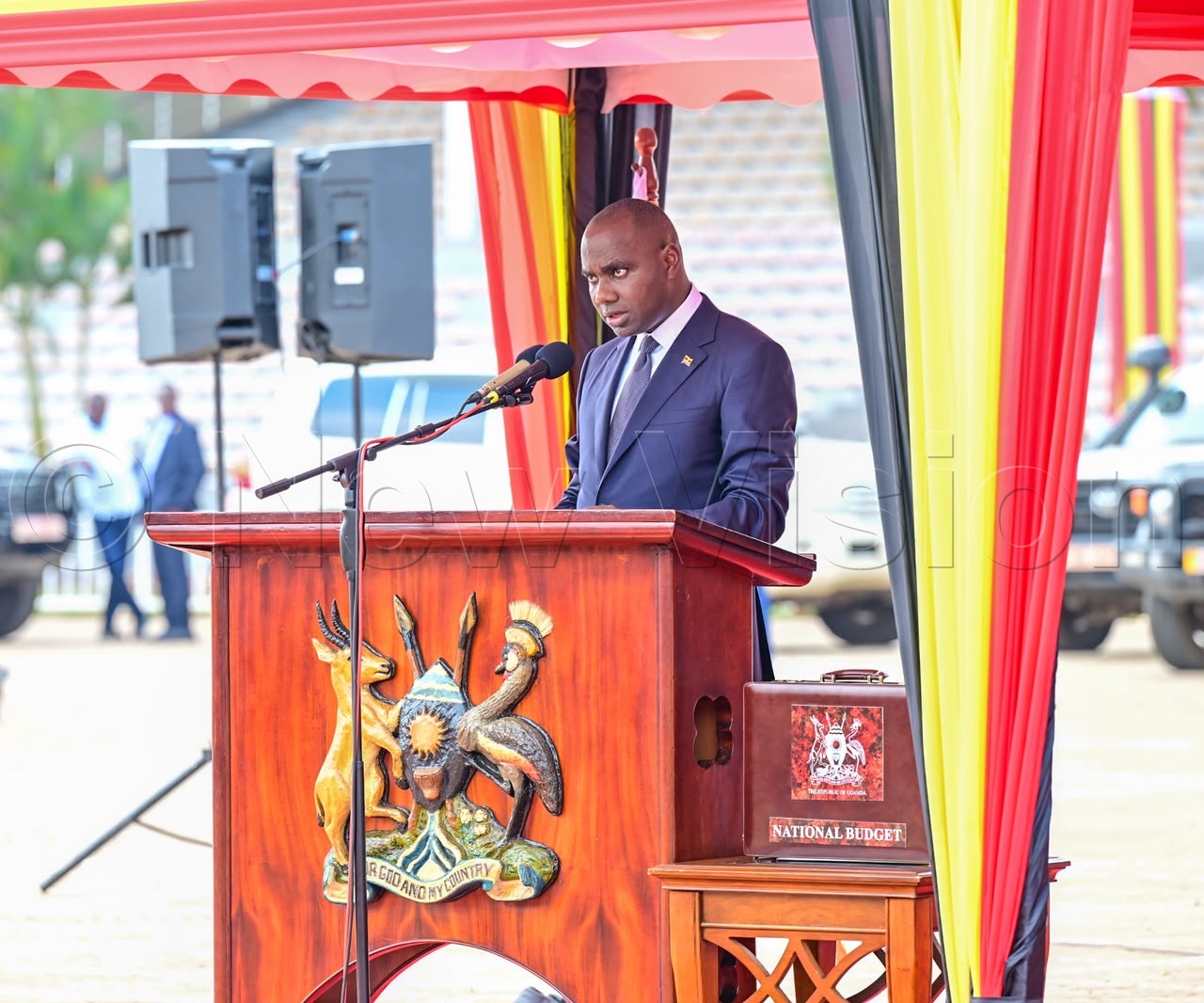
(Credit: Miriam Namutebi)
He emphasised that this is the essence of full monetisation of the economy, as consistently stressed by the President. It also forms the core of the Tenfold Growth Strategy and remains the central objective of the current Budget
___________________
Exports, services and infrastructure gains
Finance Minister Henry Musasizi further highlighted that Uganda has recorded strong external sector performance, with exports nearly doubling over the past five years, alongside expanded access to health, education, and other social services.
He also pointed to major investments in infrastructure and a strengthening industrial base, which he said are laying the foundation for private-sector-led growth and long-term economic transformation.
_____________________
Solid Ground for future growth
Finance Minister Henry Musasizi noted that Uganda has built a strong foundation for socio-economic transformation, underpinned by sustained economic growth of over 5% despite global shocks and attainment of lower-middle-income status, with gross national income per capita rising to $1,389.
____________________
Focus on Economic Transformation
The Finance Minister says the task ahead is to accelerate wealth creation, eradicate poverty, create productive jobs, and fast-track Uganda’s transformation into a $500 billion (sh1,900 trillion) economy in the shortest time possible.
___________________
Minister outlines key areas of budget speech
Finance Minister Henry Musasizi says his Budget Speech will review the economy's recent performance and outlook, account for commitments made in FY2025/26, highlight Government priorities for FY2026/27, and outline the strategy for financing the national budget.
___________________
Finance Minister delivers Budget Speech FY2026/27
Minister of Finance, Planning and Economic Development, Henry Musasizi, is presenting the budget speech for the financial year 2026/27
___________________
Speaker calls for a productive Financial Year
Speaker of Parliament Jacob Marksons Oboth is delivering his remarks ahead of the Budget Reading, expressing the Legislature's commitment to a productive financial year and continued collaboration in advancing Uganda’s development agenda.
___________________
Parliamentary sitting underway
Speaker of Parliament Jacob Marksons Oboth is delivering his remarks
____________________
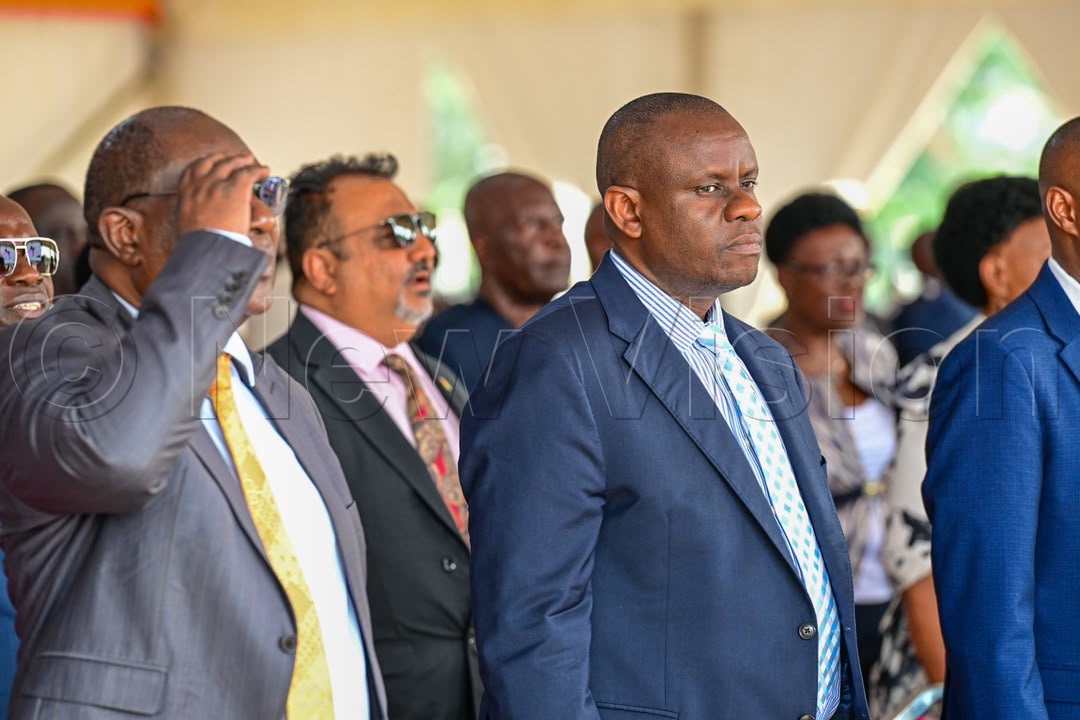
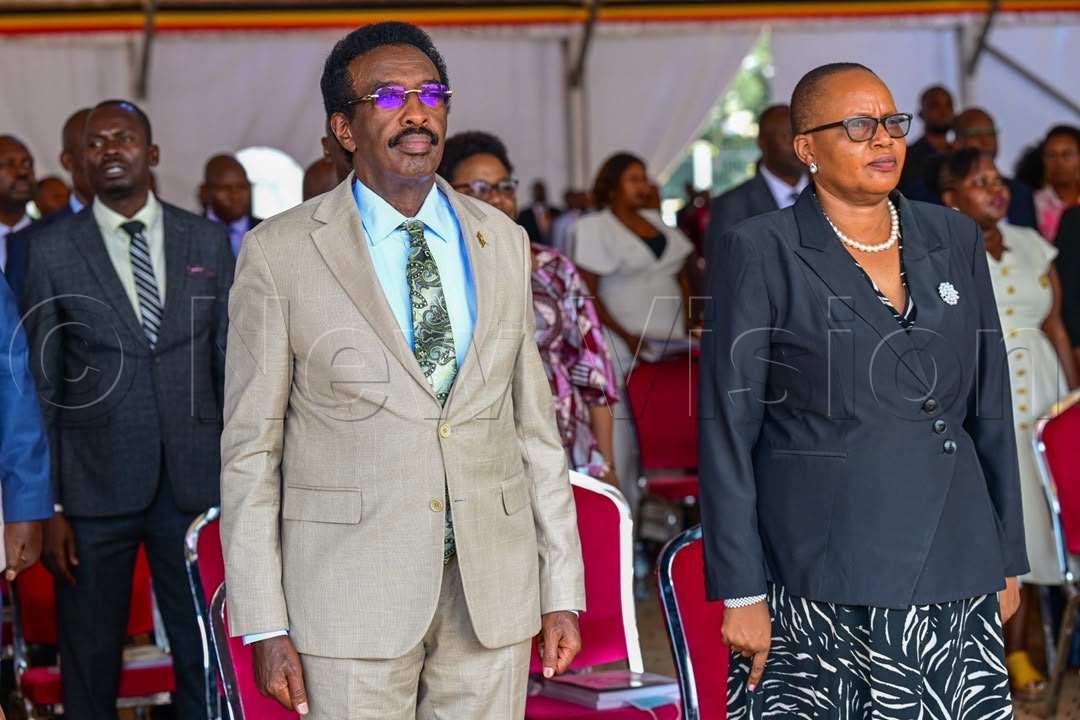
Anthems
We are in for the anthems: Uganda and the East African Community (EAC) anthem.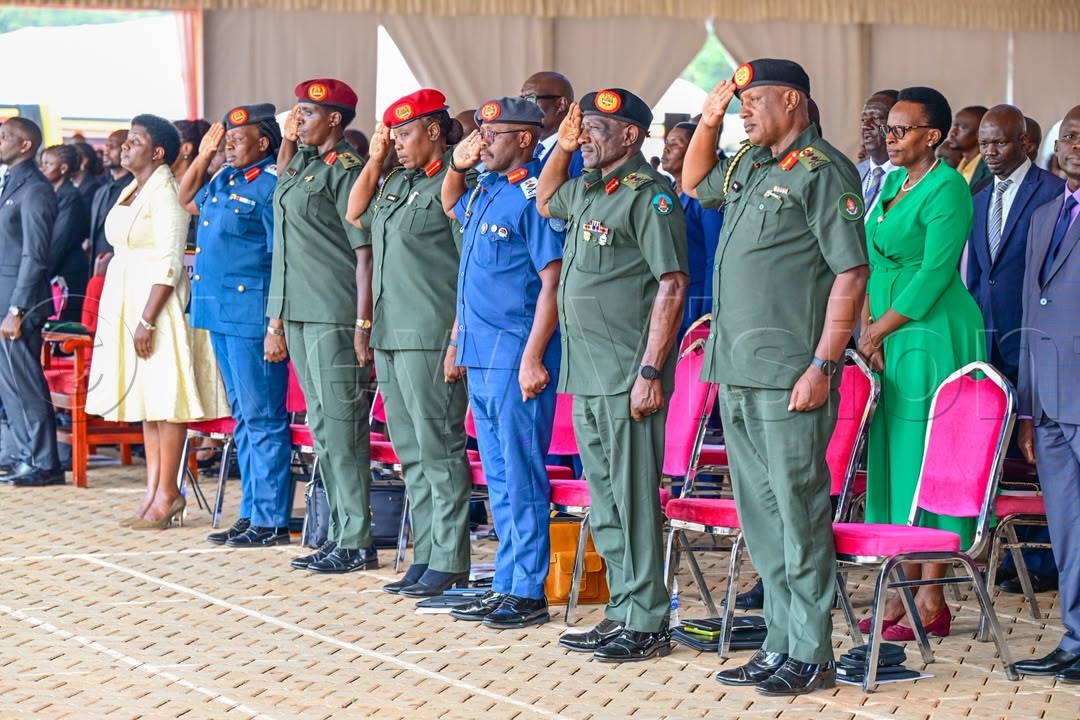
___________________
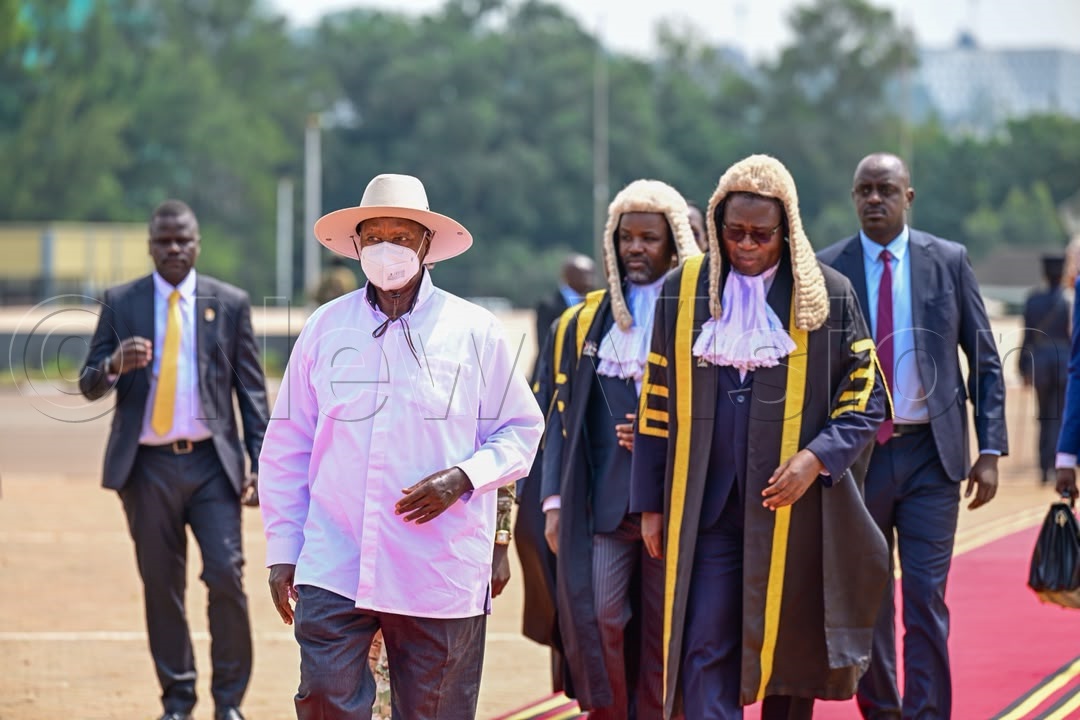
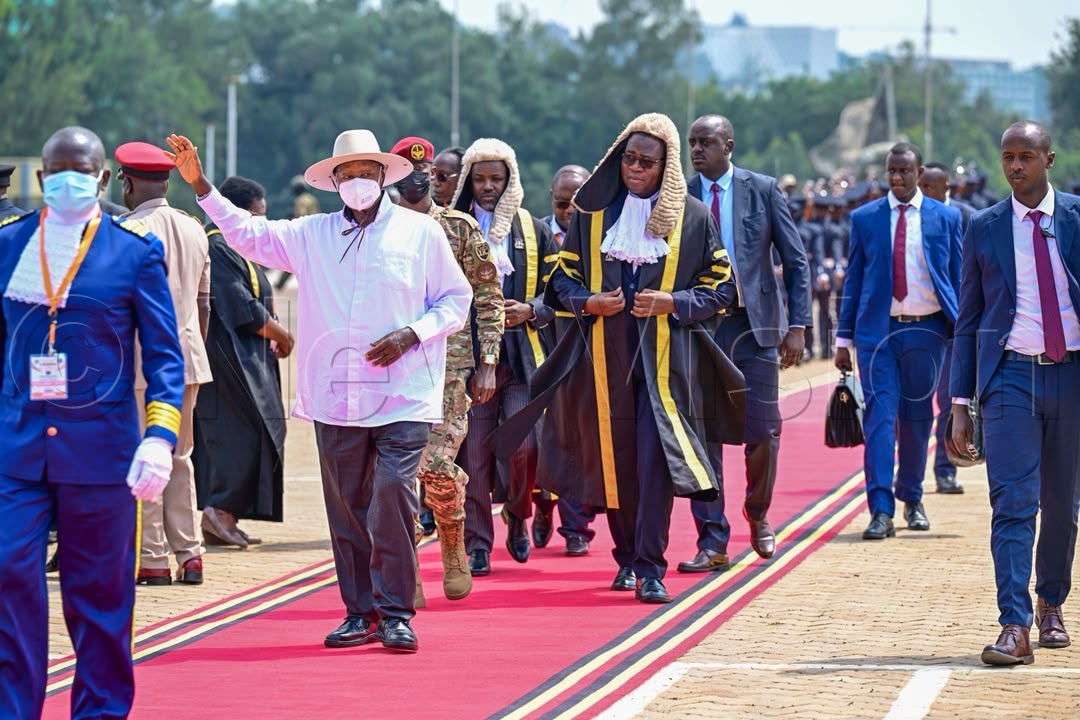
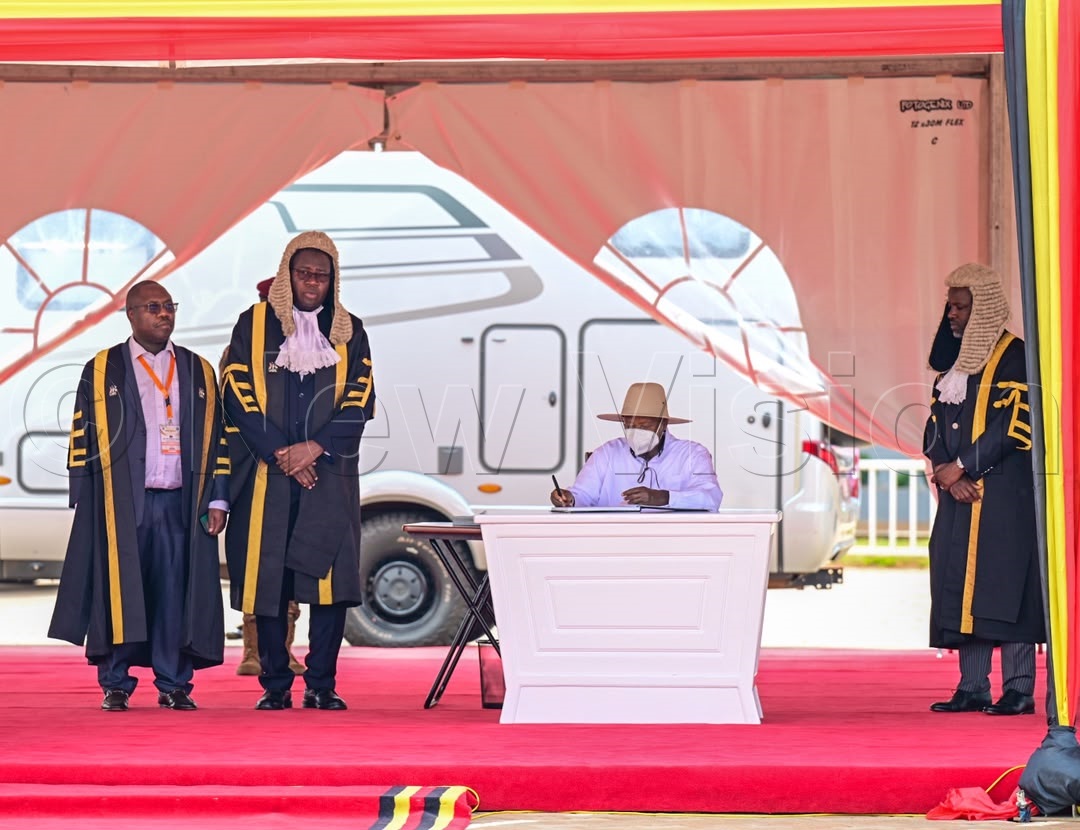
President arrives for the Budget Reading
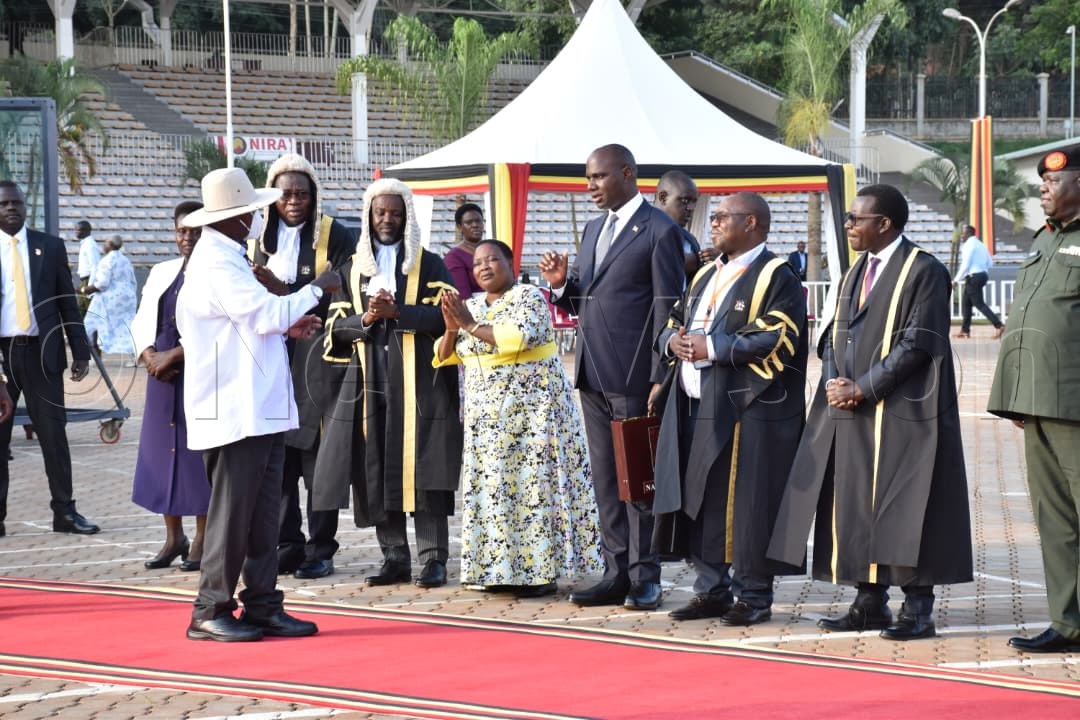
President Museveni has arrived at Kololo Ceremonial Grounds and has been received by the Speaker and Deputy Speaker of Parliament.
(Credit: Miriam Namutebi)
___________________
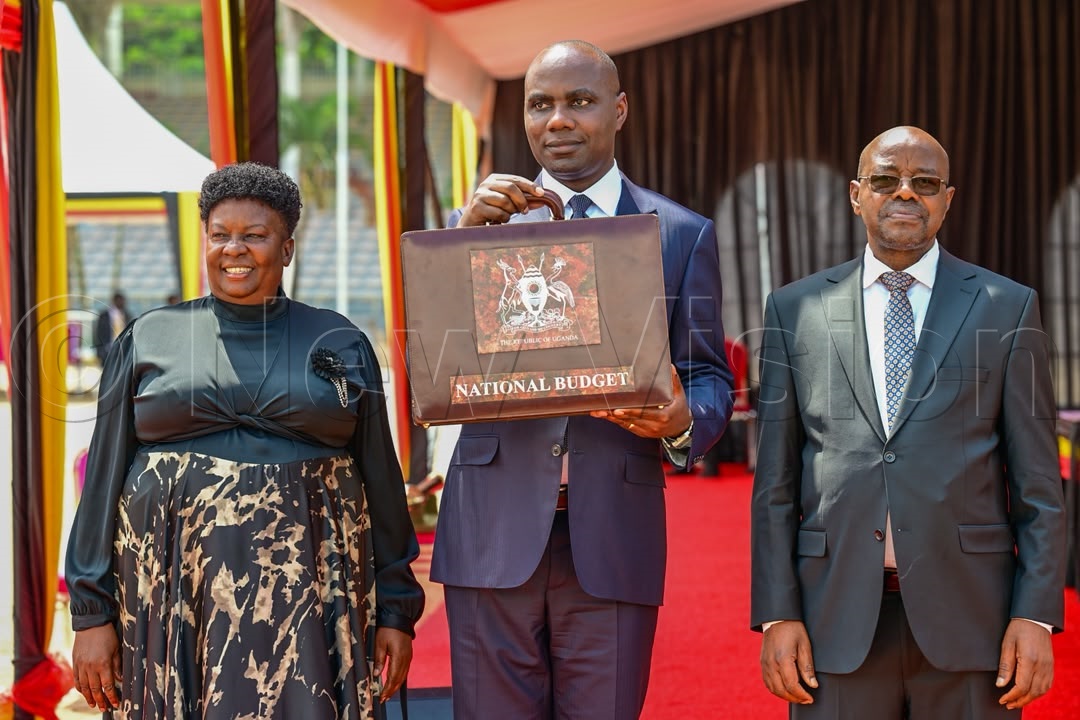
Finance Minister arrives with Budget
Minister of Finance, Planning and Economic Development, Henry Musasizi, has arrived with the Budget.
(Credit: Miriam Namutebi)
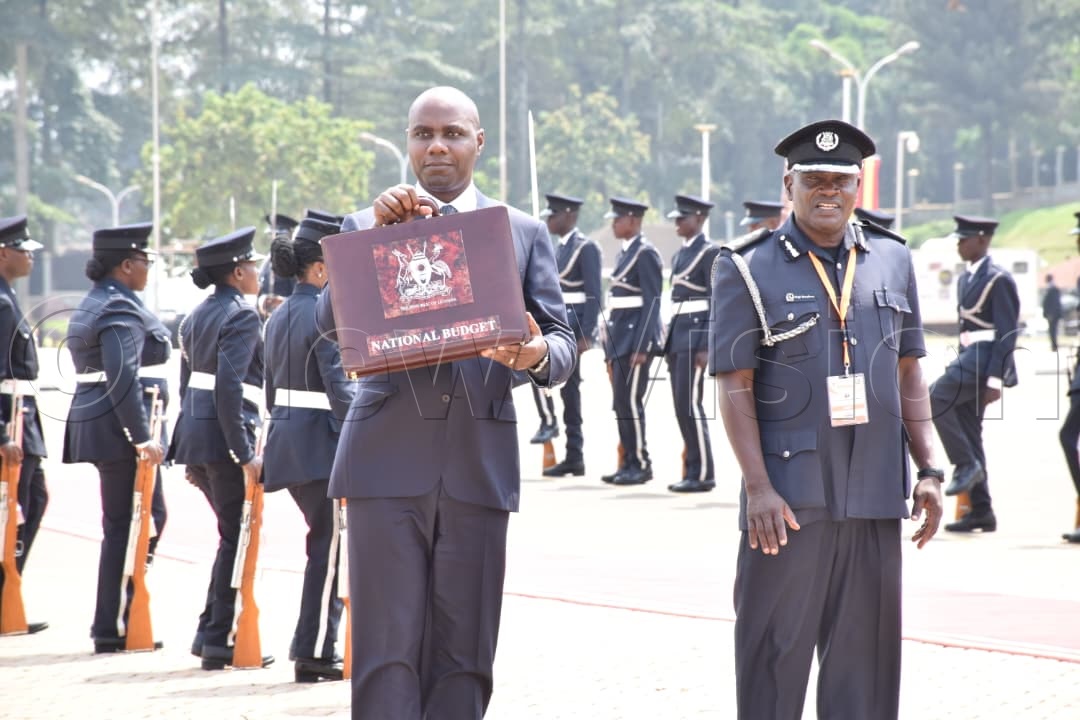
Minister of Finance, Planning and Economic Development, Henry Musasizi, arrives with the budget. (Credit: Simon Peter Tumwine)
__________________
Early Arrivals
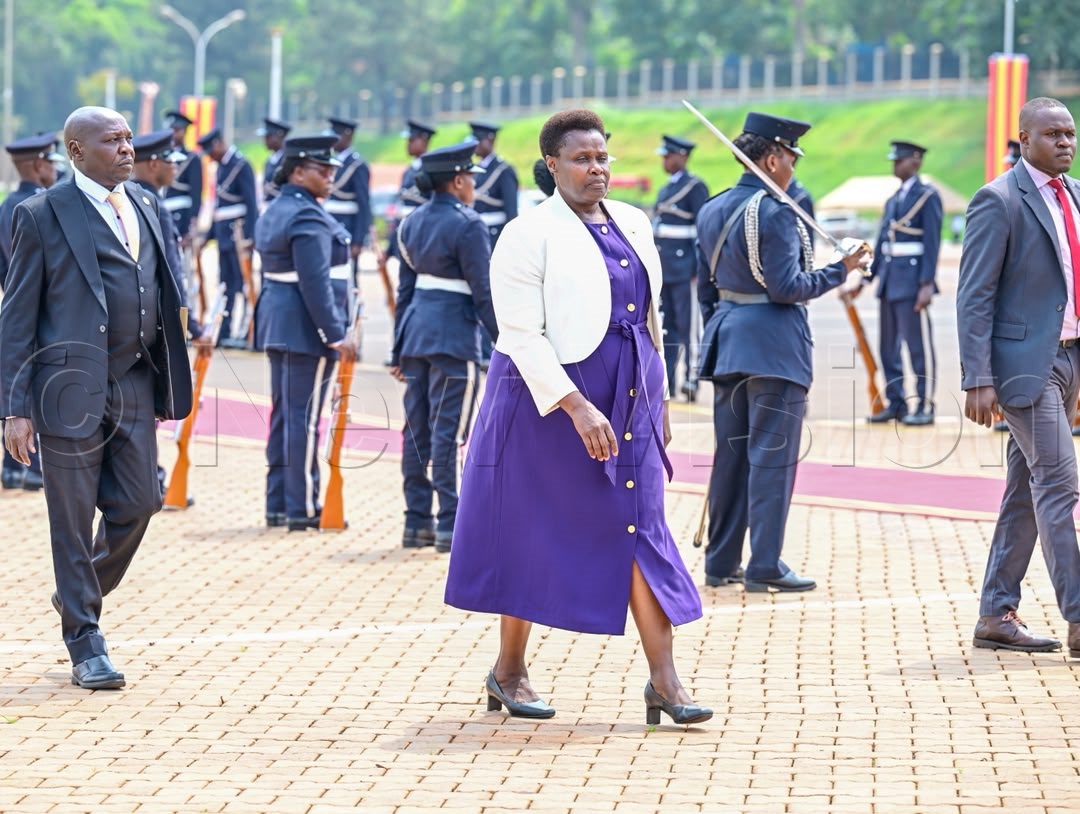
Vice President Jessica Alupo arrives.
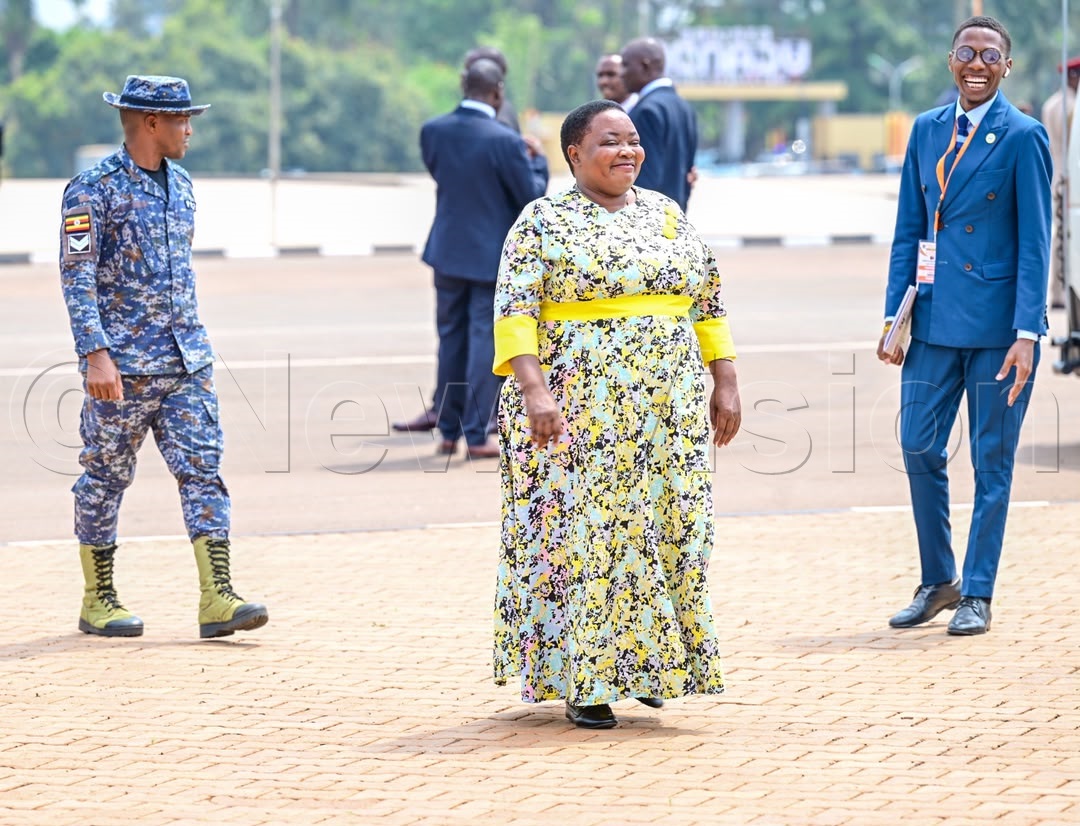
Prime Minister Robinah Nabbanja arrives.
___________________
How budget will be financed
The Government projects to raise sh44.18 trillion from domestic revenue, making it the largest source of financing for the FY2026/27 Budget.
Additional funding will come from domestic borrowing (sh11.97 trillion), external project support (sh11.27 trillion), and domestic refinancing (sh13.97 trillion). Other sources include petroleum revenues (sh1.44 trillion), budget support grants (sh1.22 trillion), and local government revenues (sh0.34 trillion).
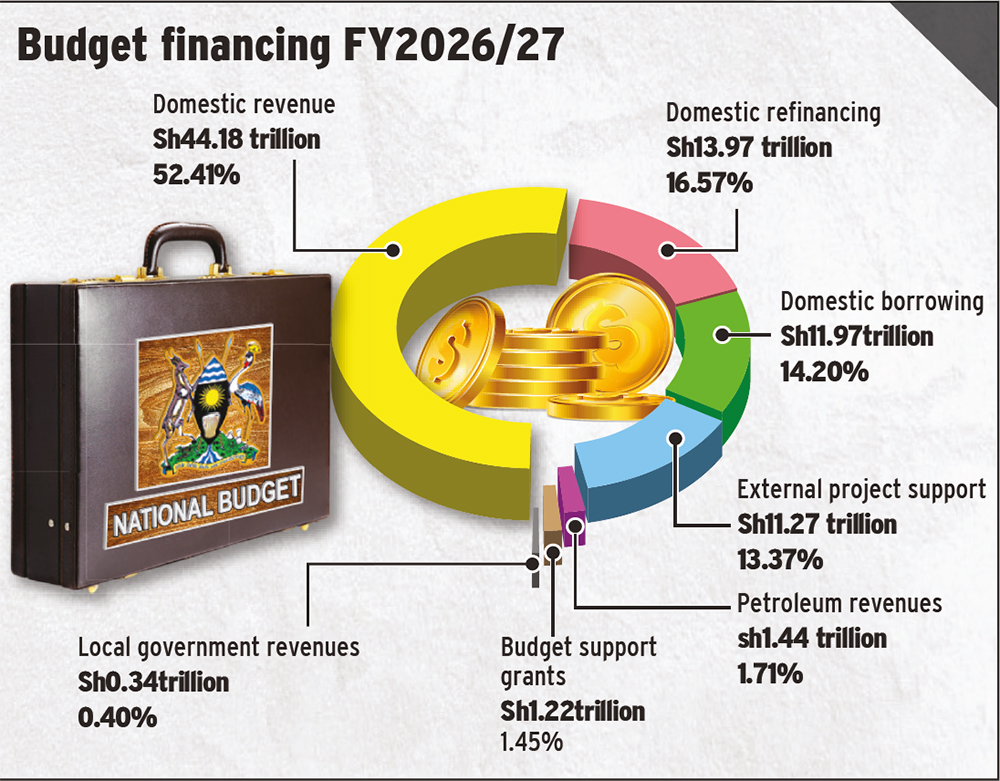
Together, these sources will finance the sh84.39 trillion national budget, the largest in Uganda’s history.
___________________
In his maiden Budget Speech, the Minister of Finance, Planning and Economic Development, Hon. Henry Musasizi, is expected to outline key tax measures that the Government plans to introduce to boost revenue collection and help finance the national budget.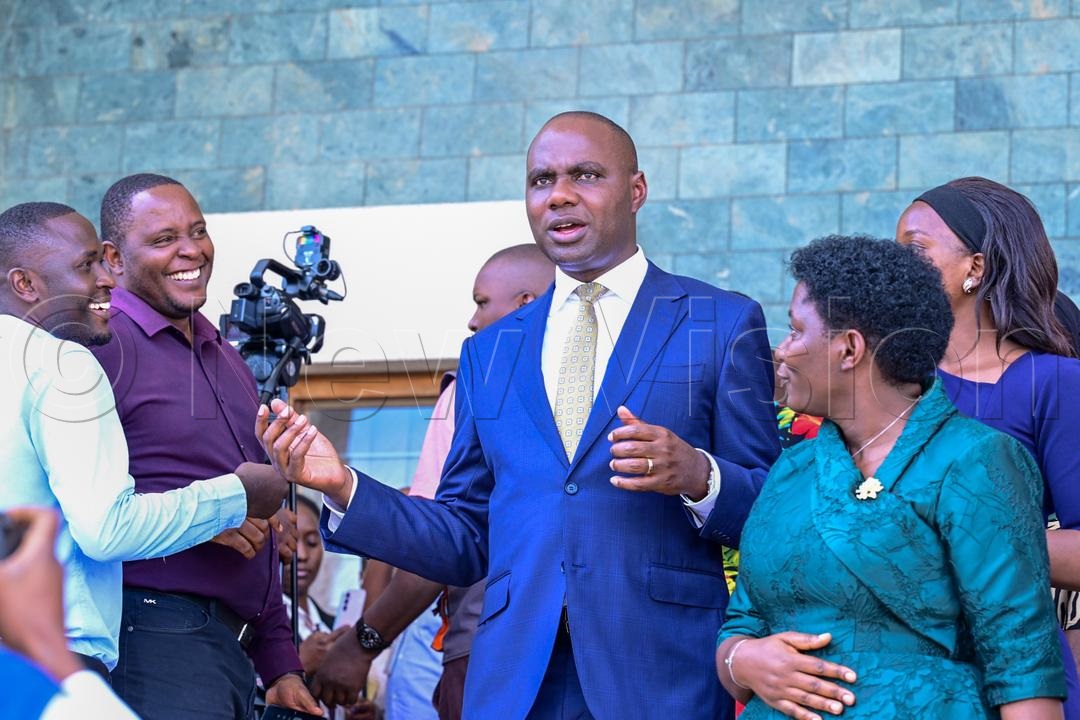
Minister of Finance, Planning and Economic Development, Henry Musasizi. (File)
According to the Ministry of Finance, while the Budget will be funded through various sources, the largest share will come from domestic revenue, comprising both tax and non-tax collections.
The Government projects to raise sh44.18 trillion from domestic revenue, underscoring its commitment to strengthening local resource mobilization and reducing reliance on external financing.
__________________
It’s Budget Day!
Welcome to New Vision’s live text commentary coverage of the National Budget Reading for FY 2026/27. The Budget will be presented this afternoon at 2:00 PM at Kololo Independence Grounds.
In line with Article 155 of the Constitution of the Republic of Uganda and the Public Finance Management Act (Cap. 171), the Minister of Finance is required to present the National Budget, as approved by Parliament, to both Parliament and the people of Uganda.
The Minister of Finance, Planning and Economic Development, Hon. Henry Musasizi, is set to deliver the country's largest-ever budget, totaling sh84.39 trillion.
The FY 2026/27 Budget represents an increase of sh2.78 trillion from the revised FY 2025/26 Budget of sh81.61 trillion, reflecting continued growth in government expenditure and investment priorities.
Stay with us for live updates, key highlights, and expert analysis throughout the Budget Reading. 📊🇺🇬