
How certification is unlocking bank loans for landless women farmers in the North
For Lango sub-region in particular, customs reserving land ownership to mainly men have made the situation worse, as women are denied full ownership of land.
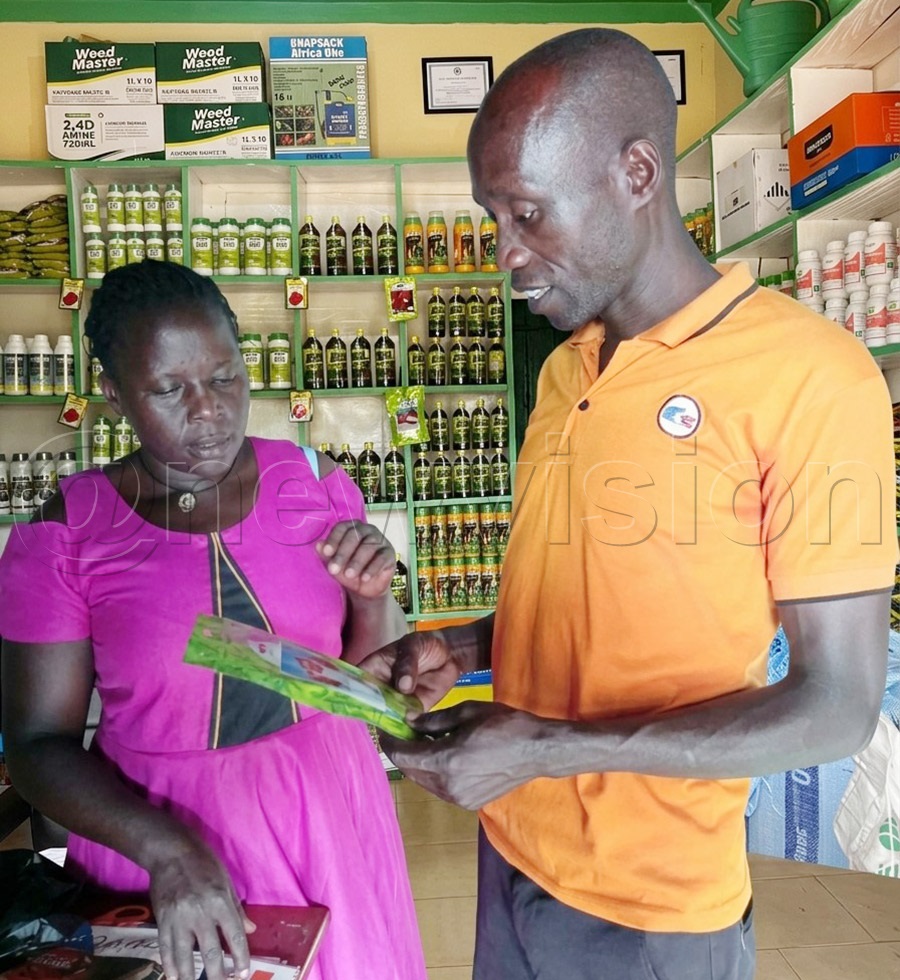
Ajwang and a colleague examine their vegetables
In Northern Uganda, women are the backbone of rural agricultural production. On a daily basis, they labour to grow the food that feeds their families and sell some of it to earn money.
Despite their efforts, many women struggle to access funds to expand their farmlands.
For Lango sub-region in particular, customs reserving land ownership to mainly men have made the situation worse, as women are denied full ownership of land.
This cultural barrier is making women remain landless, and it cuts them off from formal financial systems. Without land ownership to pledge as collateral, traditional bank loans remain out of reach for women. While men can leverage land possession to secure capital, women are left stranded.
From the small harvest, women sell what they get to earn an income. The remaining money is saved through their local village savings and loans associations (VSLA), which keeps small household enterprises alive.
But the reality is that the VSLA financial pool is small, and the demand for credit is overwhelming. The loans women receive from the VSLAs, while helpful, are simply too low to fund significant business expansion or drive major capital investments.
Such realities prompted the Austrian Development Agency (ADA) in partnership with East-West Seed Knowledge Transfer Foundation (EWS-KT) to pilot a project that is facilitating financial access for smallholder farmers in Northern Uganda.
Joshua Mwanguhya, the EWS-KT Uganda manager, said the initiative begins with hands-on training for farmers in improved vegetable production practices, including seedling production and nursery management, climate-smart agronomic techniques, as well as responsible and proactive pest and disease management.
These skills, according to Mwanguhya, enable the women to produce quality farm products, from which they earn extra income.
He noted that the training does not just improve farmers’ skills; it ensures that participants understand how and why each practice works, and they hold the farmers to high technical standards.
To ensure that what is being taught is put into practice, Mwanguhya said participants are evaluated at the end of each cropping season.
“At the end of each cropping season, participants’ knowledge and practical skills are evaluated through a formal assessment, and those who demonstrate technical competency earn official certification. That piece of paper is proof of their capability as commercial vegetable farmers,” he said.
He added that EWS-KT then connects certified farmers to financial institutions such as Centenary Bank, to help female borrowers and micro-enterprises in rural areas access financing.
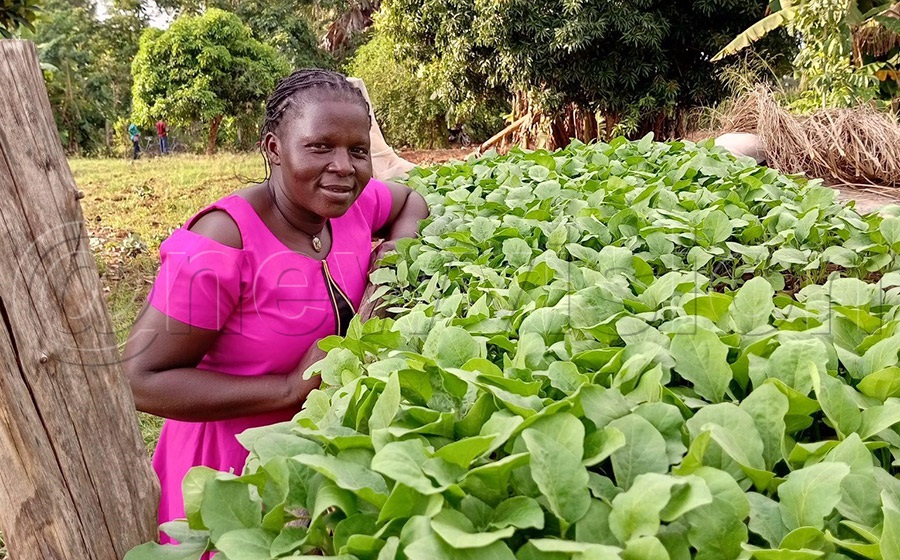
Ajwang with some of the vegetables she sells to earn money, which she invests in her agro-input shop and also saves
“Understanding that rural women lack land as collateral, the project has advocated for alternative credit-securing criteria. Instead of requiring physical land ownership documents, Centenary Bank evaluates certified farmers on their technical capacity, certification results, track record in the field, and demonstrated farming progress,” Mwanguhya added.
Beneficiaries speak out
Susan Ajwang, a vegetable farmer and agro-input dealer in Tebule Village in Kole District, is one of the beneficiaries. “I am happy that I am one of the many women whose lives have been transformed by this opportunity. With my certification and a good business plan, I was able to secure a loan of sh7m. I used the money to increase stock in my agro-input shop and expanded land for vegetable growing,” Ajwang said.
Moses Ongom, the agricultural officer for Okwerodot sub-county in Kole, added that the project is raising awareness of profitability of commercial vegetable farming, which is encouraging more small-scale farmers to adopt the improved techniques.
“As a result, the demand for high-quality seeds and reliable inputs is increasing, and Ajwang’s business is growing right alongside it," Ongom said.