
Experts call for more financing to unlock Uganda’s mining potential
In his address, the minister of State for Energy and Mineral Development, Sidronius Okaasai Opolot, reaffirmed the government’s continued decision to prioritise mineral beneficiation and encourage investors to prioritise processing minerals within Uganda rather than exporting raw ore.
Experts call for more financing to unlock Uganda’s mining potential
Experts are calling for innovative financing solutions to unlock investment in Uganda’s mineral sector and turn the country’s vast mineral resources into sustainable economic value.
The appeal was made on Tuesday during the CEO Breakfast of the 15th Annual Mineral Wealth Conference held at Speke Resort Munyonyo under the theme “Beneath the Surface Unlocking Africa’s Next Mining Powerhouse” attended by government officials, mining companies, investors, financial institutions, among others.
According to Grace Mullisa, Ecobank managing director and the main sponsor, financing remains a key issue affecting the output of the minerals sector limiting the expansion of exploration and viable mining projects that would strengthen value addition within the sector.
Mullisa emphasised that access to affordable and appropriate financing remains critical for businesses seeking to move mineral projects from exploration and feasibility studies to production.
“Mining is a capital-intensive business, requiring significant upfront investment in geological surveys, exploration, equipment, infrastructure and processing facilities before projects can begin generating returns. This makes access to long-term capital particularly important for investors operating in the sector,” Mullisa added.
She added that while Uganda plans to grow its economy from about $50b to $500b by 2040, there must be deliberate interventions to exploit Copper, cobalt, graphite, rare earths, iron ore and gold, which would build the energy transition block.
“Uganda does not need to own every stage. But every step beyond the pit, into concentrating, refining, processing and manufacturing, multiplying the jobs, the skills and the tax base.”
Stakeholders argued that Uganda needs financing models that respond to the different stages of the mining value chain.
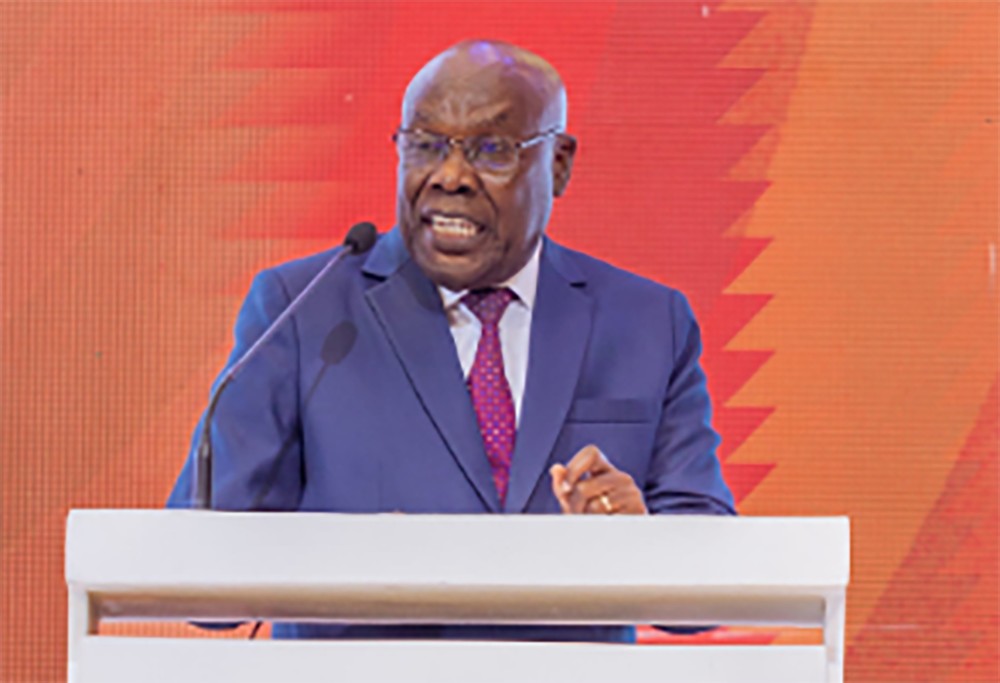
Minister Sidronius Okaasai Opolot
In his address, the minister of State for Energy and Mineral Development, Sidronius Okaasai Opolot, reaffirmed the government’s continued decision to prioritise mineral beneficiation and encourage investors to prioritise processing minerals within Uganda rather than exporting raw ore.
“Value addition can create opportunities for local businesses, generate employment and increase the economic contribution of the minerals sector,” the minister said.
Aggrey Ashaba, Chairman, Governing Council, Uganda Chamber of Energy and Minerals, underscored the need to move beyond extraction and strengthen processing, beneficiation and national participation in Uganda’s minerals sector.
Financial institutions can therefore play a significant role by developing products tailored to the needs of mining businesses, including structured finance, trade finance, working-capital facilities and investment solutions.
For Uganda, increased access to financing could help attract more private investment into exploration and mining while supporting businesses involved in equipment supply, logistics, processing and mineral trading.
From mineral resources to economic value
The conference is also expected to focus attention on the need for Uganda to derive greater economic value from its mineral resources.
Rather than concentrating solely on the extraction and export of raw minerals, stakeholders have increasingly emphasised the importance of developing processing and value-addition capabilities within the country.
However, developing processing facilities requires substantial capital as well as reliable infrastructure, technical expertise and predictable investment conditions.
This makes collaboration between government, investors and financial institutions essential to building a competitive minerals value chain.