
Euro gold eyes Uganda as regional hub
Uganda’s gold exports have grown threefold, rising from $239.41m in July 2023 to $788.45m in July 2026, cementing gold’s position as the country’s leading foreign exchange earner.
A man operating a high-tech machine at the refinery. (File)
_______________
Gold has lately solidified its position as Uganda’s leading foreign exchange earner, overtaking coffee that had long been the country’s top export.
Reports indicate that gold first overtook coffee as the leading export in 2018 and has since solidified its position. Bank of Uganda’s State of the Economy report for June 2026 indicates that Uganda’s external position improved in the 12 months to April this year as the current account deficit narrowed to $3.155b from $3.387b in the year to April 2025.
Bank of Uganda attributes this mainly to improvements in the secondary income inflows driven by higher personal transfers, while the goods deficit declined on account of strong export performance, including coffee and non-coffee exports, specifically gold.
Finance ministry’s performance of the economy reports indicate that Uganda’s month-on-month gold exports have grown threefold from $239.41m recorded in July 2023 to $788.45m in July 2026.
The emergence and growth of gold as Uganda’s top export coincided with President Yoweri Museveni’s strong advocacy for local mineral value addition and the subsequent ban on export of unprocessed minerals.
“You can imagine the raw materials. It is a mere rock, but with 65% tin component. That is what we have been exporting all this time.
Let the minerals stay in the ground. They have been here for thousands of years and they will continue to be there until intelligent people come and add value to them,” Museveni said during the commissioning of Woodcross, the first tin processing facility in Uganda, located at Ruti, Mbarara City in 2024.
The rise of Euro Gold
One of the entities that took Museveni’s gospel seriously is Euro Gold Refinery, a locally-owned refinery established in 2021 with the main objective of adding value to Uganda’s gold.
Ben Mungu Feni, the Euro Gold Refinery director, says Uganda did not have any refinery where individual local miners would access such value addition facilities.
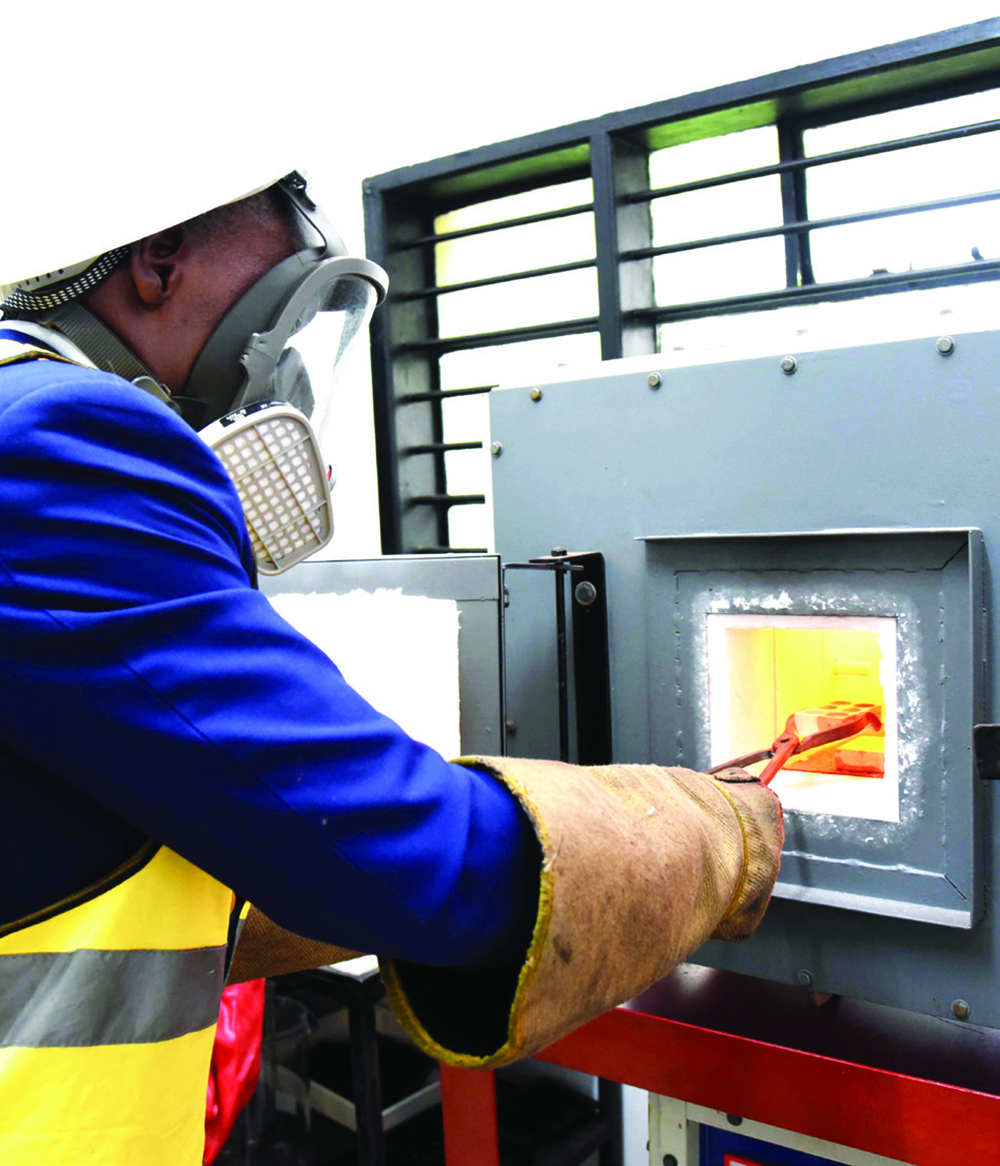
An employee operates a furnace at the facility. (File)
He says they have since partnered with different local miners, holding different mining licences including exploration, mineral dealing, trading and refining, creating over 2,000 direct and indirect jobs.
Feni describes Uganda’s current mining landscape as one that is actively growing, aided by the Ministry of Energy and Mineral Development’s agenda of licensing artisanal miners as one of the key driving factors to this growth.
“You know it is not easy to get a licence for mining in Uganda, particularly gold, because there are a lot of criteria involved. Additionally, the land ownership system in Uganda, which is largely communal, complicates it.
We believe the economy in general and the mining sector in particular shall grow in the next five years if we continue on the trajectory we are on now,” Feni says.
Rays of hope
In April, the Bank of Uganda and Euro Gold entered into a partnership in which the former would purchase locally produced gold, whose value addition majorly happens at the latter’s premises located in Kamwokya, a Kampala suburb.
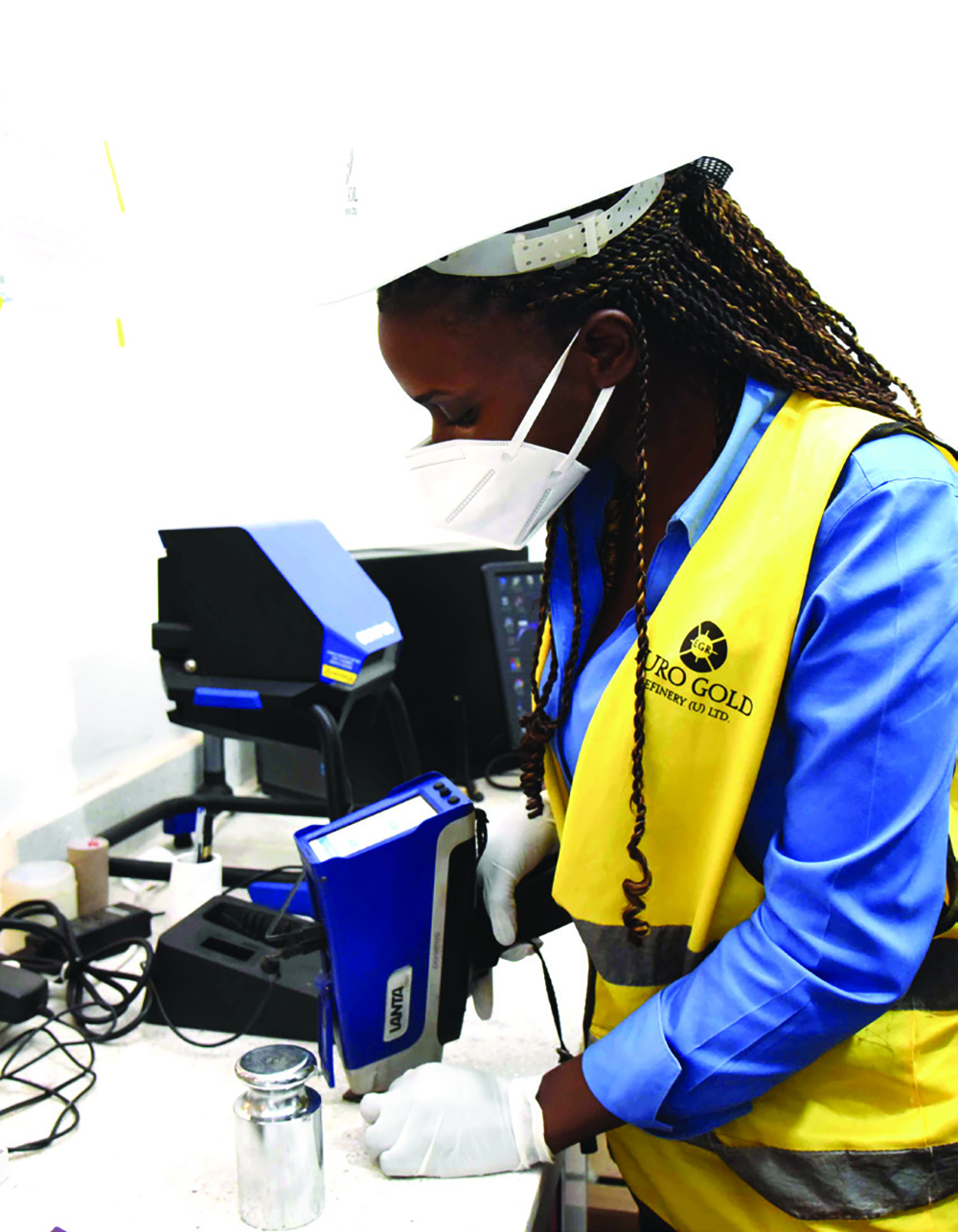
A lady testing mineral composition at the Euro Gold Refinery in Kamwokya, Kampala. (File)
Feni describes the initiative as promising and one of the best decisions long overdue.
We believe that Uganda will, in the shortest time to come, have a very big gold reserve since many miners have been supported and more mines opened,” he says.
Feni adds that they are targeting to build on the progress registered to turn Uganda into a gold trade hub in Africa, like Dubai in the Middle East, even though they do not have active mines.
To achieve this, he urges the energy ministry and policymakers to prioritise investments in exploration and discovery of the minerals, as he says about 80% of the mineral deposits are undiscovered.
“90% of gold discoveries are not done by the Government but by the locals who just bump into them in their soils and alert the ministry. I am aware that the Government, through the ministry, started exploration surveys in northern Uganda and Karamoja.
If they can do that in the whole of Uganda and come up with clear deposits, not only gold, but other minerals like tin, iron, lithium, copper and base metals and have ready data, it will ease investments by investors,” he says.
Need to bridge gaps
However, Feni believes that there are some challenges that need to be addressed, top of which is access to finance by artisanal and small-scale miners.
“It is very hard for banks to support the mining industry as compared to any other sector or business, yet it is the leading foreign exchange earner with a footprint in all regions of the country. I think they needed to come up and see how they can support the sector because the advantage is that gold exists. The miners just need to be empowered to acquire tools and to be able to get it out of the ground,” he says.
Feni explains that local miners have been forced to look outside the country for investors as a source of financing and that these investors end up taking the lion’s share in the ownership of the local mining ventures and charging locals exorbitantly.
“In the end, you find investors owning about a 70% shareholding in the mines as the locals are reduced to owning just 30% because they brought in the money, and there is nothing you can do.
So, Ugandans have been exploited, yet banks charge interest rates of about 20% annually. Now imagine if a bank were willing to partner with the local miners, the 70% shareholding in the mines would be going to the locals,” he says.