
Discussions open on turning investments into more jobs
The Uganda Industrialisation Conference 2026, running from November 18 to 20, is organised by the Ministry of Trade, Industry and Cooperatives in partnership with the Uganda Development Corporation (UDC) and the United Nations Industrial Development Organisation (UNIDO).
Policymakers, investors, manufacturers, development partners and private sector leaders have come together at Speke Resort Munyonyo to discuss concrete ways of speeding up Uganda’s industrial growth. (Courtesy photo)
__________________
Policymakers, investors, manufacturers, development partners and private sector leaders have come together at Speke Resort Munyonyo to discuss concrete ways of speeding up Uganda’s industrial growth and moving closer to a $500b economy by 2040.
The Uganda Industrialisation Conference 2026, running from November 18 to 20, is organised by the Ministry of Trade, Industry and Cooperatives in partnership with the Uganda Development Corporation (UDC) and the United Nations Industrial Development Organisation (UNIDO).
It is held under the theme “Celebrating Uganda’s Industrial Growth” and also marks UDC’s 10th anniversary. The gathering will end with the commemoration of Africa Industrialisation Day on November 20.
In his address at the official opening, the Minister of Trade, Industry and Cooperatives, Sanjay Tanna, said industrialisation sits at the centre of the country’s plan to become a high-income economy. Under the National Development Plan IV and the Ten Fold Growth Strategy, Uganda is targeting growth from roughly $50b to $500b by 2040.
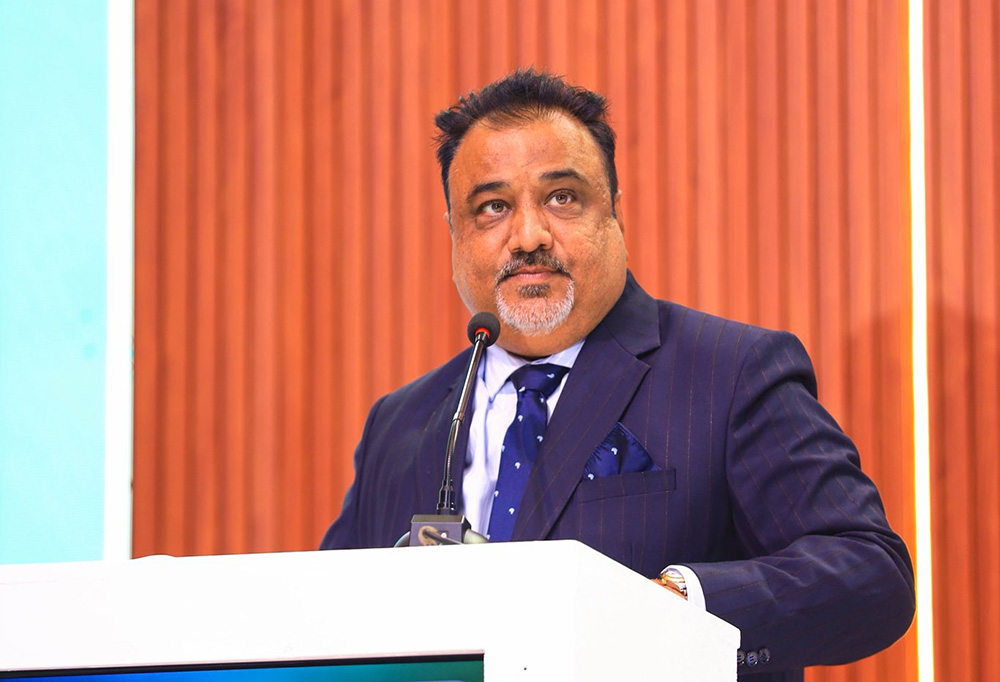
Minister of Trade, Industry and Cooperatives, Sanjay Tanna, speaking during the official opening. (Courtesy photo)
“Our greatest measure of industrial success must not simply be the number of factories established, but the value they add to our economy, the jobs they create, the farmers and local suppliers they support, the imports they substitute and the exports they generate,” Tanna said.
Tanna said that formal manufacturing establishments have increased from about 81 in 1986 to more than 12,000 being active currently. The industrial sector now contributes 27.4% of GDP, grows at 6.4% a year, accounts for 24.6% of merchandise exports and employs more than 1.8 million people.
UDC’s investment portfolio has grown from about sh160b in 2019 to sh1.5 trillion in 2026. The corporation holds stakes in 30 companies, of which 18 are commercially operational, and 12 are still under implementation. These investments have created 5,799 direct jobs and more than 700,000 indirect jobs, while also supporting the purchase of over 35,769 metric tonnes of agricultural produce.
Ben Kavuya, Chairman of East African Medical Vitals, one of the firms that received funding from UDC, said the government should continue to widen channels for patient and long-term capital for access to local industries.
“Without UDC, we would not be where we are without the support from UDC. They believed in us. The government should continue and improve our infrastructure. The cost of transport for raw material from Mombasa to Kampala will be cut by half. The earlier we have the Standard Gauge Railway in place, the better,” he said.
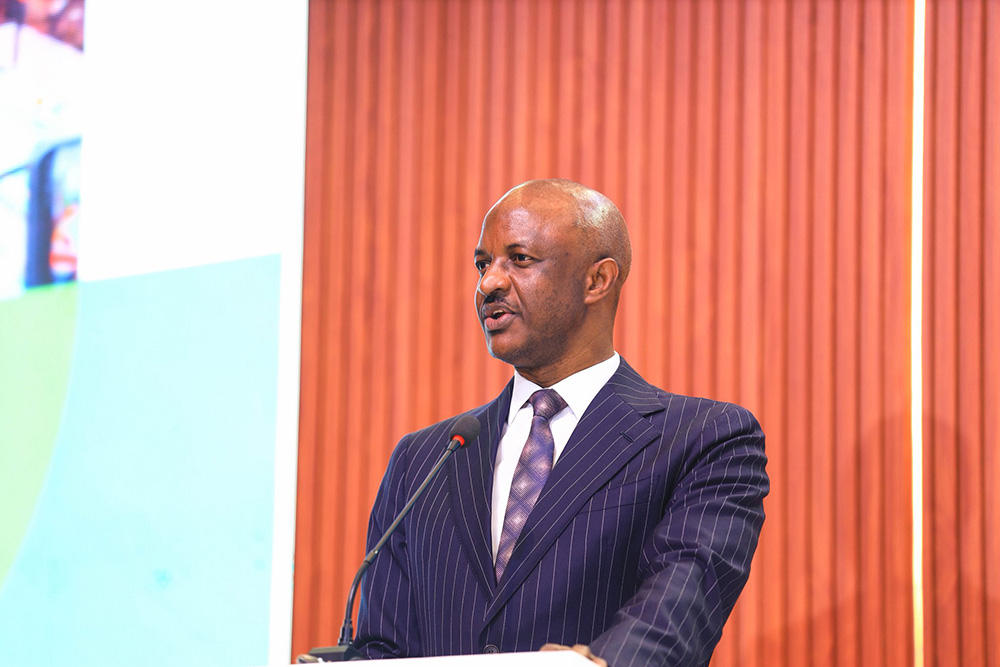
Ramathan Ggoobi, the Permanent Secretary and Secretary to the Treasury, said the next major milestone is to cross $100b before 2030 on the way to the $500b target by 2040. (Courtesy photo)
Ggoobi said the next industrial revolution will not be won merely by government spending more, but by investing better, coordinating better, mobilising private capital more effectively and demanding measurable results.
He said that government appropriations alone cannot finance the scale of investment needed, and called for greater mobilisation of domestic savings, institutional investments, private equity, development finance and foreign capital.
Lynette Bagonza, the Permanent Secretary in the Ministry of Trade, Industry and Cooperatives, said that industrialisation must produce real improvements in people’s lives through job creation, value addition, enterprise growth and more economic opportunities.
She said there is a need to strengthen local industries, attract strategic investments, embrace technology and develop competitive value chains that connect Ugandan producers to regional and international markets.