
Chinese investors to invest $300m into Uganda’s agrobusiness
Alupo used the same platform to re-echo the need for Uganda to transit our agricultural sector from traditional subsistence practices to commercialised, high-value, modern agribusiness, adding that the transformation is vital as we push aggressively towards our national target of expanding Uganda’s economy to $500 billion by 2030.
Vice President Jessica Alupo shares a moment with FAO Country Director Ezana Kassa. (Credit: Simon Peter Tumwine)
______________________
The Vice President, Jessica Alupo, has challenged Ugandans to improve pineapple production in an effort to meet the international demand.
While addressing different stakeholders at the China-Uganda Agricultural Cooperation Industrial Park in Luweero on Thursday (July 23), Alupo observed that the industrial park's output is still low.
“I have learnt the factory processes only three tonnes of pineapples out of the required six tonnes of pineapples. We need more millions of pineapples because you have all seen that the plant is operating below capacity,” Alupo said after a guided tour of the premises.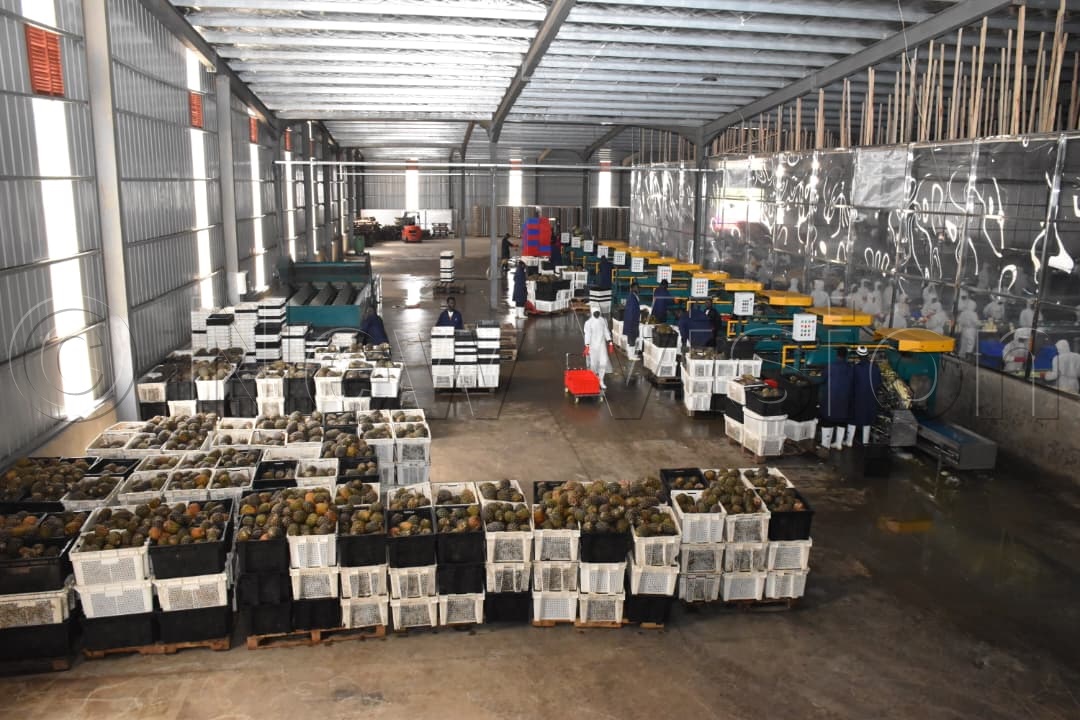
Pineapple processing plant. (Credit: Simon Peter Tumwine)
Alupo used the same platform to re-echo the need for Uganda to transit our agricultural sector from traditional subsistence practices to commercialised, high-value, modern agribusiness, adding that the transformation is vital as we push aggressively towards our national target of expanding Uganda’s economy to $500 billion by 2030.
At the event, Luo Heng, the chairman of the industrial park, revealed that his team plans to invest an additional $300m to transform the Park into a comprehensive agro-industrial hub by attracting 30 to 50 leading enterprises who will foster a dynamic industrial cluster that will generate greater employment opportunities, stimulate economic growth, and strengthen Uganda's industrialisation process,” Heng said.
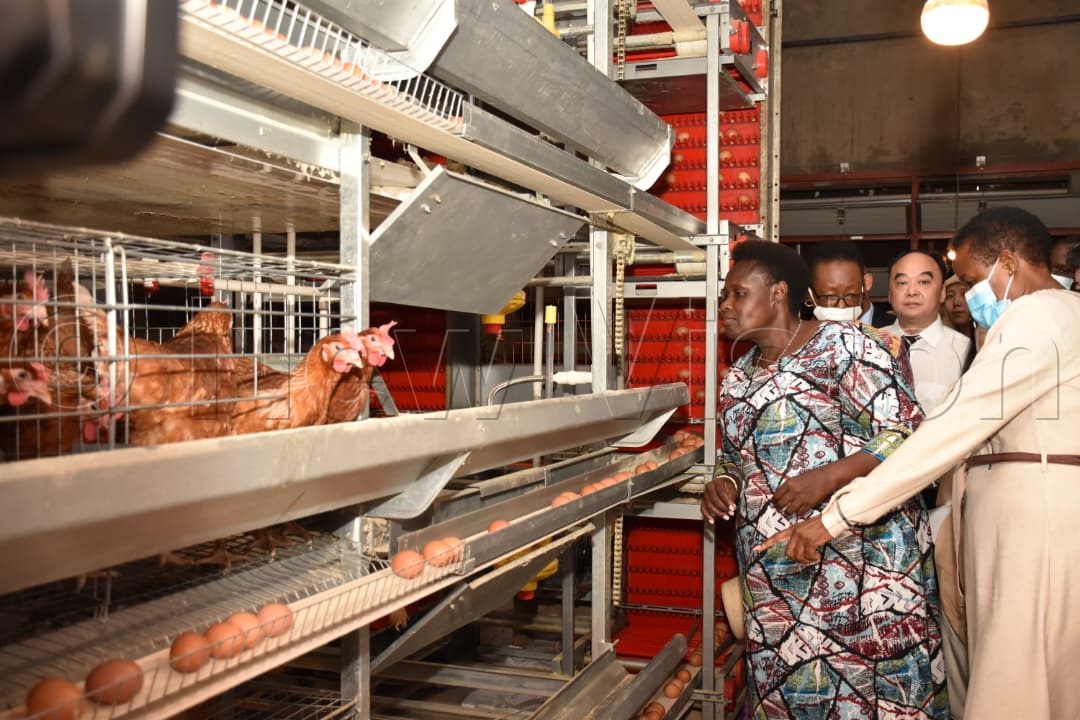
Vice President Jessica Alupo inspects poultry at the park. (Photo by Simon Peter Tumwine)
(Photo by Simon Peter Tumwine)
Expounding on more opportunities in Agriculture, Vice President Alupo reported that last year, Uganda exported 11 tonnes of chili paper to China, which led to the signing of the Forum of China-Africa Cooperation Summit in Beijing.
Alupo also noted that as Uganda celebrates the progress it has attained, industrial growth requires a fully responsive public sector.
“An industrial park cannot thrive in isolation. It requires seamless infrastructure, reliable utilities, access to capital and favourable policy environments,” Alupo said
Food and Agriculture Organisation (FAO) country director Ezana Kassa said the visit reflects the importance that the government attaches to agro-industrialisation as a key driver of economic transformation, job creation, food security, and export growth.
“This industrial park is a practical demonstration of what can be achieved through partnership between Uganda and China, supported by FAO through South-South Cooperation,” Kassa said.
Kassa noted that because of the South-South Cooperation, Countries across the continent are looking to Uganda's experience as an example of how international partnerships can support agricultural modernisation and industrial development.
Kassa, however, noted that as we enter the next phase, there is a need for stronger farmer organisations, aggregation systems, extension services, contract farming arrangements, and market linkages to ensure that agro-industrial parks create opportunities for farmers while securing reliable supplies for processors.
“The success of agro-industrialisation will ultimately be measured by the incomes it generates for farming households and the jobs it creates for young people,” Kassa said, adding that agro-industrialisation requires a strong enabling environment.
Kassa noted that there is still a need to continue investing in roads, electricity, water and irrigation infrastructure, extension systems, food safety and quality systems, among others, adding that these investments are essential for attracting investors, reducing production costs, and enhancing Uganda's competitiveness in regional and international markets.
Other products at China-Uganda Agricultural Cooperation industrial park:
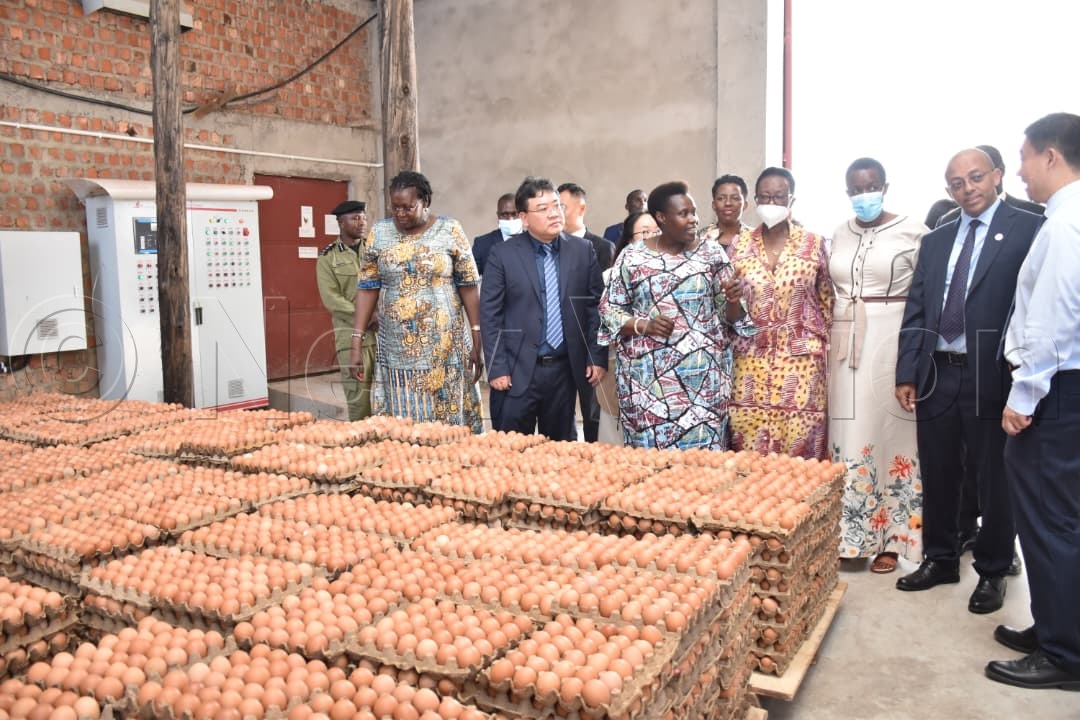
Luo Heng, the chairman of the industrial park, revealed that the park currently houses 300,000 hens, producing around 250,000 eggs daily, and added that the project has created more than 400 direct employment opportunities for local communities.
Heng noted that as the park celebrates its 10th anniversary, they have launched an ambitious five-year development strategy with a planned investment of $500m, adding that through this initiative, they (investors) will further strengthen their integrated value chain and transform the Park into a modern agro-industrial hub where agriculture and industry develop hand in hand.