
China’s 107-year-old cotton mill shows Uganda and Africa what’s possible
It is captivating seeing a 107-year-old cotton mill operating with modern smart digital technology. And this is precisely the story of Wuxi No. 1 Cotton Mill, in Wuxi city, Jiangsu province, China.
China’s 107-year-old cotton mill shows Uganda and Africa what’s possible
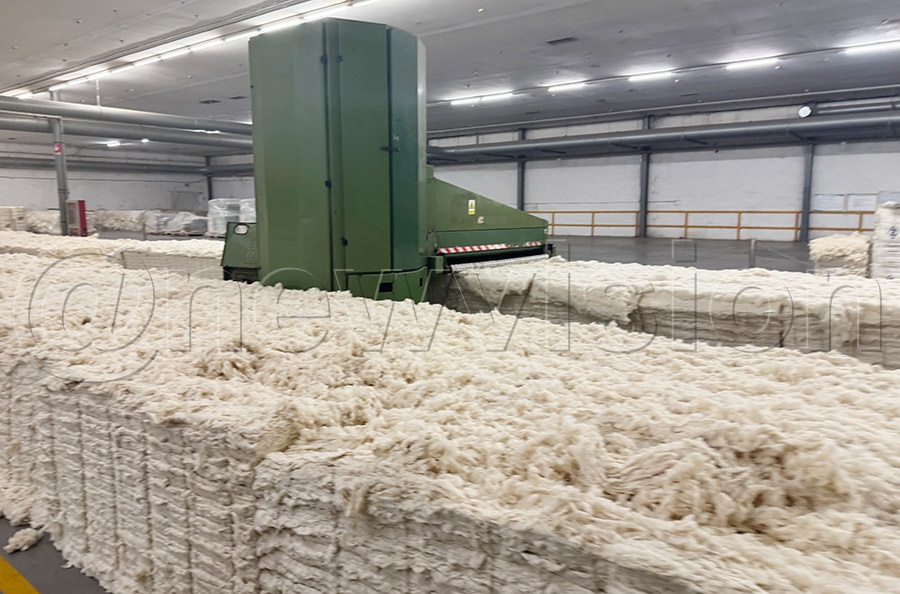
Thousands of machines hum across the production floor at Wuxi No. 1 Cotton Mill, each doing its part to turn cotton into yarn.
Some workers move through the factory, but much of the work is now done by machines. Sensors examine the spinning process. Digital systems monitor production. Fine cotton yarn moves through a factory whose origins go back to 1919.
It is captivating seeing a 107-year-old cotton mill operating with modern smart digital technology. And this is precisely the story of Wuxi No. 1 Cotton Mill, in Wuxi city, Jiangsu province, China.
It has survived more than a century not by remaining the same, but by repeatedly changing with the industry around it.
The factory was established in 1919 by brothers Rong Desheng and Rong Zongjing, prominent Chinese industrialists from the Rong family.
More than a century later, cotton remains at the centre of the business. What has changed is its production.
From labour to automation
The basic process of making textiles has remained familiar for thousands of years. Cotton is prepared, spun into yarn, and then woven or knitted into fabric before being dyed, finished and eventually made into clothes.
But the machinery doing the work has changed dramatically.
Wuxi No. 1 Cotton Mill has moved from traditional, labour-intensive production to automated compact spinning and digitalised manufacturing. Across the company's factories, there are about 700,000 spindles and 600 looms (cloth weaving tools).
Sensors fitted to the equipment monitor production and help workers identify problems.
“We have been operating our production with smart and artificial intelligence technology,” says Julian Zhu, Vice Director of the Sales Department at Wuxi No. 1 Cotton Mill.
The change has also been driven by the economics of manufacturing.
China's labour costs have risen over the years, while countries such as India and Pakistan compete with lower labour costs in parts of the textile industry.
“Labour cost is growing in China every year,” Zhu says. For Wuxi, technology has become one way to remain competitive.
The factory employs about 1,100 workers, but machines now perform much of the repetitive work that once required far more human labour.
The workers have not disappeared, their jobs have changed.
They monitor machines, manage production, maintain equipment and respond when something goes wrong.
Zhu puts the Wuxi’s annual high-grade yarn production at 40,000 metric tonnes, whereas a 2025 report puts annual high-grade fabric production at 50 million metres with an annual output value of approximately two billion RMB.
The mill also continues to invest in upgrading its production. Zhu says between one and two million RMB is set aside every year to improve production.
It is a process of continuous modernisation rather than a one-time transformation.
For Uganda, this is where the comparison begins. Uganda produces roughly 250,000 bales of cotton yearly, but historically about 90% has been exported before being turned into yarn, fabric or clothing.
Its two main integrated textile manufacturers - Fine Spinners Uganda and Southern Range Nyanza - consume only a small share of the country's cotton.
Making better yarn
Technology has also allowed the company to move towards higher-value products.
Wuxi produces high-grade cotton yarn, fine-count knitting yarn, speciality combed and spandex yarns and grey fabrics.
Its smart workshops can produce very fine cotton yarn, and the focus on finer yarn is deliberate.
“When you produce fine cotton yarn the output is lower, but revenues generated from its sale is much bigger,” Zhu says.
The objective is, therefore, not simply to produce more. It is to produce products that command greater value.
That strategy has connected the over century old Chinese mill to the global apparel market.
About 75% of the company's products are exported to Europe, America, Japan, Korea and Southeast Asia, according to the company.
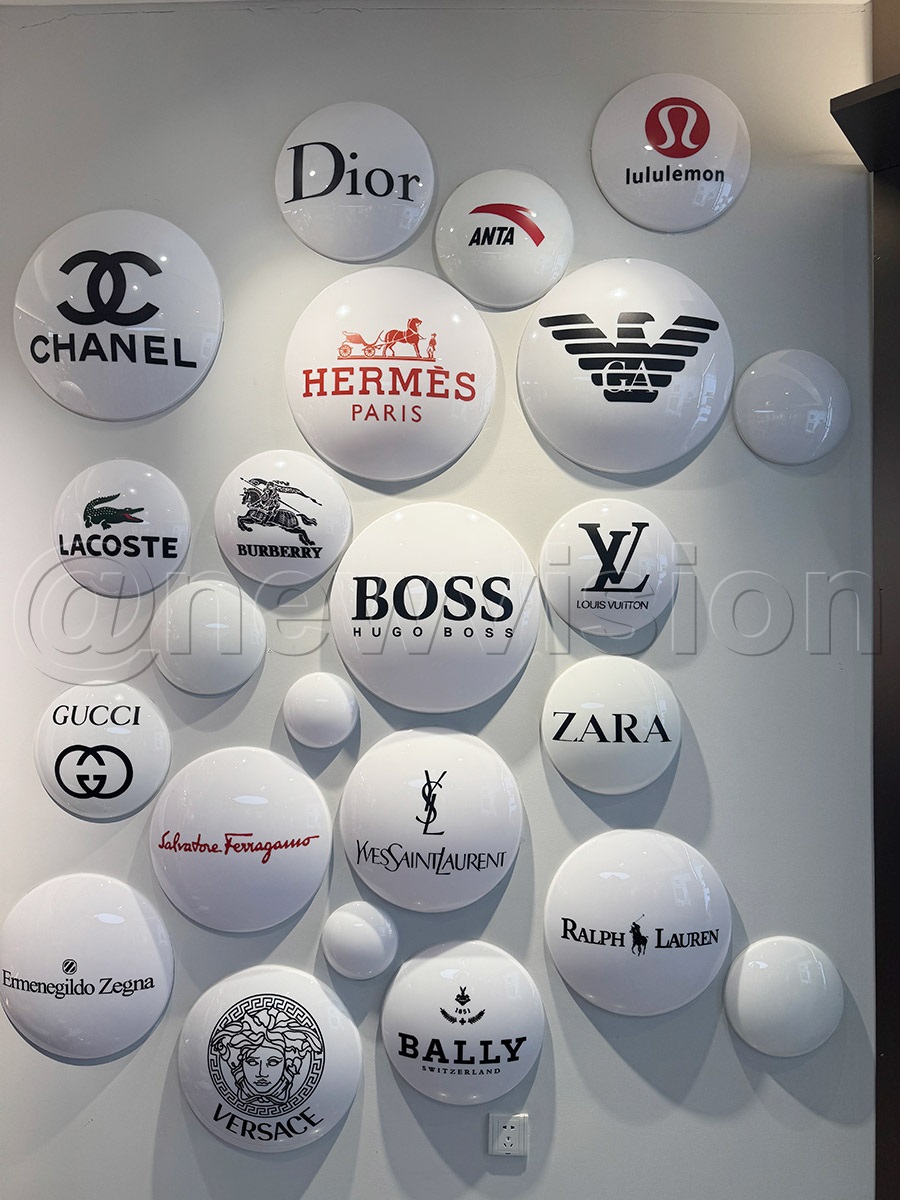
Its TALAK trademark has been registered in international markets, and the company says its high-grade cotton yarn is supplied to and used by apparel brands including Calvin Klein, Hugo Boss, Ralph Lauren, Brooks Brothers, Nautica, Talbots, Uniqlo and Zara.
For consumers, the factory is invisible. They see the shirt, dress or T-shirt in a shop.
But behind that garment is a long supply chain, beginning with cotton and passing through spinning, weaving or knitting, dyeing and finishing before becoming a finished piece of clothing. Wuxi occupies an important part of that chain.
Uganda has built parts of that chain. Fine Spinners, for example, takes cotton from Kasese through spinning, knitting or weaving, dyeing, cutting and sewing at its Kampala facility.

The company says it can produce more than 500,000 garments a month and works with about 16,000 farmers.
It shows that Uganda and other cotton growing African countries, can move beyond exporting raw cotton. The challenge is doing so at much greater scale.
Quality starts with cotton
Modern machines alone cannot produce high-quality yarn. The raw material matters.
Wuxi sources cotton locally in China and imports from countries including Brazil, the United States and Australia.
The company says the quality of the cotton is critical to the quality of the yarn it produces.
“We buy the finest cotton for global clothing brands to make the finest clothes,” Zhu says.
Before cotton enters production, it is tested in the company's central laboratory.
“It is important to select quality cotton,” Zhu says. “We have the experience and expertise to know the best quality.”
The process, therefore, begins long before the cotton reaches the spinning machines.
Good raw material, modern equipment, skilled workers and quality control all have to work together. That has enabled the company to serve demanding international customers.
An old industry with a new approach
The transformation of Wuxi No. 1 Cotton Mill reflects a broader approach to traditional manufacturing in China.
Rather than simply abandoning older industries in favour of new ones, China has increasingly invested in upgrading them.
Textiles are one of the country's oldest manufacturing industries. But the technology used in textile factories has changed enormously.
Cai Yun, chairman of Wuxi No. 1 Cotton Mill Textile Group, was in 2024, quoted by China Daily affirming that while the overall textile production process has remained largely unchanged, the technological content of the equipment has changed significantly.
He noted that improvements in equipment accuracy have greatly increased the output of spinning machinery.
Wuxi has followed that path, investing in automated equipment, digital systems and higher-value products.
Wu Shuokai of the Wuxi municipal bureau of industry and information technology also highlighted the importance of applying new productive forces to traditional industries.
The idea is simple: an industry does not become outdated simply because it is old. It can become more productive through technology.
As a result, Uganda is trying to expand its processing capacity. According to Uganda Investment Authority, NYTIL is planning a 30,000-spindle spinning unit, which would allow more Ugandan cotton to be turned into yarn locally.
The challenge is, therefore, not simply growing more cotton. It is building the machinery, skills, finance, reliable power and markets needed to turn more of that cotton into higher-value products.
Taking the business beyond China
Wuxi's transformation has not stopped at the Chinese border. In 2019, the company established a textile factory in Ethiopia, where it now employs about 600 people.
The investment reflects another feature of China's modern manufacturing story: companies that have built expertise at home are increasingly taking capital, technology and production experience into international markets.
For Wuxi, the goal remains global. “We target the high-end market who go for the fine cotton yarn,” Zhu says.
The company's strategy is to combine smart technology with global business. That strategy has taken a factory founded over 100 years ago into markets thousands of kilometres away.
For Uganda, and Africa the opportunity is to build more of the cotton value chain at home and connect it to international markets. Benin, Mali, Ivory Coast, Cameroon, Burkina Faso, Tanzania, Nigeria, Egypt, Zimbabwe and Chad are among the continent's major producers.
Uganda and the cotton growing African countries have the cotton, farmers and factories. What remains is building the industrial depth and scale around them.
The lesson of a century
The history of Wuxi No. 1 Cotton Mill is of adaptation. The cotton mill has faced changing technology, rising labour costs, growing international competition and changing customer demands.
But each time, it has invested and changed with the industry, continuously making it more productive, more precise and more valuable.
Although Wuxi No. 1 Cotton Mill is still a cotton factory after more than a century, it is no longer the cotton factory that opened its doors in 1919. The industry stayed, the factory stayed, but the way of doing business had to change.