
Bread prices rise as bakers grapple with costly wheat flour
Under the new price review, the wholesale price of a 1kg loaf of bread has increased from sh5,000 to sh5,500, while that of a 500g loaf has risen from sh2,500 to sh3,000.
The interim chairperson of UBA, Dr Canon Gaster Lule, said the new prices would take effect on Monday, November 2, 2026. (Photo by Ronnie Kijjambu)
________________
Members of the Uganda Bakers’ Association (UBA) have increased the wholesale prices of bread in response to rising costs of wheat flour and other baking materials, as businesses struggle to remain afloat amid the rising dollar exchange rate and increasing fuel prices.
Under the new price review, the wholesale price of a 1kg loaf of bread has increased from sh5,000 to sh5,500, while that of a 500g loaf has risen from sh2,500 to sh3,000.
The interim chairperson of UBA, Dr Canon Gaster Lule, said the new prices would take effect on Monday, November 2, 2026.
Speaking to the New Vision after the association’s general meeting on Wednesday (October 28), Lule said the decision followed deliberations on the rising cost of production and the need to sustain bakery businesses.
The interim chairperson of UBA and managing director and co-founder of Ntake Group, Guster Lule, showing wheat grains in the flour milling section of Ntake Group at Nalukolongo Lubaga division, Kampala. (Photo by Ronnie Kijjambu)
Lule, who is also the proprietor of Ntake Bakery and Companies Ltd, said the retail price of a 1kg loaf was expected to range between sh6,000 and sh7,000, depending on the location of the retailer and the market served.
He appealed to retailers not to charge more than sh7,000 for the loaf, noting that consumers were also struggling with the rising cost of living.
“We want our customers to continue affording bread for their families, especially children who enjoy it with tea and carry it to school in the morning,” Lule said.
Rising cost of wheat flour
Lule attributed the price increase to the rising cost of wheat flour, which he said had been increasing since the Russia-Ukraine war began.
He said bakers had absorbed the additional costs for some time while striving to maintain the quality of their products, but the situation had become increasingly difficult.
“The price of flour has been increasing by between one and two dollars since the start of the Russia-Ukraine war. We have been enduring the cost while continuing to produce quality bread for our customers. However, the situation has worsened following the conflict in the Middle East involving the United States, Israel and Iran,” Lule said.
According to Lule, the wholesale price of a carton of wheat flour has risen from sh80,000 to about sh97,000.
He added that other baking ingredients, including baking fat and yeast, had also become more expensive amid pressure on the exchange rate.
Lule said some ships transporting wheat grain through the Port of Mombasa had been forced to use longer routes to avoid the Strait of Hormuz, increasing transportation costs and contributing to higher prices.
Traders feel the pressure
Traders have also reported increases in the prices of wheat and other essential commodities, which they say are affecting both their businesses and consumers.
Nusurah Namukasa, an owner of a bakery shop in downtown Kampala, said the price of wheat flour had increased in retail shops.
“We used to buy a kilogram of wheat flour at sh3,500, but following the increase in the dollar exchange rate, it is now selling at between sh3,800 and sh4,000,” Namukasa said.
Sunde Mayanja, a trader operating in Namugongo, said the price of a 50kg sack of wheat flour had also risen.
He said the sack, which sold for about sh145,000 around May, is now retailing at between sh160,000 and sh165,000 in several shops.
Call for local wheat production
Stakeholders have called for increased local wheat production to reduce the country’s dependence on imported supplies and protect businesses and consumers from fluctuations in international prices.
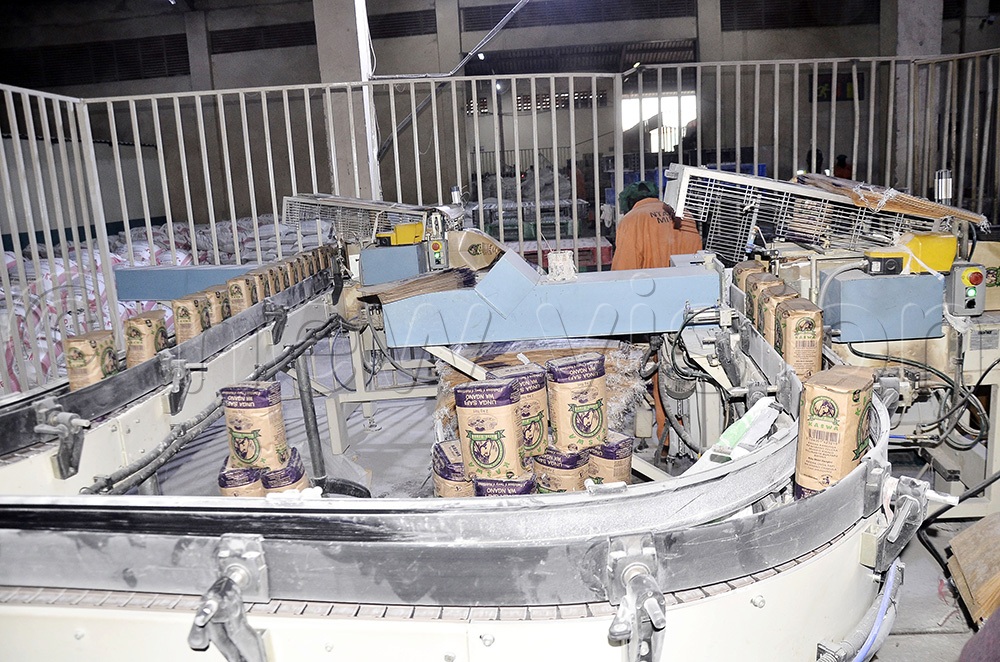
The packing machinery in the flour milling section at Ntake Group in Nalukolongo Lubaga Division, Kampala. (Photo by Ronnie Kijjambu)
Meanwhile, rising food costs have continued to push some young people towards relatively affordable meals such as kikomando and rolex.
Achiles Kayemba, a youth leader in Maya, said many university students and young people living in urban informal settlements relied on these foods to manage their budgets.
He said the meals offered a relatively affordable way to satisfy hunger while saving money in the current economic climate.
Bakers defend the increase
Lule acknowledged that bakery products, including bread, mandazi, chapati and cakes, remained important to many households because they were convenient and relatively easy to prepare, carry and consume.
He said bread and other bakery products provided convenient accompaniments to tea, particularly for families and people with limited time to prepare meals.
However, he noted that Uganda’s heavy reliance on imported wheat made local consumers vulnerable to international price changes and currency fluctuations.
Lule said expanding local food production, including the use of alternatives such as cassava, sweet potatoes and matooke, could help reduce pressure on households.
He also referred to recent advice from President Yoweri Museveni and the Secretary to the Treasury, Ramathan Ggoobi, encouraging Ugandans to consider locally available food alternatives amid economic pressures.
Lule, however, said expanding local wheat production would require access to sufficient land and the capacity to farm on a commercial scale.
He urged consumers to bear with the new prices, describing the sh500 increase in the wholesale price of a 1kg loaf as a necessary adjustment to help bakers meet rising production costs.
He said the association hoped the situation would improve as the dollar exchange rate stabilised.