
BOU says technology can cut the cost of financial services
“Artificial intelligence can support fraud detection and service provision. Open Banking and Open Finance may create opportunities for customers to benefit from the secure, consent based sharing of their financial information,” Nuwagaba said.
Speaking at the Annual Financial Inclusion and Financial Literacy Forum 2026 at Four Points by Sheraton in Kampala on Thursday, Nuwagaba said: “Technology offers opportunities to reduce costs, improve service delivery and reach underserved populations.”
KAMPALA - Technology offers a chance to bring down costs in the financial market, improve services and reach people who are still left out, Bank of Uganda (BOU) Deputy Governor Augustus Nuwagaba has said.
Speaking at the Annual Financial Inclusion and Financial Literacy Forum 2026 at Four Points by Sheraton in Kampala on Thursday, Nuwagaba said: “Technology offers opportunities to reduce costs, improve service delivery and reach underserved populations.”
He said that artificial intelligence (AI) and Open Banking are key areas to watch as areas that will determine the future of banking globally.
“Artificial intelligence can support fraud detection and service provision. Open Banking and Open Finance may create opportunities for customers to benefit from the secure, consent based sharing of their financial information,” he said.
But Nuwagaba also warned that the gains come with risks that must be handled early. Cyber threats, he admitted, are a constant worry for the central bank.
“These opportunities require careful attention to safeguards. Customers need to understand how their data are used and how decisions affecting them can be challenged. Privacy, security, fairness and accountability must be considered from the outset,” he said.
Cost of credit
Wilbroad Owor, executive director at Uganda Bankers Association said: “I think we should also speak about the cost at which this financial service is made available. As an ecosystem we use technology not only to extend reach but also bring about efficiency.
“We see that in the medium term the domestic borrowing should reduce and ultimately bring down the cost of lending this money so that it is much cheaper. I think product, the cost and most importantly the underlying aspects for which this money can then be used.”
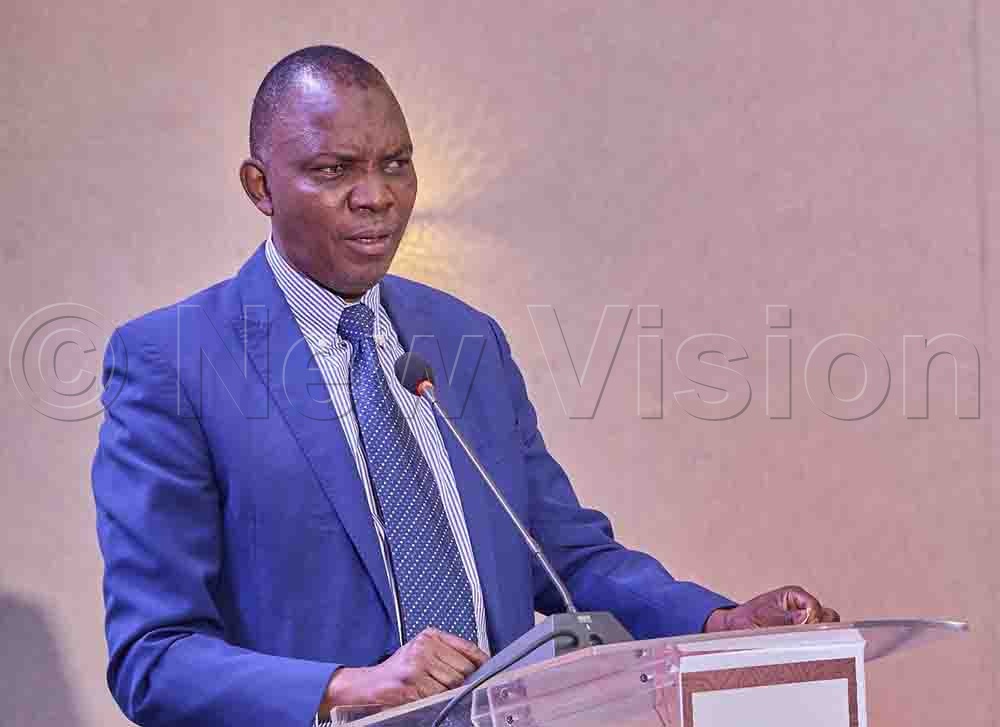
Moses Kaggwa
On financial literacy, Nuwagaba said the National Strategy for Financial Literacy III gives the country a framework for more coordinated action, but its success depends on timing.
Government points to tax changes
Finance Minister Henry Musasizi, who was represented by Moses Kaggwa, director, economic affairs, said financial inclusion and literacy are central to Uganda’s development plans.
“Financial inclusion and financial literacy are critical for the realization of the NDP IV, the Tenfold Growth Strategy, and is a major focus in the NRM Manifesto to transform households from subsistence to the money economy,” he said.
He said the vision is being carried out through programmes such as the Parish Development Model (PDM), Emyooga and Operation Wealth Creation, which focuses on agricultural inputs, boosting productivity and linking smallholder farmers to markets.
Musasizi said the government has also changed tax rules to make borrowing cheaper for small businesses.
“To increase access to financial services by micro, small and medium-size enterprises, Government in 2025 amended the Income Tax Act to recognize Tier 4 microfinance institutions and SACCOs in the treatment of allowable tax deductions,” he said.
“In addition, the 2025 stamp duty amendment provides for zero stamp duty on all loans. These measures are aimed at increasing access and reducing the cost of borrowing to promote productivity and growth of MSMEs.”