
Accounting officers trained as Uganda expands electronic procurement system
Speaking during the opening of the training today (Monday), Acting Accountant General, Godfrey Ssemugooma, said accounting officers play a critical role in ensuring the reforms succeed because procurement laws place ultimate responsibility on them.
Some of the accounting officers from different government entities undergoing the e-GP training at the Ministry of Finance on Monday. (Photos by Aloysious Kasoma)
________________
The Government has begun training accounting officers from 100 public entities on the Electronic Government Procurement (e-GP) System in a major step towards digitising public procurement, enhancing transparency and improving accountability in the use of public funds.
The three-day training, organised by the Ministry of Finance, Planning and Economic Development in partnership with the Public Procurement and Disposal of Public Assets Authority (PPDA), the Ministry of ICT and National Guidance, and the National Information Technology Authority-Uganda (NITA-U), targets permanent secretaries, chief executive officers and heads of government institutions who are legally responsible for procurement decisions.
The programme follows the successful rollout of the e-GP platform to 36 government entities and marks the next phase of Uganda's migration from paper-based procurement to a fully electronic system.
Speaking during the opening of the training today (Monday), Acting Accountant General, Godfrey Ssemugooma, said accounting officers play a critical role in ensuring the reforms succeed because procurement laws place ultimate responsibility on them.
"Our procurement laws place responsibility on accounting officers. They cannot effectively discharge those responsibilities without being empowered to use the Electronic Government Procurement System. This training is only the beginning as we prepare to onboard even more entities during this financial year," Ssemugooma said.
He explained that once institutions join the platform, they will no longer rely on newspaper advertisements, physical bid submissions, manual evaluations or paper-based contract signing. Instead, the entire procurement cycle will be conducted electronically, reducing paperwork, shortening procurement timelines and improving efficiency.
Mugisha Functional Support training accounting officers 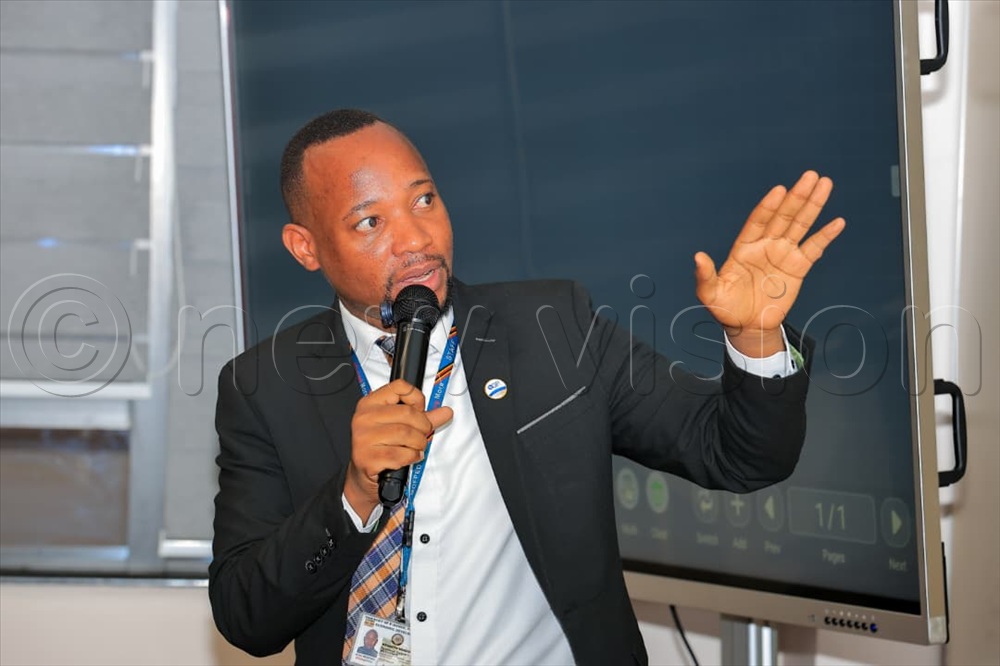
Ssemugooma noted that automation is expected to significantly reduce corruption by limiting direct interaction between procurement officials and bidders while introducing automatic verification of suppliers through integrations with the Uganda Revenue Authority (URA), Uganda Registration Services Bureau (URSB), National Identification and Registration Authority (NIRA) and the National Social Security Fund (NSSF).
"Every time you automate a process, you minimise human contact, and it is often that human interaction that creates opportunities for corruption. The system automatically verifies suppliers, making it much harder to submit forged documents or manipulate procurement records," he said.
He added that every action on the platform leaves a permanent electronic audit trail, enabling oversight institutions to monitor procurement activities more effectively while improving transparency and accountability.
According to Mariam Baluka, Acting Director of Procurement and Disposal Capacity Building at PPDA, the rollout introduces e-GP Version 2.0, which incorporates feedback from users of the initial system to improve usability.
"We listened to the experiences of government entities and service providers using Version 1.0 and incorporated their feedback into Version 2.0. The new platform has easier navigation, voice-guided registration and embedded YouTube tutorials to support users," Baluka said.
She said PPDA has established an extensive support programme that includes online training, dedicated technical officers assigned to each entity and collaboration with the Ministry of Finance's regional Treasury Service Centres to provide continuous assistance to both government institutions and private sector suppliers.
Baluka said the transition to electronic procurement will continue in phases until all government entities are connected.
"We started with 36 entities and have now added another 100. Every financial year, more entities will be onboarded until the entire Government is operating on the Electronic Government Procurement System. Our goal is to fully digitalise public procurement," she said.
She urged suppliers interested in government business to register on the e-GP platform, noting that institutions already operating under the system no longer advertise tenders in newspapers and can only transact with registered providers.
The national e-GP training programme is designed to equip accounting officers, procurement professionals and private sector suppliers with the skills required to use Uganda's online procurement platform, paving the way for faster, more transparent and efficient public procurement across government.