
84,000 young women targeted to unlock Uganda’s creative economy
The programme’s first-year results, covering October 2025 to September 2026, reached 5,521 young people through work-enabling outreach, supported 699 young people into work, and helped 61 creative enterprises grow and formalise.
Some of the products developed by members of the first cohort on display during the exhibition. (Courtesy)
________________________ Bernard Bakaye Lubega. (Courtesy) Panel discussion. (Courtesy)
Uganda’s creative economy is emerging as a potential source of employment and income for young women, with a three-year programme targeting 84,000 young women creatives and reporting 699 young people in work during its first year.
The CREATE programme, led by the International Trade Centre (ITC) and Bayimba Foundation in partnership with the Mastercard Foundation under the Young Africa Works initiative, seeks to equip young women with market-relevant skills, improve access to finance and connect them to employment opportunities across the creative industries.
Bernard Bakaye Lubega, Commissioner for Culture and Family Affairs at the gender ministry, says the Government has a responsibility to create an environment in which creative enterprises could thrive.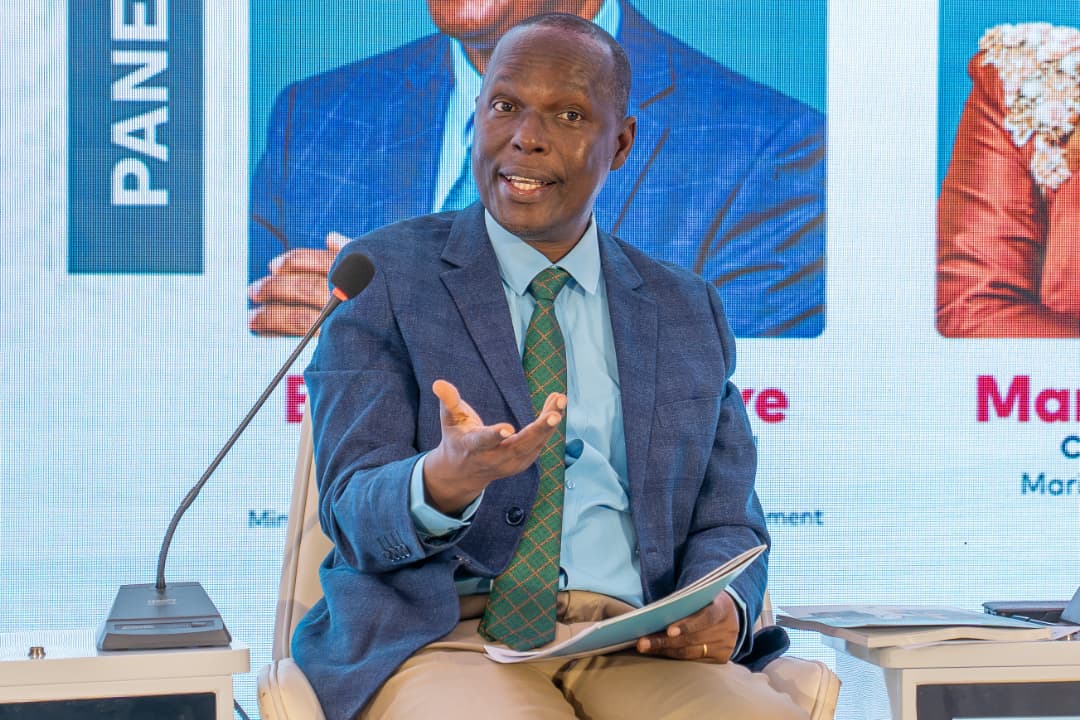
“We need for supportive policies, accessible financial channels and stronger training infrastructure.”
“Universities and other institutions should pay greater attention to the skills required by creative industries,” he added.
Lubega was addressing young creatives during a CREATE Media Café at Golden Tulip Hotel in Kampala, October 26, 2026.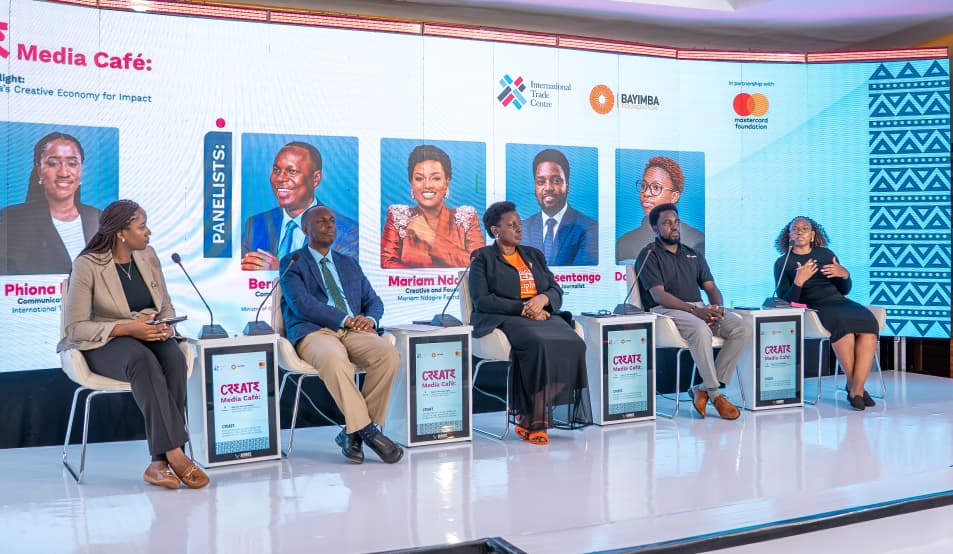
He also stressed the importance of market access, noting that producing quality creative work was not enough if creators could not sell it.
His remarks highlighted a central challenge facing the sector: connecting talent and training to viable markets, investment and sustainable business opportunities.
Strengthening public understanding
Meanwhile, organisers engaged journalists on how to strengthen public understanding of the creative economy’s contribution to Uganda’s development.
Beyond entertainment, the initiative seeks to position creativity as a viable economic sector capable of generating jobs, growing businesses and improving livelihoods.
Uganda’s creative economy attracts many young people, including women, partly because entry into the sector can be relatively accessible. However, much of the industry remains informal, underfinanced and undervalued.
Young women face barriers including limited access to capital and collateral, training that does not always reflect evolving digital practices, inadequate protection of their work and social attitudes that often dismiss creative careers as unserious.
CREATE aims to address these challenges by reaching 84,000 young women creatives, supporting 40,000 to access dignified and fulfilling work, and training 76,000 in market-relevant skills across 13 districts in urban and rural Uganda.
The programme’s first-year results, covering October 2025 to September 2026, reached 5,521 young people through work-enabling outreach, supported 699 young people into work, and helped 61 creative enterprises grow and formalise. It also handed a draft National Creative Industries Strategy to government.
Growth potential
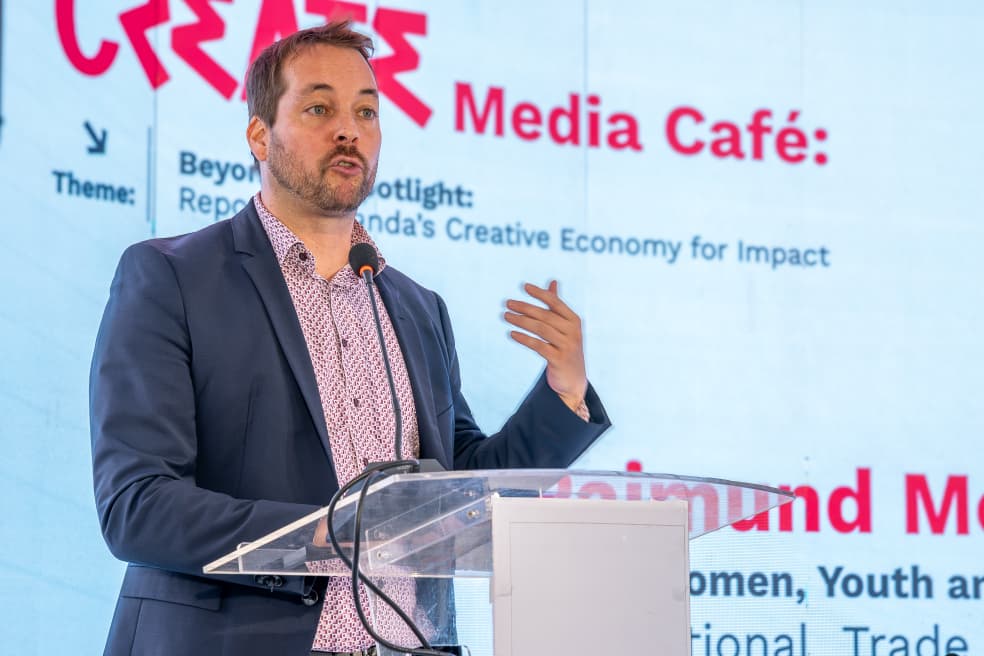
Raimund Moser, Section Chief at the International Trade Centre (ITC). (Courtesy)
Raimund Moser, section chief at the International Trade Centre, said the initiative was designed to help young people, particularly women, acquire skills and find decent jobs in a sector with considerable growth potential.
“The creative economy sometimes suffers from still a perception of being more of a hobby, of a pastime, of an entertainment, and not so much of a business,” Moser said.
He said engagement with the media was important in highlighting the sector’s contribution to economic growth, value addition and employment.
Practical skills open doors for young women
For Mariam Ndagire, founder of the Mariam Ndagire Film and Performing Arts Centre, practical training is essential to helping young creatives compete for opportunities in the industry.
Through CREATE, she trained 44 young women in theatre-related disciplines during the programme’s first year.
The training covers acting, writing, directing, production management, set design, lighting and sound, equipping participants with multiple skills that can broaden their employment prospects.
“I want you to have very many things because that is how I've survived in this industry,” she said.
She welcomed the programme’s financial support, explaining that it enables training to be delivered more intensively through classes and a two-week boot camp.
Ndagire believes sustained investment in skills, infrastructure and supportive policies could help Uganda build a stronger film industry, drawing parallels with Nigeria’s Nollywood.
“Uganda has got talent, that is for sure,” she said, adding that the country's stories and growing pool of young creatives could support the industry's expansion.
She said demonstrating that creative careers can provide sustainable incomes would also encourage parents to support young people pursuing them.
Early gains point to wider potential
Deborah Asikeit, project manager for the Creative Industries Project at ITC, said the programme had begun to demonstrate how training could help young women transition from unemployment into work.
With more than 10 partners involved, CREATE is also exploring how partnerships can strengthen the sector and increase its contribution to Uganda’s gross domestic product.
Asikeit said the proposed national creative industries strategy could help government provide more structured support while encouraging private-sector investment and improving access to finance and markets.
Winnie Nandawula, a CREATE participant, said the skills she acquired had helped her access opportunities she had long wanted to pursue.
Her sewing skills have enabled her to work with clients including Miss Uganda, Little Misses and members of Parliament.
“For a young woman like me, achieving this is great,” she said, pointing to the opportunities that practical skills can create.
Actress Selin Audo also welcomed the engagement, saying such initiatives give creatives greater visibility and relevance. She encouraged young creatives to take advantage of similar opportunities.
As CREATE moves into its second year, its longer-term significance will depend on whether training translates into sustained employment, stronger creative enterprises and improved incomes.