
From Chengdu to Zhoushan: What China taught me about development
Leading a delegation from the Union of Comoros and consular staff on a benchmarking mission, Bashasha says he travelled through Chengdu, Nanjing, Suzhou, Ningbo and Zhoushan, where I encountered a nation that has made development a deliberate and disciplined national project.
Bashasha says China's success has also been shaped by its willingness to study global experiences, adapt useful ideas to local realities and gradually build a model suited to its own circumstances.
By Professor Alex Bashasha
A recent 12-day visit to China offered far more than a glimpse of world-class infrastructure and technological advancement.
Leading a delegation from the Union of Comoros and consular staff on a benchmarking mission, I travelled through Chengdu, Nanjing, Suzhou, Ningbo and Zhoushan, where I encountered a nation that has made development a deliberate and disciplined national project.
Beyond the skyscrapers, high-speed rail networks and modern industrial parks lies a culture of planning, organisation and long-term thinking that has transformed China into one of the world's most remarkable development success stories.
What impressed me most was not the scale of China's achievements but the principles underpinning them.
The journey revealed valuable lessons in governance, human capital development, innovation and strategic foresight that are highly relevant for countries seeking sustainable economic transformation.
China's rise is not the product of chance. It is the result of clear priorities, consistent policy implementation and an unwavering commitment to continuous improvement.
Like many first-time visitors, I arrived with certain assumptions. I left with a different perspective. What struck me most was that China's development story is not a miracle. It is a story of deliberate choices, long-term thinking, and a national willingness to learn, adapt and keep moving forward.
Before departing Uganda, we underwent mandatory medical screening. On arrival at Chengdu Tianfu International Airport, we encountered another layer of health checks before entering the country.
At first, it seemed like a routine procedure. But as the journey progressed, it became clear that China places significant emphasis on prevention rather than reaction. Whether in health, transport, urban planning or disaster management, the philosophy appeared consistent: anticipate problems before they happen.
One of my most memorable experiences came in Nanjing. Like many African travellers arriving from rapidly expanding cities, I expected congestion and urban disorder. Instead, I found a city that felt remarkably organised.
The roads flowed smoothly. Public parks blended naturally into the urban landscape. Parking areas appeared carefully planned. Streets were clean and well maintained. The experience prompted an uncomfortable question: Must a country become rich before it becomes organised?
Organisation itself can be part of the development process. Discipline, planning and efficient management are not luxuries reserved for wealthy societies. They are often among the foundations that create prosperity in the first place.
As we watched traffic move efficiently through busy intersections, I realised that development is not simply measured by income levels. Sometimes it is reflected in how a society manages everyday life.
Travelling by road through Nanjing, Suzhou, Hangzhou and Zhoushan became a moving classroom. For more than 500 kilometres, we passed highways, industrial parks, rail networks and logistics centres that appeared designed for future needs rather than current demands.
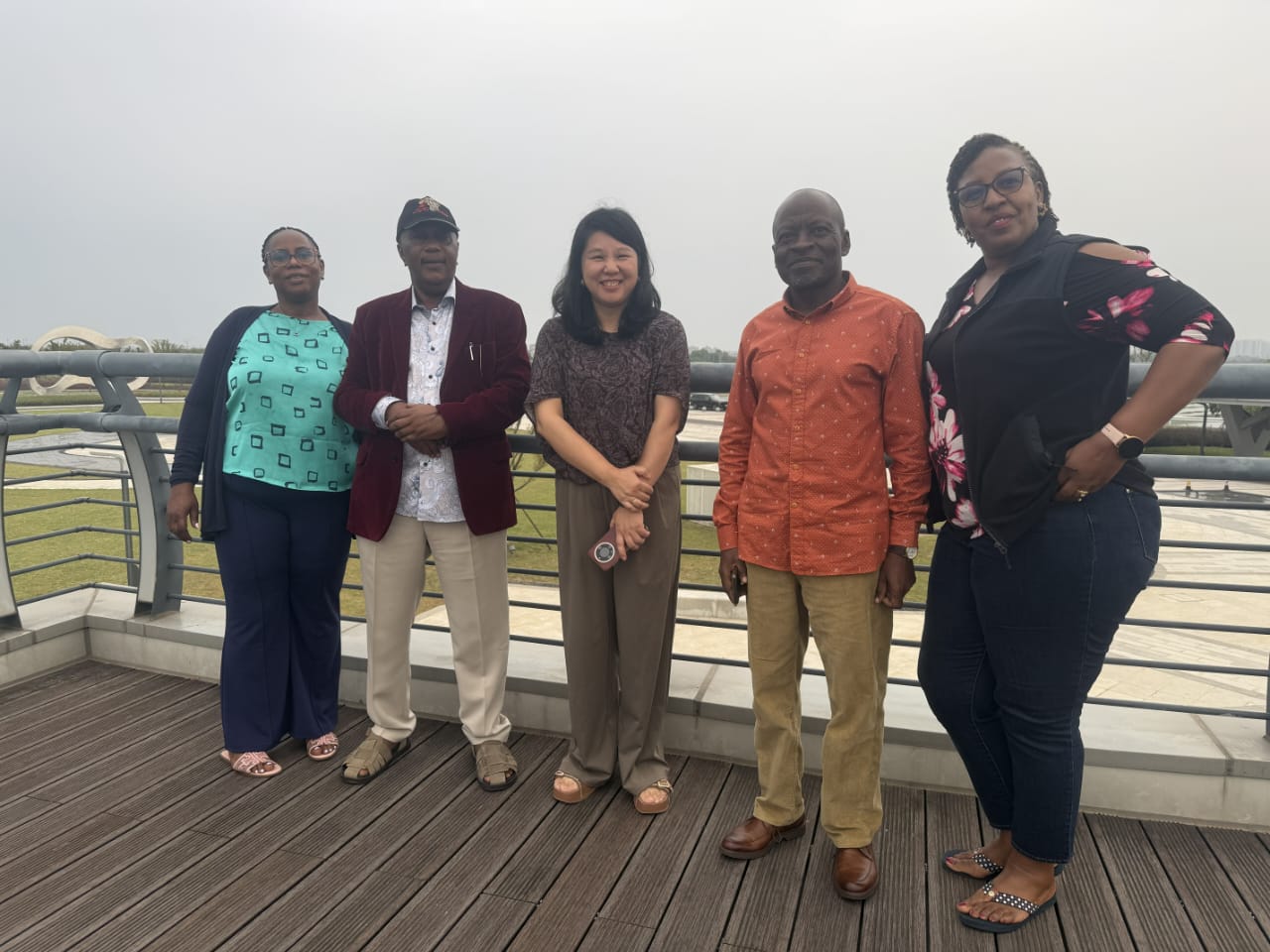
We visited facilities maintained specifically for people who may be displaced by natural disasters. Though empty during our visit, they were fully furnished and ready for emergency use.
At the Central Digital Broadcast Centre in Nanjing, we observed sophisticated communication systems capable of supporting emergency alerts, weather monitoring and coordinated public messaging. The emphasis was clear: prepare before disaster strikes.
For visitors from countries that often respond to emergencies after they occur, this proactive approach offered valuable food for thought.
It is easy to look at China's modern cities and assume that highways, railways and towering buildings are the secret behind its success. Yet our visit revealed something deeper.
At the Zhoushan shipbuilding yard, which employs more than 32,000 workers, we witnessed an impressive ecosystem of specialised talent working in coordination. Engineers, researchers, accountants, technicians, plumbers, safety specialists and managers all contributed to a sophisticated production process.
The experience reinforced an important truth: people remain the most important infrastructure of all. China's achievements are not simply products of investment. They are products of skilled, organised and well-trained human capital.
Another surprising lesson emerged from discussions about China's economic history. Before becoming an industrial giant, China first focused on improving agricultural productivity.
Agricultural reforms strengthened food security, increased efficiency and helped create the conditions necessary for industrialisation.
As an African visitor, I found this particularly relevant. Too often, agriculture and industry are presented as competing priorities. China's experience suggests they can be complementary.
Modern agriculture can generate the surplus, employment and raw materials that support broader economic transformation.
Technology was another recurring theme throughout our travels.
From administrative services to communication systems, digital platforms were integrated into many aspects of daily governance.
What impressed me was not the technology itself but its purpose. Digital tools were being used to reduce inefficiency, simplify service delivery and improve information management.
The lesson was simple: technology is most useful when it solves real problems.
China is increasingly known not only for manufacturing but also for innovation.
Throughout our journey, conversations frequently turned to electric vehicles, renewable energy, artificial intelligence, advanced manufacturing and research.
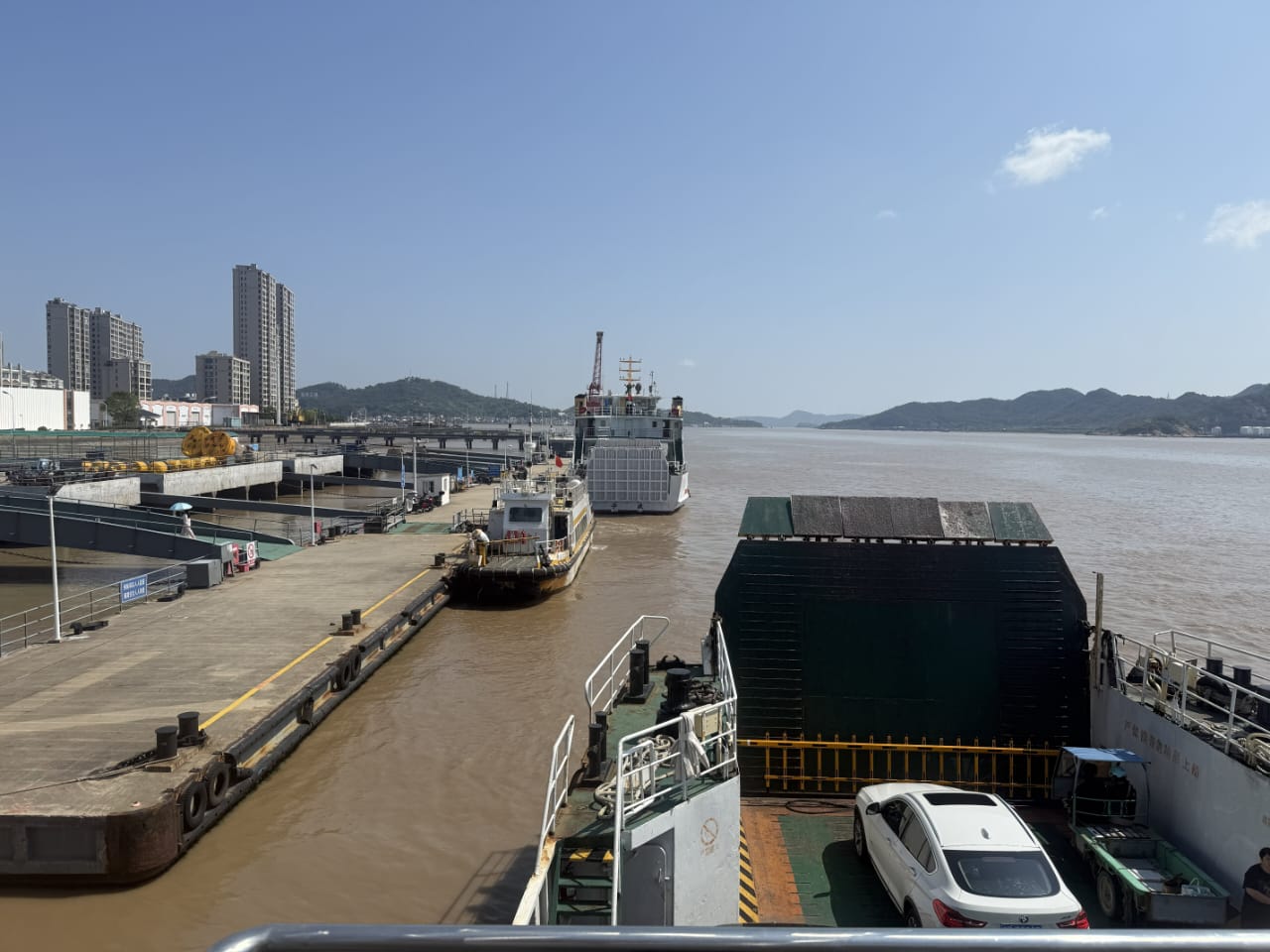
For developing economies, the message is clear. Long-term competitiveness will depend not only on natural resources and labour but also on knowledge, innovation and the ability to create value.
What became increasingly apparent during our visit was that these achievements did not emerge in isolation. They are rooted in a distinct development and leadership model that places strong emphasis on long-term planning, policy consistency, strategic state coordination and the careful alignment of national priorities.
China's leaders have pursued development through successive national plans, investing heavily in infrastructure, education, technology, industrialisation and poverty reduction while maintaining a clear long-term vision.
Rather than focusing solely on short-term political gains, the system places significant emphasis on continuity, implementation and measurable outcomes.
Chinese scholars have increasingly debated the concept of neo-authoritarianism as a transitional phase between traditional autocracy and a more liberal political order.
Whatever one's view of that debate, there is little doubt that strong state coordination, policy consistency and long-term planning have played a central role in China's transformation.
China's success has also been shaped by its willingness to study global experiences, adapt useful ideas to local realities and gradually build a model suited to its own circumstances.
It neither copied other countries wholesale nor rejected external lessons. Instead, it learned, modified and innovated.
That approach mirrors a philosophy our delegation has often discussed: copy, translate and roll out. Learn what works elsewhere, adapt it to local needs and execute it consistently.
As our visit concluded in Chengdu with meetings between African and Chinese business leaders, I found myself reflecting on everything we had seen. China is not perfect. Like every nation, it faces challenges, including demographic shifts, economic pressures and changing global dynamics.
Yet the most important lesson from China is not its skyscrapers, high-speed railways or modern factories. The true lesson lies in the development philosophy and leadership model that made those achievements possible.
China's transformation is largely the result of purposeful leadership, long-term national planning, disciplined implementation and an unwavering commitment to investing in people, innovation and productive capacity.
The country's experience demonstrates that development is not accidental. It requires visionary leadership, institutional discipline and the determination to think beyond immediate political and economic pressures.
As our aircraft lifted off for the journey back to Uganda, I carried home more than photographs and souvenirs.
I carried a renewed conviction that nations rise when leadership provides a clear direction, institutions execute that vision consistently, and citizens are empowered to contribute to a shared national purpose.
In many ways, that may be China's most valuable lesson for the developing world.
The writer is the Director General, TABKEN Consults on Development.