
West Nile women building poultry sector from scratch
A group of women in West Nile are now up in arms to disrupt this capital flight from the region’s economy. Their farming method is tested for success amidst the changing geographical weather conditions of the area.
Ayikosi poultry Framers group in Arua city
__________________
West Nile has imported the bulk of its poultry products from the neighbouring sub-regions, including Acholi, Lango and Bunyoro, for many years.
Sector players estimate the annual expenditure on poultry products to be sh2 billion every year in eggs, meat and, to a lesser extent, feeds and veterinary drugs.
A group of women in West Nile are now up in arms to disrupt this capital flight from the region’s economy. Their farming method is tested for success, amidst the changing geographical weather conditions of the area.
Their inspiration is not from outside the sub-region, but just within.
Alice Oriba leads Crown Ventures Poultry Farm, located in Yabiavoko Ward on the outskirts of Arua City, sitting on about four acres of land along the valley of a small stream, which moderates the micro-climate of the area.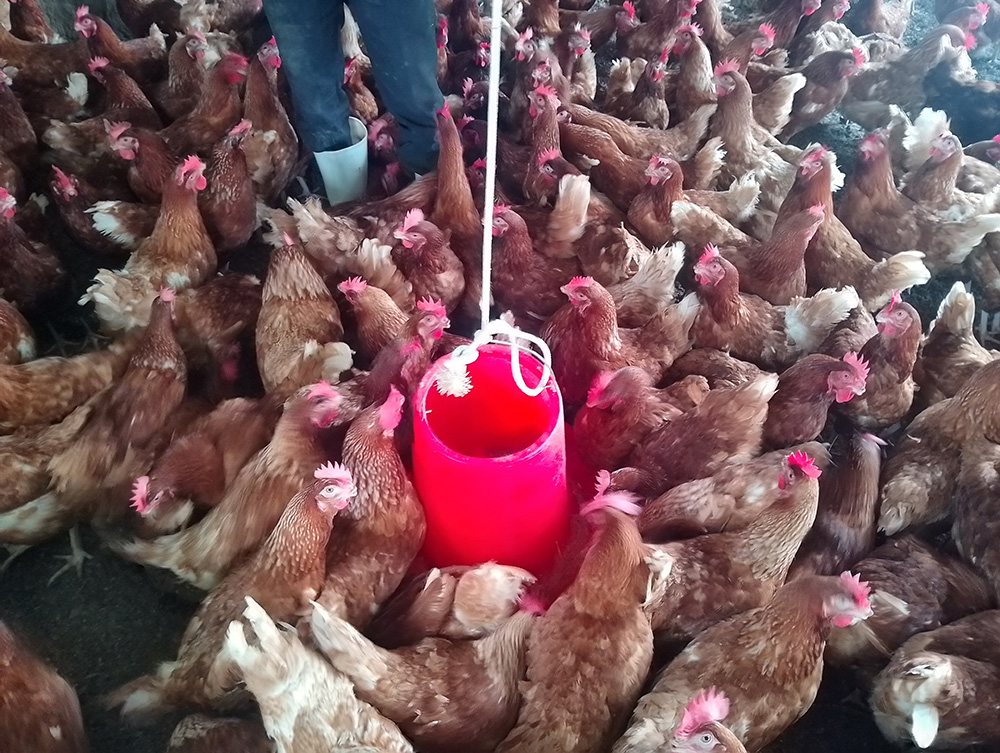
Layers crowding around a feeder at Lanora Poultry Farm in Arua District
Layer chicken take turns to peck at feeds meant to stimulate egg production. The farm owners paint the house red like the bricks used in constructing their weatherproof shelters. The structure is made of double burglar-proof wire mesh running across the vast aeration windows, regulated by giant polythene bags during cold evenings and nights. There are automated water drinking lines equipped with taps running overhead.
“These are not just water drinkers. They are the lifeline of poultry. We administer vitamins and medications through them. They are like life-saving cannulas to humans," Oriba proclaims.
A convoy of cars- a minibus and two vans transporting agriculture reporters are on a tour of the poultry farm in West Nile. Up to 20,000 chicken are being reared inside two large rooms.
Biosecurity measures
Tucked inside two well-manned security gates, the success of the farm goes beyond physical security. Just outside the first gate is a pool of water many journalists mistook for poor sanitation practice. Oriba then politely requests everyone to disembark and wade their shoe soles in this water mixed with disinfectants. “It is a bio-security measure we implement to prevent infections to the birds. We should have asked you to first bathe from our sanitary area before you access the project,” she says.
Cars drive through the same pool of water. The practice is not just a mandatory wheel wash, but a recommended bio-security measure aimed at keeping pathogens responsible for lethal outbreaks like Newcastle disease or Coccidiosis at bay. Blended with other best practices, including ensuring the quality of feeds, the women farmers are guaranteed profits.
Birds raised by Crown Ventures are distributed to rural groups located in different locations when they are ready to start laying eggs.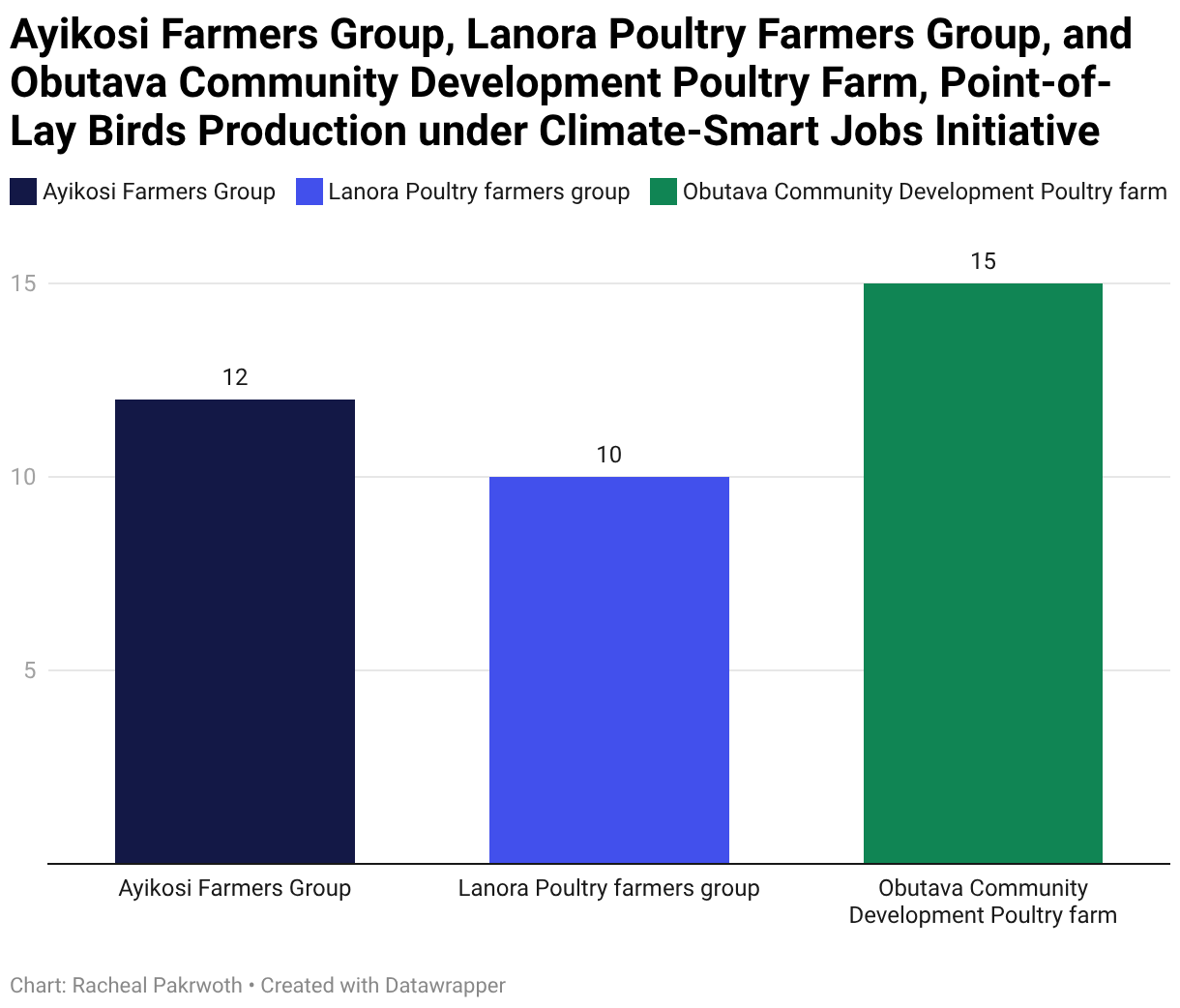
Ayikosi Farmers Group, Lanora Poultry Farmers Group, and Obutava Community Development Poultry Farm Point Of Lay Birds Production under Climate Smart Jobs Initiative
The groups receive the layers at no cost, manage them for a period until they start declining in egg productivity.
Throughout the period of egg production, the supplier of the layers buys the eggs at a subsidised price from the grassroots farmers and sells the eggs to buyers at the prevailing market price, hence making profits.
A 2025 report by the Arua District Production Department indicated that over 90% of smallholder (village) chicken farmers in West Nile experience disease problems, with Newcastle being the biggest threat to poultry production in the area.
Poultry Loss Drivers
As disease outbreaks get worse with changing weather, hotter temperatures or erratic rains lead to more pathogens breeding and spreading quickly among poultry. Thus, biosecurity is not just farm management anymore; it is climate adaptation.
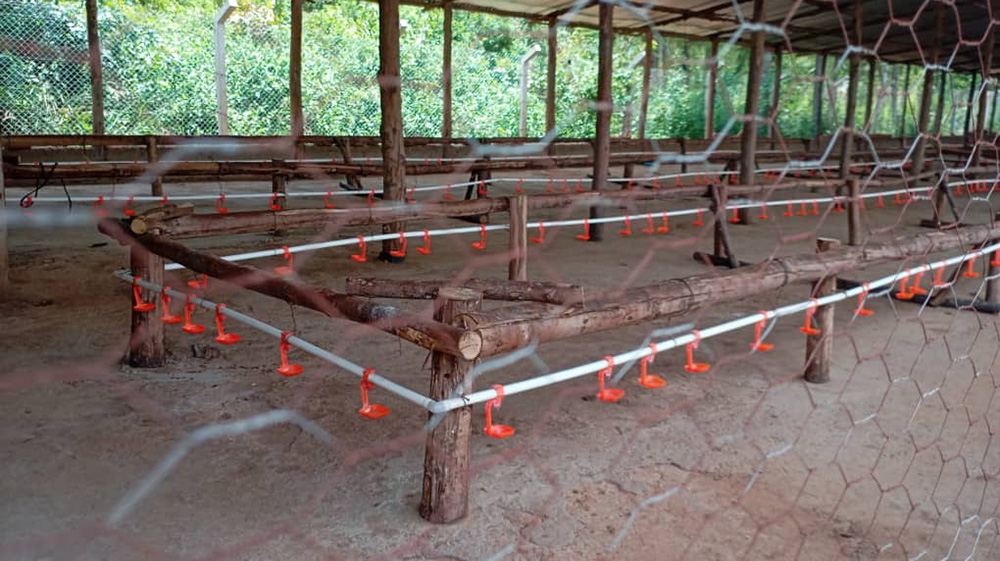
Drinkers used for providing water in a poultry farm
Collins Angujabo, an extension worker from Celavie Livestock Hub, says, “rapid change in temperature or extreme rainfall creates conditions for viruses to survive and spread among the flock.”
Celavie Livestock Hub trains farmers to always be alert in case of sudden changes in weather to prevent diseases. Robust routine vaccination schedules must be adhered to in addition to allowing birds access to immune-boosting vaccines or vitamins every month. Litter must be removed on schedule, as the environment around the poultry house is controlled for pests capable of hosting or transporting disease-causing organisms to the chicken. The buildup of ammonia in chicken houses is also dangerous and can cause respiratory distress to the chicken. Ammonia is a toxic gas produced from manure decomposition that can harm poultry health, reduce productivity, and pose environmental risks.
At all project sites, early warning systems exist for extension staff to swiftly mitigate damage to the project through isolation of sick birds for treatment.
Ayikosi Women Farmers group derives its name from the local Lugbara language word 'Ayikosi', which means “with happiness.” They are part of this revolutionary network of climate smart poultry farming initiative, supported by Climate Smart Jobs, a project whose focus is on Northern Uganda as part of the UK's International Climate Finance commitment. The project objective is to support large-scale job creation in the agri-business sector, with the aim of improving productivity and/or incomes in agriculture.
Alice Badaru, the chairperson of the group found at Euata Village in Eruba Parish within Vurra Sub-County, Arua District, says; “through intensive trainings, they have managed to control disease outbreaks and progress in business.”
A 2020 survey by the National Livestock Resources Research Institute shows that about 80% of Uganda's poultry consists of indigenous breeds kept by rural households.
Majority of these farmers lack knowledge on disease prevention and best farming practices. Unvaccinated flocks in rural areas suffer mortality rates of up to 40%, the research found.
The report also indicates that about 91.7% of Ugandan farmers are aware of diseases like Newcastle, but many lack access to veterinary services. The farmers have never used chicken vaccines, yet vaccinated flocks see mortality rates drop to 2-5%.
The report further observes that farmers also lack knowledge on proper storage and transport (maintaining the "cold chain" as a result, vaccines often lose effectiveness, leading to bird deaths, yet vaccinating against Newcastle Disease boosts flock egg production by 80%).
Members of Lanora Poultry Farmers Group in Tilevu Yivu East Village, Tilevu Parish, Arua District, are among several grassroots smallholder farmers changing their narratives after attending the training under the auspices of Climate Smart Jobs.
Household Impact
Esau Ozimati, a member of Lanora Poultry Farmers Group, which consists of three women and three men, is one of many happy farmers under the network.
“We have fenced off our poultry house to avoid unnecessary contacts with stray livestock and humans, and we have specific changing attires and garments, including gumboots for us or visitors to wear before accessing the vital area of the poultry house,” says Ozimati.
She says that distance from the city is her first vaccine because it cushions her from random visitors and stray chicken, hence serving as a disease prevention measure. Oriba continues to pass on these ideas to the grassroots poultry farmers.
Using improved or standard poultry housing does not only help curtail disease outbreaks; it also increases flock size.
Chicken drink about twice as much as they eat. Additionally, an egg is about 70% water. If laying hens do not have steady access to water, they will lay fewer eggs, and the shells will become thin or break easily.
According to Oriba, if the water is dirty and full of germs, diseases are easily spread; hence, farms require constant clean water to keep birds healthy.
Because of this, local farmers' groups have not taken the idea of constant and alternative water sources lightly.
According to Ozimati, a drilled shallow well and solar-powered water system that supplies water to a tank ready for distribution to the poultry house does the work for the members of Lanora Poultry Farmers Group.
Badaru of Ayikosi Women Poultry Farmers Group also testifies that constant water supply to her chicken is life for them; a reason her group outrightly embraced the idea of harvesting rainwater through a water tank the group acquired. “This tank has enabled our poultry to get constant clean water,” she narrates.
Celavie Poultry Farm's Angujabo believes helping farmers creates alternatives that save them amid serious challenges of water scarcity. This is true with Obutava Community Development Poultry Farm in Maracha District, which currently manages about 1,000 birds. The group has 15 members.
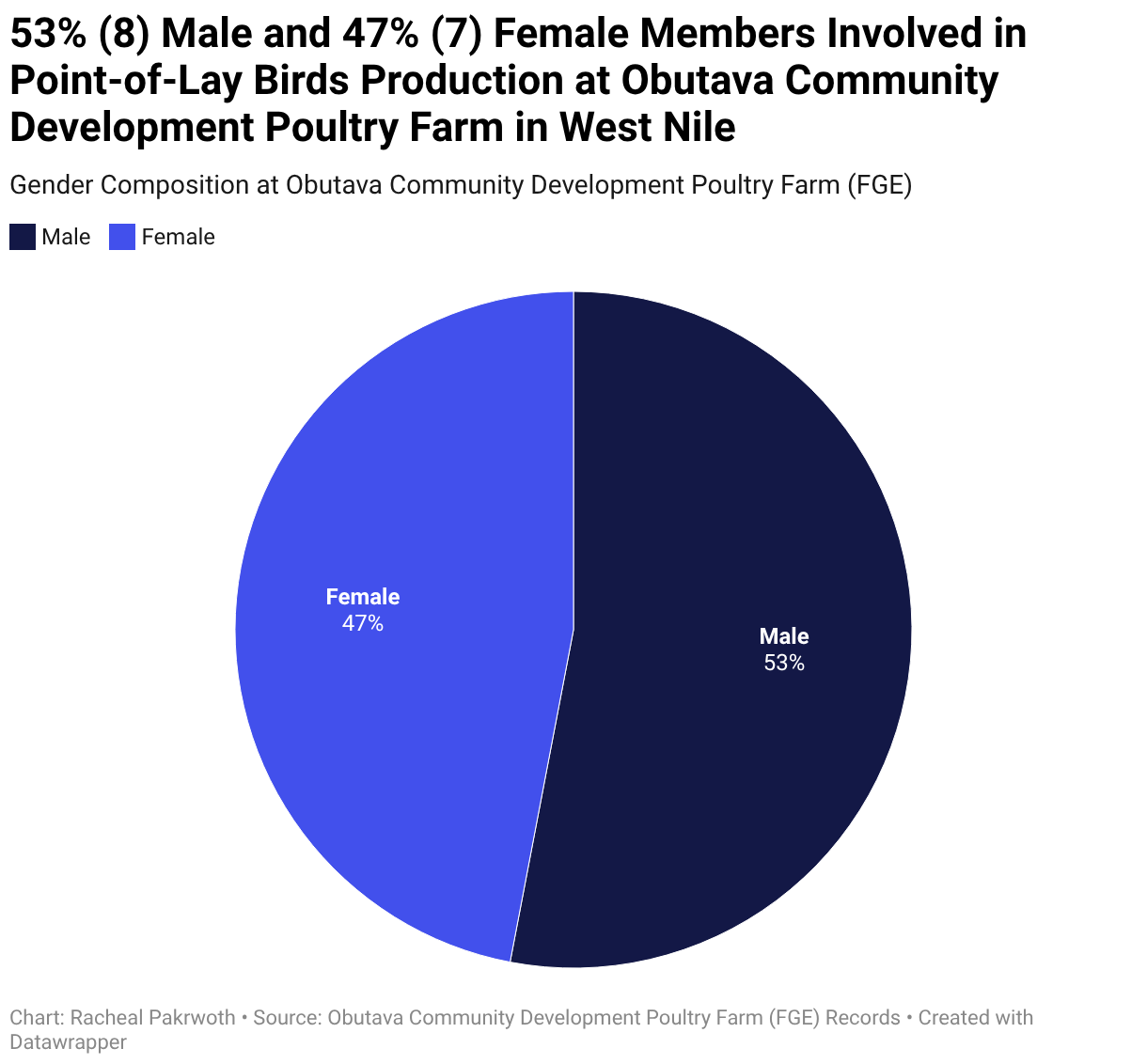
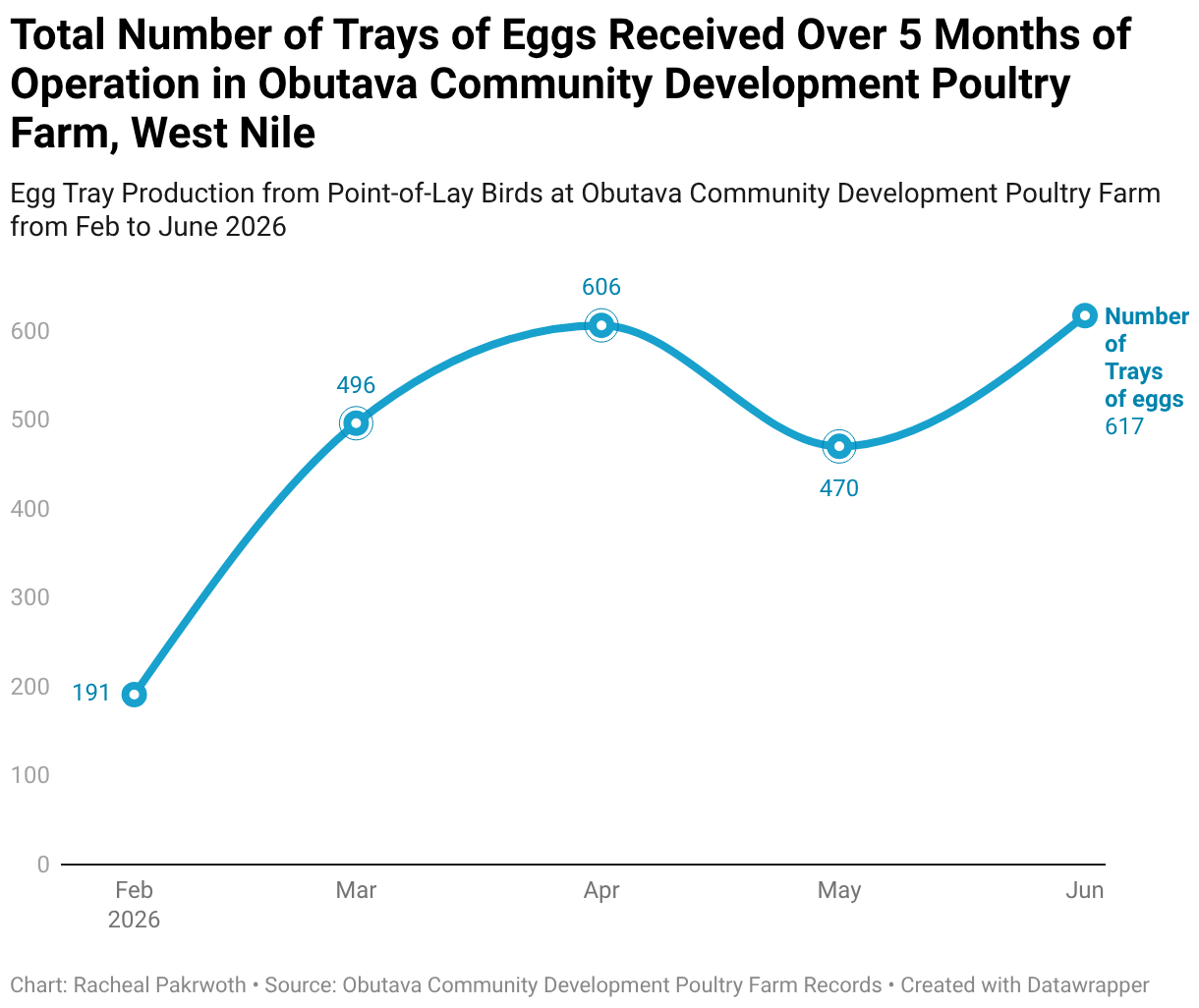
Primo Adomati, the Chairperson of the group located in Ambidro Village, Alikua Sub-County, acknowledges the benefits of Climate Smart Jobs to their group. He urges more members of the community, especially the women, to join poultry farming. The group now collects between 18-22 trays of eggs daily, earning them at least sh200,000.
Wider outreach
To expand the reach of the best practices and access to genuine vaccines and veterinary drugs, Celavie Agribusiness Enterprise like other service providers under the Climate Smart Jobs initiative, is effectively utilising the WIIGOT ecosystem by using localised commercial agents to connect smallholder farmers. WIIGOT is an ecosystem that connects smallholder farmers with agribusinesses through trusted intermediaries called commercial agents and farmer group enterprises.
Angujabo says, "As a company, we do not have enough members to reach the grassroots farmers in rural areas; that’s why we identify interested people who want to deal in our products in the communities, we register them, sign memorandums of understanding with them, and they get commissions after selling our products.”
He adds that this helps farmers avoid fake or expired vaccines, access authentic drugs and treatment to fight poultry diseases in West Nile.
Whereas disease control, vaccination, proper housing, constant water supply among others are central in a poultry farmer’s battle against climate change, poultry farming itself is a climate-smart venture, which delivers high-quality protein, requires less land and produces fewer greenhouse gas emissions than larger livestock farms, according to Angujabo.
He says its resilience offers a quicker return on investment and faster financial turnover compared to other livestock farming practices. This diversification, he added, acts as a buffer for farmers facing crop failure due to unpredictable weather.