
Ugandan youth-led agricultural initiatives seek more support at World Food Forum
Ugandan youth-led agricultural initiatives are seeking stronger government and international support following President Yoweri Museveni's commitment to support the World Food Forum (WFF) Uganda Youth Chapter during the 2026 Global Youth Forum in Rome, Italy.
Participants pose for a group photograph during the session “Leading from the Front: Africa’s Youth Driving Agrifood Systems Transformation” at the World Food Forum 2026, held at the Sheikh Zayed Centre, FAO headquarters, Rome, Italy, on October 13, 2026. (Photo by Christian Mantuano/FAO; editorial use only. Copyright ©FAO)
___________________ Uganda’s Senior Presidential Adviser on Agribusiness and Value Addition Development, Dr Hillary Emmanuel Musoke, speaks during the session “Leading from the Front: Africa’s Youth Driving Agrifood Systems Transformation” at the World Food Forum 2026, held at the Sheikh Zayed Centre, FAO headquarters, Rome, Italy, on October 13, 2026. (Photo by Christian Mantuano/FAO; editorial use only. Copyright ©FAO) FAO Representative in Ethiopia ad interim Orlando Sosa (left) speaks alongside World Food Forum Ghana National Chapter lead Alberta Nana Akyaa Akosa and other panellists during the session “Leading from the Front: Africa’s Youth Driving Agrifood Systems Transformation” at the World Food Forum 2026, held at the Sheikh Zayed Centre, FAO headquarters, Rome, Italy, on October 13, 2026. (Photo by Christian Mantuano/FAO; editorial use only. Copyright ©FAO)
Ugandan youth-led agricultural initiatives are seeking stronger government and international support following President Yoweri Museveni's commitment to support the World Food Forum (WFF) Uganda Youth Chapter during the 2026 Global Youth Forum in Rome, Italy.
The commitment was communicated by Dr Hillary Emmanuel Musoke, the senior presidential advisor on agribusiness and value addition, who represented Uganda at the World Food Forum flagship event held from October 12 - 16 at the Food and Agriculture Organisation of the United Nations (FAO) headquarters.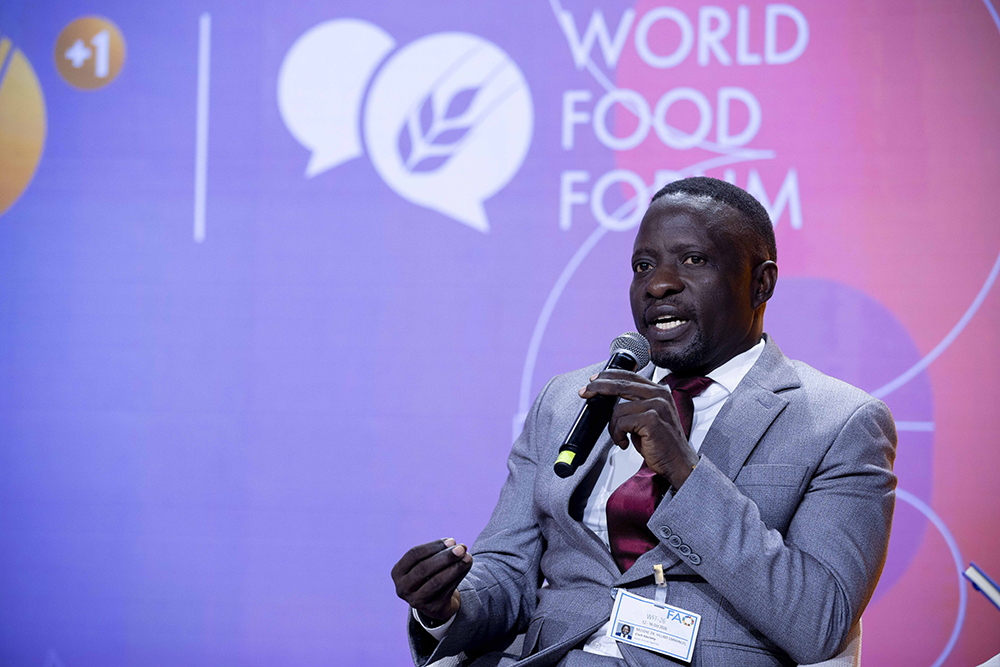
Musoke used the international gathering to highlight Uganda's efforts to involve young people in agricultural transformation, calling for stronger investment in agribusiness, technology, skills development and youth participation in policymaking.
He also engaged FAO officials on possible areas of cooperation to strengthen the WFF Uganda Youth Chapter and expand opportunities for young people to participate in agricultural value chains.
The discussions focused on how the Ugandan government, FAO and youth-led organisations could work together to improve access to financing, technical knowledge, innovation and markets.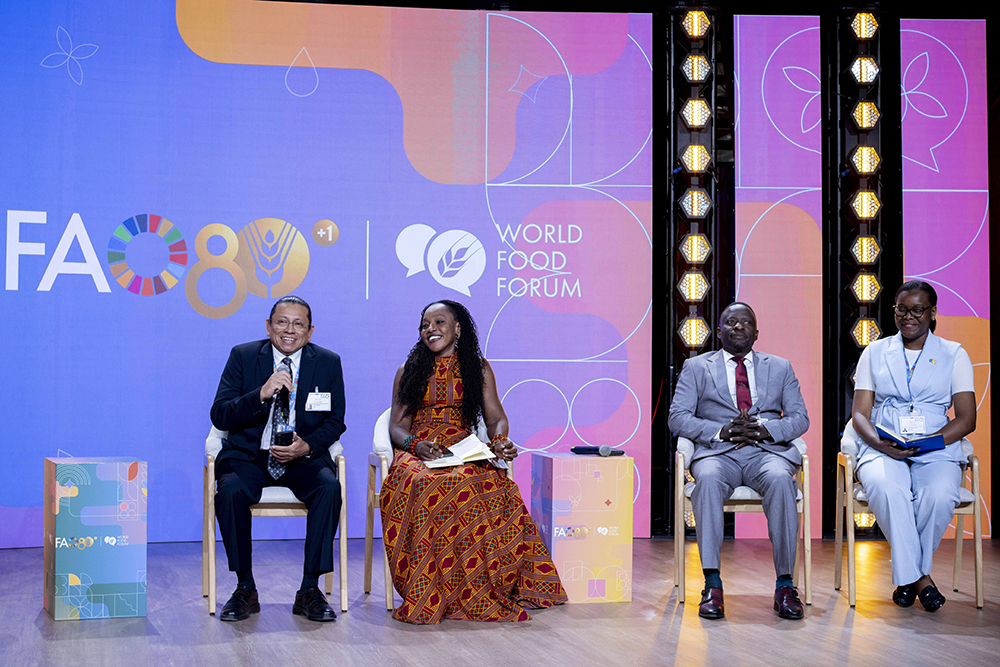
Youth at the centre of agricultural transformation
The 2026 World Food Forum was held under the theme Innovate Today, Nourish Tomorrow, highlighting the importance of innovation, intergenerational cooperation and investment in the people who will shape the future of global food systems.
Opening the Global Youth Forum, FAO Director-General Qu Dongyu emphasised that young people should not merely participate in agricultural development initiatives, but should also have meaningful responsibility in shaping and implementing them.
Dongyu called on governments and development partners to remove barriers that limit young people's access to knowledge, skills, finance, technology and entrepreneurial opportunities.
He also stressed that institutions should serve young people rather than act as gatekeepers, arguing that investment in youth was essential to building inclusive, resilient and sustainable agrifood systems.
Established as a youth-driven global initiative, the WFF has developed into a platform connecting young people, governments, businesses, researchers and development partners working to transform agrifood systems.
According to information presented during the forum, the network has expanded to more than 100 national youth chapters worldwide, reflecting growing efforts to strengthen youth participation in food security and agricultural development.
Uganda highlights youth-led agricultural initiatives
During a session titled; 'Leading from the Front: Africa's Youth Driving Agrifood Systems Transformation', Musoke highlighted the potential of Uganda's young population to accelerate agricultural production, agro-processing, entrepreneurship and industrialisation.
He cited government initiatives, including the Parish Development Model, youth financing programmes, skilling initiatives and agricultural credit facilities, as existing interventions that could help young people participate more actively in the agricultural economy.
Musoke argued that agriculture should be positioned as an attractive and commercially viable career for young people, rather than being perceived primarily as subsistence work.
He noted that young people could contribute across the agricultural value chain, from production and processing to research, logistics, marketing and the adoption of emerging technologies.
He also highlighted the work of the WFF Uganda Youth Chapter, led by Elizabeth Kabakoyo, as an example of youth-led engagement in agricultural innovation and agribusiness.
The chapter has reportedly reached 621 young people and directly engaged 220 across Uganda's eight agro-ecological zones through knowledge exchange and partnership-building initiatives.
The figures point to the chapter's efforts to broaden youth participation in agriculture, although further details on the measurement period and the activities covered would be necessary to assess the scale and long-term impact of its work.
FAO engagement focuses on institutional support
During the Rome visit, Musoke held strategic discussions with Abebe Haile-Gabriel, the FAO Assistant Director-General and Regional Representative for Africa, on possible ways to strengthen cooperation between the organisation, the Ugandan government and the WFF Uganda Youth Chapter.
The discussions explored the importance of government leadership, a clear strategic plan and stronger coordination between the chapter and FAO's country-level operations.
Among the issues raised was the possibility of mobilising resources to support youth-led agricultural projects and strengthening engagement with potential development partners.
The meetings also considered the need to align the chapter's activities with Uganda's agricultural development priorities while maintaining appropriate oversight and accountability.
African youth chapters expand
The WFF event also marked an expansion of the WFF National Youth Chapters network in Africa, with 13 new chapters announced, including Benin, Botswana, Burundi, Comoros, the Democratic Republic of Congo, Eswatini, Gabon, Lesotho, Namibia, Nigeria, São Tomé and Príncipe, Senegal and Togo.
The additions brought the number of national youth chapters in Africa to 33. Speaking during the launch, Haile-Gabriel emphasised the importance of sustained investment in youth leadership, skills development, financing and technology.
Africa's youthful population presents significant opportunities for agricultural development, particularly as countries seek to create jobs, increase productivity and expand agro-processing.
"However, unlocking that potential requires more than mobilising young people. It also depends on access to land, affordable finance, reliable infrastructure, modern technology, markets and practical agricultural training," Musoke said.
Women-led agribusiness also in focus
Musoke also attended the dinner during which an accelerator mentorship programme for women-led small and medium-sized enterprises in Africa was launched.
The programme seeks to strengthen women's participation in agribusiness by providing mentorship, business knowledge and opportunities to develop their enterprises.
Participants shared experiences of growing their businesses while balancing family responsibilities, and called for stronger support from governments and financial institutions.
The discussions highlighted the need to expand women's access to capital, business development services and opportunities to participate in agro-industrialisation.
The programme formed part of broader efforts to strengthen the role of women and young entrepreneurs in building more inclusive agricultural economies.