
Uganda braces for below-normal rains in June-August
Delivering the seasonal forecast statement, the permanent secretary of the ministry, Dr Alfred Okot Okidi, said the country should prepare for prolonged dry spells in many regions, especially in the central and western parts of the country. At the same time, northern and eastern Uganda are expected to receive near-normal to below-normal rainfall.
Alfred Okot Okidi, Permanent Secretary Ministry of water and environment during the press conference held on 29th May 2026. (Photo by Bridget Ahurira)
_________________
Uganda is expected to experience near normal and to below-normal rainfall (near average to below average) and warmer-than-average temperatures during the June–July–August (JJA) 2026 season.
The development is contained in a detailed national climate outlook released by the Ministry of Water and Environment at the Uganda Media Centre in Kampala on Friday (May 29).
Delivering the seasonal forecast statement, the permanent secretary of the ministry, Dr Alfred Okot Okidi, said the country should prepare for prolonged dry spells in many regions, especially in the central and western parts of the country. At the same time, northern and eastern Uganda are expected to receive near-normal to below-normal rainfall.
Accompanied by senior ministry officials and meteorologists from the Department of Meteorological Services, Okidi said the forecast should guide farmers, disaster preparedness agencies, health authorities, water resource managers and local governments in planning and decision-making over the next three months.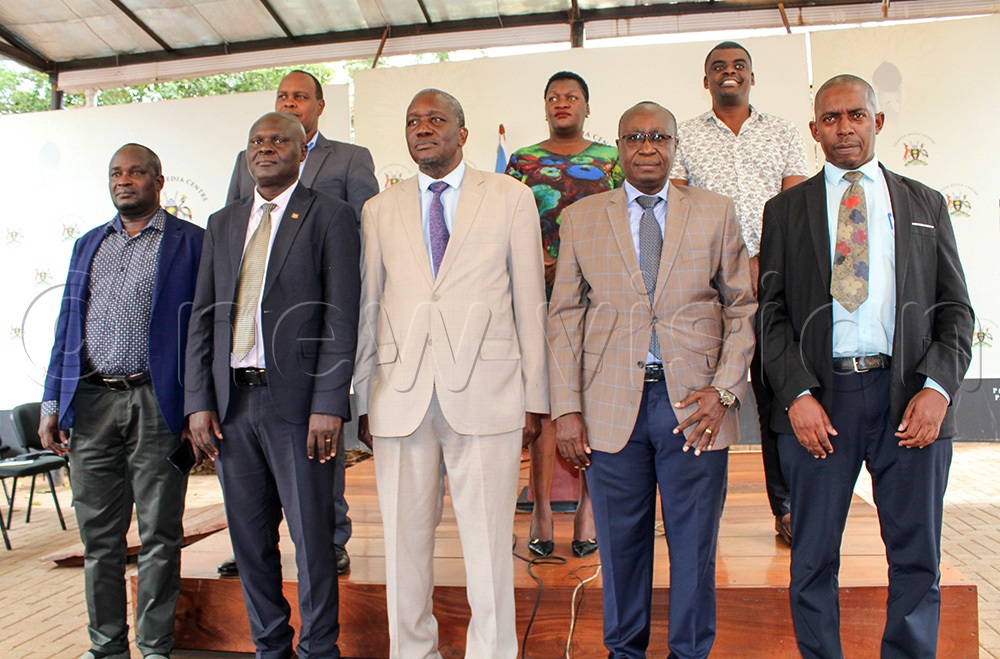
Alfred Okot Okidi, Permanent Secretary Ministry of water and environment poses for a photo moment with other delegates during the press conference held on 29th May 2026. (Photo by Bridget Ahurira)
“Overall, the June, July and August 2026 climate outlook indicates that most parts of the country are expected to receive near-normal to below-normal rainfall, that is, near-average to below-average rainfall, and the temperatures are expected to be warmer than average,” Okidi told journalists.
He said Uganda’s climate is largely influenced by the movement of the Inter-Tropical Convergence Zone (ITCZ), large water bodies, topography and global ocean-atmosphere interactions such as El Niño and La Niña.
The country experiences two major rainfall seasons, the March-April-May (MAM) season and the September-October-November-December (SOND) season, separated by dry spells.
However, northern and eastern Uganda often receive substantial rainfall during the June–July–August period due to the northward movement of the ITCZ and the influence of the Congo air mass.
“As you are aware, Uganda experiences two major rainfall seasons, namely the March, April, May season and the September, October, November, December season as the first and second rainy seasons respectively,” Okidi said.
“However, the northern and eastern parts of Uganda usually receive substantial rainfall during the June, July and August season.”
Uganda receives an average annual rainfall of between 1,000 millimetres and 1,500 millimetres, although rainfall distribution varies widely across regions.
The Lake Victoria Basin and mountainous regions such as Mount Elgon and the Rwenzori ranges often receive more than 2,000 millimetres annually, while the cattle corridor stretching across central and northeastern Uganda records significantly lower totals averaging between 500 and 1,000 millimetres annually.
The MAM and SOND seasons are usually the wettest periods over southern Uganda, while JJA rainfall is more significant over northern and eastern Uganda.
According to the ministry, several climate drivers are expected to shape the JJA 2026 outlook, including warming sea surface temperatures over the equatorial Pacific Ocean associated with El Niño tendencies.
“The current warm state of the sea surface temperatures over the equatorial central and eastern Pacific Ocean, which is what is known as the El Niño tendency, is expected to suppress the June-July rainfall over most parts of the country,” Okidi explained.
He added that the Madden-Julian Oscillation, an eastward-moving pulse of clouds and rainfall in the tropics together with the positioning of the ITCZ and local topographical features such as mountains and lakes, would influence the timing and distribution of rainfall across the country.
In western Uganda, particularly the southwestern highlands covering Kabale, Kisoro, Rukungiri, Kanungu, Rubanda, Bushenyi and neighbouring districts, dry conditions are expected to persist for most of the forecast period after brief isolated showers in early June.
“Overall, below-normal, that is, drier-than-normal conditions are expected to prevail during the forecast period,” Dr Okidi said.
The same outlook applies to the southwestern lowlands districts of Mbarara, Isingiro, Kiruhura and Kazo, as well as the Rwenzori sub-region, including Kasese, Bundibugyo, Kabarole and Bunyangabu.
Central western districts such as Hoima, Masindi, Kagadi, Kibaale and Kiryandongo are also expected to receive below-normal rainfall, although isolated showers may occur in some areas during June.
The central region and Lake Victoria Basin are similarly projected to experience reduced rainfall.
Districts in the west-central region, including Sembabule, Mubende, Kiboga, Luwero and Nakasongola, are expected to remain predominantly dry after early June.
For Kampala, Wakiso, Mukono and surrounding districts in the Lake Victoria Basin, the ministry forecast intermittent showers until mid-June before drier conditions dominate the remainder of the season.
“Overall, near-normal to below-normal conditions are expected to prevail over this region,” Okidi said.
Meanwhile, districts in the Teso and Elgon sub-regions, including Soroti, Kumi, Mbale, Sironko and Kapchorwa, are forecast to receive occasional rainfall throughout the season, although totals are likely to remain below average.
Northern Uganda, which typically receives substantial rainfall during the JJA period, is also expected to experience suppressed rainfall this year.
Karamoja districts such as Moroto, Kotido, Kaabong and Napak are projected to receive below-average rainfall after brief rains in early June.
North-western districts, including Arua, Yumbe, Koboko and Moyo, are expected to receive near-normal to below-normal rainfall, while Acholi and Lango sub-regions may continue receiving intermittent showers until the end of August.
Okidi warned that the anticipated dry conditions and rising temperatures could significantly affect agriculture, food security, water availability and public health.
“The June-July-August forecast indicates that most parts of northern and eastern Uganda will experience near-normal to below-normal rainfall, while central and western regions are expected to experience below-normal conditions, thus impacting various socio-economic sectors, particularly agriculture and food security, health and water resources, among others,” he said.
Uganda’s economy remains heavily dependent on rain-fed agriculture, employing more than 70% of the population directly or indirectly.
The ministry warned that below-average rainfall could affect crop yields, pasture conditions and livestock productivity, especially in the cattle corridor and drought-prone Karamoja region.
It indicated fear of increased risks of heat-related illnesses, water stress and localised outbreaks of diseases associated with poor sanitation and limited access to clean water.
Dr Okidi urged the public and all stakeholders to utilise the forecast information responsibly and implement anticipatory measures to reduce potential losses.
“It is important to note that the sector-specific advisories have been developed jointly by several government ministries, departments and agencies and shared in the detailed forecast document,” he said.
He added, “I urge all stakeholders to use this forecast for strategic planning and informed decision-making to enhance food security, protect livelihoods and strengthen climate resilience.”
He assured the public that the ministry would continue issuing timely weather updates and advisories throughout the season.
“My ministry will continue to provide timely weather updates to guide the nation and communities for planning and decision-making purposes,” Okidi said.