
Stranded boats, out-of-work fishermen as Danube hits record lows
The waters of the river are so low that vessels can no longer get in or out due to sandbars.
A boat lies in the shallow water of the Danube river in Corabia, southern Romania on July 24, 2026. (AFP)
________________
CORABIA - The tourist port in the Romanian town of Corabia, on the banks of the Danube river, is deserted except for a few pleasure boats stranded in the algae.
The waters of the river are so low that vessels can no longer get in or out due to sandbars.
"Last year we could swim across but now the water only comes up to our chests," said 71-year-old Doru, pointing to an island in the river.
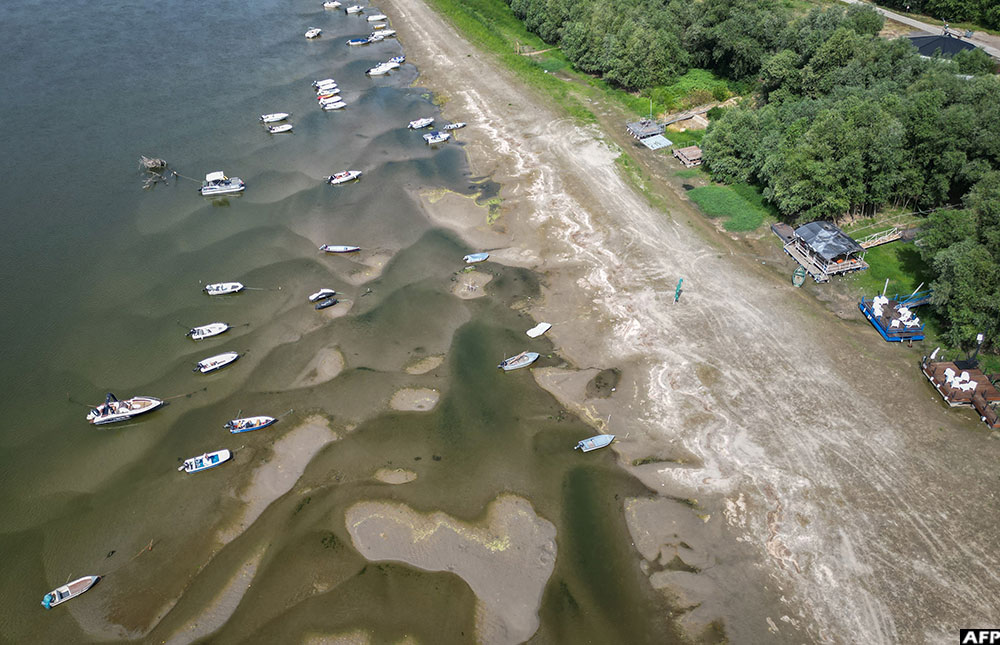
An aerial view taken on July 24, 2026 shows boats in the shallow water of the Danube river in Corabia, southern Romania
"In two years, we'll be able to just walk across," the fisherman, who only gave his first name, told AFP.
The waters of the mighty Danube, Europe's second longest river, have dropped in parts to a record low due to successive heatwaves that have parched the continent since May.
From its source in the Black Forest mountains of western Germany to its mouth on the Black Sea in the east, countries along its 2,850-kilometre (1,770-mile) route are feeling the impact.
In Slovakia and Hungary in central Europe to Romania and Bulgaria further east, ships are unable to travel fully loaded along the waterway and face lengthy waits.
Hungary shut down its sole nuclear power plant, which relies on the waters of the Danube for cooling, on Sunday while Romania shut down the two reactors at the Cernavoda plant, the first time both had been shut at the same time because of low water levels.
Serbia has also been forced to reduce power generation on its two biggest hydroelectric plants.
Already harsh, this current drought was made even more severe by human-caused climate change, according to a report published last week by the World Weather Attribution group of scientists.
The river is at a 30-year low in Romania and Slovakia and at its lowest ever in Hungary.
At the Vidin-Calafat bridge connecting Bulgaria and Romania across the Danube, Bulgarian fishermen complained of being out of work because the low water levels had trapped their boats onshore.
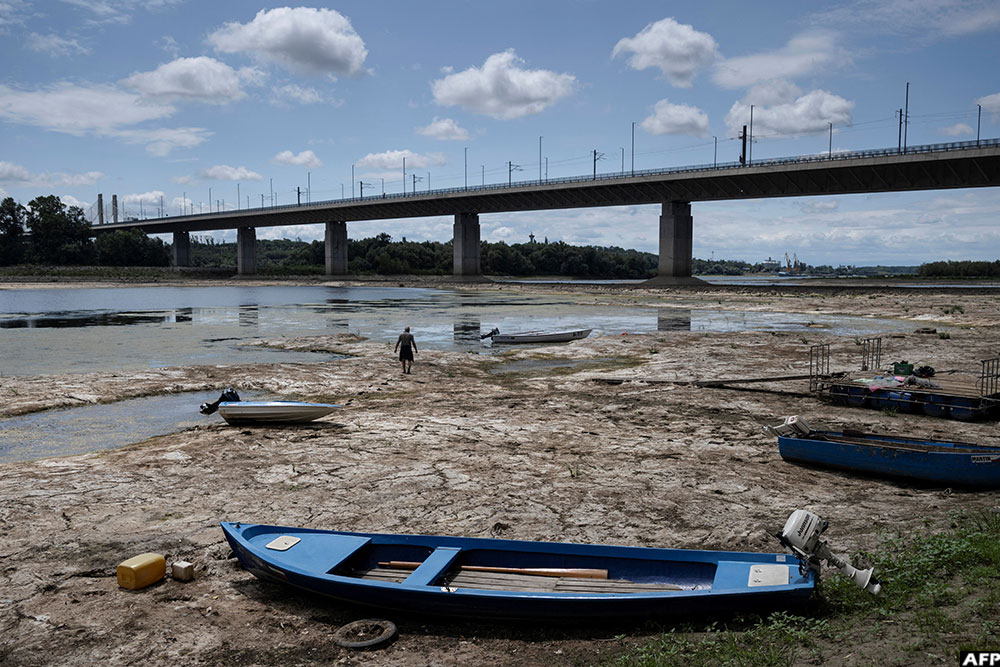
A fisherman tries to move his boat, blocked by algae on the bottom of the Danube river in front of the Calafat-Vidin bridge, connecting Bulgaria and Romania near the village Antimovo, southeastern Bulgaria
"It's never dried up this much before," fisherman Rossen Dobrev told AFP. "Now we can even walk all the way to Romania."
"I've been a fisherman for 39 years and there's never been a drought like this before," sighed fellow fisherman Aleksandar Angelov.
"The people in charge up there need to take action," the 59-year-old added.
"We don't have any water here."
Ferry service between Romania and Bulgaria have been suspended temporarily in two areas.
A cruise ship with almost 200 passengers had to be evacuated in Bulgaria after it ran aground on the Danube because of low water levels.
Commercial shipping is also affected.
"Cargo vessels are being forced to wait or sail with a reduced load," a spokesperson at the Bulgarian government's Danube agency told AFP.
In Romania, the water level along parts of the Danube is already one metre (three feet) below the minimum navigable.
"This is an exceptional situation... We're surprised by this very, very low level," Adrian Maizel, from the administration monitoring traffic on the Danube, told AFP.
Both countries recorded low water levels much sooner than last year.
Further upstream in the Hungarian capital Budapest, the Danube has dropped to its lowest level since measurements began.
Dozens of Hungarian cities and villages along the river introduced water restrictions during the June heatwave. By July, several cruises had been suspended as well.
At Slovakia's Gabcikovo dam, further upstream again, lock operations have slowed down, causing longer waiting times, and captains are being urged to check their vessels' navigability.
'Like quicksand'
With the heat expected to last, there is no immediate relief in sight.
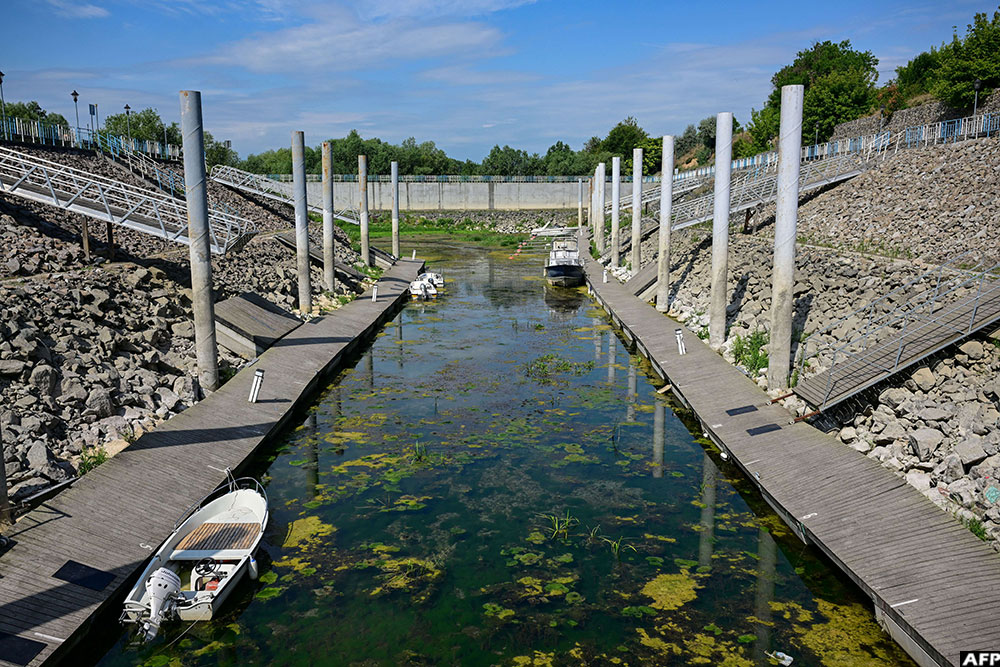
Boats lie in the shallow water of the Danube river in the tourist port of Corabia
"I've lived here for 25 years and the water has never been this low," said Romanian pensioner Mitica Nicolae from Corabia as he fished in an irrigation canal close to the river.
The 65-year-old, who checks public radio every morning for the latest Danube water report, said he was catching fewer fish than before and feared for farm crops.
The river recently dropped to a three-decade low in Romania.
The national authorities imposed irrigation restrictions on farmers in the southeast but those AFP talked to said they had not been affected so far.
On a beach in southern Romania, a few metres from the Danube shore, a boy sloshed his bare feet through water that only reached up to his ankles.
"It's like quicksand," he shouted to his family watching from a distance.