
Scientists warn mycotoxins making animals, humans sick
In free-ranging animals such as pigs, tail loss or wounds on the ears may be linked to the effects of mycotoxins.
Mycotoxins attack the crops through improper storage and pass it to the animals. (Courtesy)
______________
If your animals refuse to feed, experience vomiting, diarrhea, reduced weight gain, or reproductive failure, mycotoxins may be the culprit. These toxins contaminate cereal grains such as maize, sim-sim, and beans before or after harvest, posing significant health risks to both humans and animals. Experts say that to increase animal production and profitability, farmers must detect and manage mycotoxins effectively.
During a two-day scientific symposium held in November last year, the Animal Production Society of Uganda (APSU) organised a meeting at Pope Paul Memorial Hotel in Rubaga to explore ways of advancing the animal industry. One of the key issues discussed was how farmers can detect and manage mycotoxins to improve animal production and profitability.
Dr Ochieng Odede of DSM-Firmenich and a researcher at the University of Nairobi led the discussions. Dr Odede defines mycotoxins as poisonous substances produced by fungi when they invade or infest crops.
Dr Ochieng Odede of DMS. (Photo by Maureen Nakatudde)
According to Dr Odede, when plants are stressed by drought, flooding, or nutrient deficiency, their natural defences weaken, promoting fungal colonisation. He adds that mycotoxins can be produced both in the field and during storage. Their production depends on factors such as temperature, relative humidity, and physical damage to crops by insects, birds, and rodents.
Dr Odede notes that samples harvested from the same field can have different mycotoxin levels. Therefore, proper sampling is the foundation of effective mycotoxin risk management.
How Mycotoxins Move from Plants to Animals
Dr Odede explains that when crops are stressed, for example, by excessive rainfall, their root structures and leaves are damaged. Once the protective outer layer of the plant is broken, fungi can easily invade the crop.
By the time crops are harvested, toxins may already be present. “You cannot kill them by heating or by any processing method,” he says. “So when we feed animals or birds, the toxins enter their systems.”
For humans, Dr Odede warns that when people consume products from affected animals, such as eggs, milk, and meat, the toxins can be passed on, causing symptoms like vomiting and skin rashes. In the long term, vital body organs may be damaged. He emphasises that proper mycotoxin risk management is the only way to avoid these risks.
Effects of Mycotoxins
When mycotoxins contaminate plants, they enter animal feeds and are passed on to animals. These toxins, particularly Fusarium toxins, reduce the surface area for nutrient absorption.
“Fusarium toxins alter intestinal morphology through villi fusion, which reduces nutrient absorption,” Dr Odede explains.
Signs of Mycotoxin Exposure in Animals
Animals exposed to mycotoxins may show several symptoms. Dr Odede says they can suffer liver and kidney damage, leading to excessive urination and inability to regulate water intake. In poultry, this results in excessive litter and prolapse, where the reproductive organs protrude from the body.
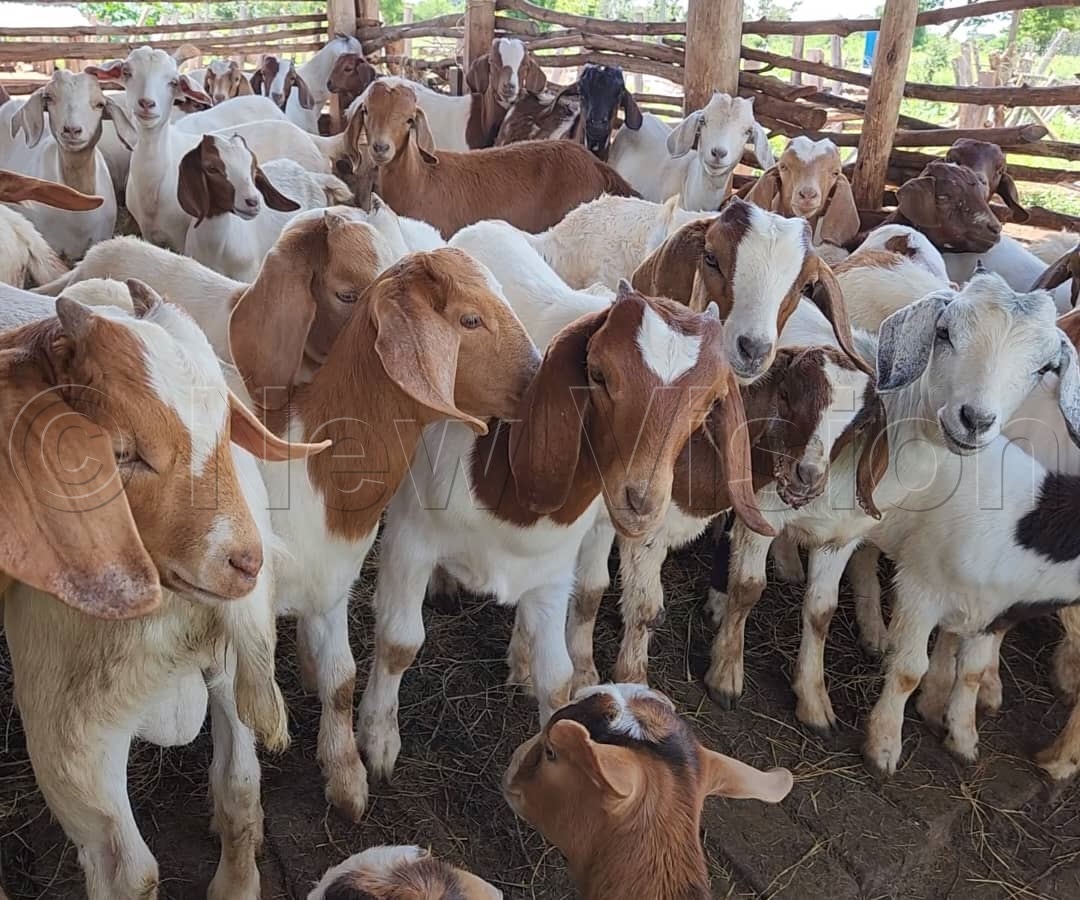
The animals with cotoxins face fertility problems. (Photo by Maureen Nakatudde)
Additionally, animals’ immunity becomes weak because they are unable to digest food properly. Unfortunately, some farmers may have animals affected by mycotoxins without realising it. Dr Odede notes that such animals are often repeatedly vaccinated but fail to respond because the toxins suppress their immune systems.
Mycotoxins can also cause abortions in animals due to uterine contractions. Even when affected animals are treated for diseases, they may not respond to medication. In hens, eggs may fail to hatch into chicks.
Dr Odede adds that in free-ranging animals such as pigs, tail loss or wounds on the ears may be linked to the effects of mycotoxins.
Prevention
Dr Odede says that if farmers eliminate the risk of mycotoxins, animals will be healthier and farmers will earn more. He advises that if animals do not respond to treatment, farmers should focus on eliminating the underlying cause—mycotoxin contamination—after which the animals and birds are likely to recover.