
Private sector urged to invest in food systems to drive Uganda's growth
According to the Uganda Demographic and Health Survey, 26% of children under five are stunted, while 53% of children and 32% of women are anaemic.
The vice chairperson of the Private Sector Foundation Uganda (PSFU), Sarah Kagingo, and Damali Ssali, the Country Manager at GAIN Uganda, share a light moment during the expo. (Courtesy photos)
________________
The private sector has been urged to invest in food systems to help steer the country’s economic growth.
The call was made by the vice chairperson of the Private Sector Foundation Uganda (PSFU), Sarah Kagingo, while officiating at the Ebyendiisa Expo that took place from April 30 to May 1, 2026, at the UMA Show Grounds in Lugogo.
According to Kagingo, Uganda's development agenda, including the 10-fold growth strategy and the agro-industrialisation strategy, is anchored on value addition, especially in agricultural products, to build competitive sectors.
“What we are seeing here today is an initiative that has brought together farmers, processors, off-takers, and buyers of these finished products. But I would also like to encourage you to continue building this into a sustainable platform because transforming food systems and transforming economies requires consistency, scale, and long-term commitment,” she said.
She added that the expo, organised by the Global Alliance for Improved Nutrition (GAIN) Uganda, presents an opportunity to drive value addition, expand markets, while promoting business growth and national development.
“They strengthen market linkages, they create visibility for businesses, and they help stimulate demand for better, more nutritious products. They also create alignment between business incentives, consumer behaviour, and national policy priorities,” Kagingo added.
She also assured event organisers that PSFU will continue to advocate for policies that support businesses across the food value chain by strengthening public-private dialogue and championing policies that enable private sector growth and lower the cost of doing business.
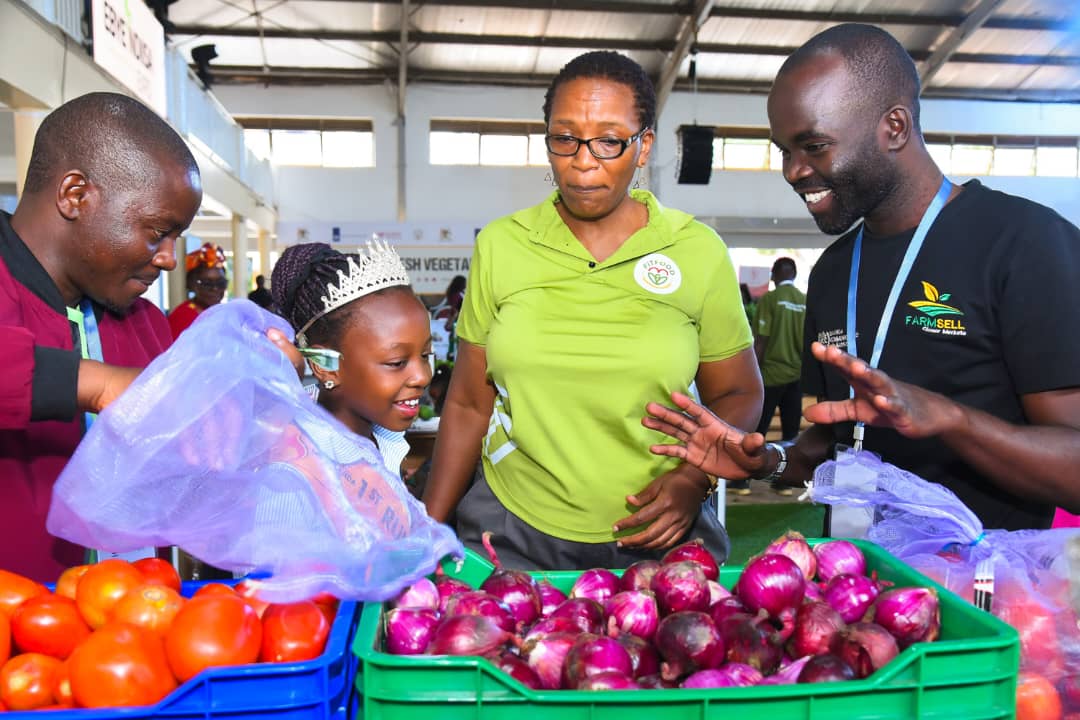
Little Miss Lohana also came through to learn the benefits of the different vegetables.
Damali Ssali, the Country Manager at GAIN Uganda, explained that although Uganda is often described as a food basket that produces a variety of foods across the country, many Ugandans are not eating well. This is because diets are characterised by low consumption of vegetables and other nutrient-rich foods, which has resulted in continued malnutrition.
According to the Uganda Demographic and Health Survey, 26% of children under five are stunted, while 53% of children and 32% of women are anaemic.
“So, the question we must ask ourselves is not simply: Do we have food? The real question is: how are we eating the food we have? That is why the Ebyendiisa Expo is a platform for behaviour change, knowledge transfer, and practical experience on how best different foods are prepared or even eaten,” Ssali said.
Ssali said the expo brought together 55% in processing and value addition, including nutritious flours, snacks, spices and other products, 20% in primary production, including farmers, vegetable vendors and input suppliers, 15% in distribution and retail, and 10% in nutrition and knowledge systems, including training, awareness and behaviour change actors, among others.
On the same occasion, Prospero Grace Lonyo, the principal nutritionist in the Ministry of Health under the nutrition division, explained that the ministry’s partnership with GAIN Uganda is aimed at promoting better nutrition among the population.
“We are still not doing well in nutrition, stunting has come down to 29 percent but has stagnated at 24 percent and wasting is at 4 percent, meaning that the food being eaten is not providing enough nutrients to the body of a child so expos like these that also have cooking demos on how best to cook for example vegetables are helping in sending the message,” she said.
Josephat Byaruhanga from the food security and nutrition department at the Netherlands Embassy called for research into the best farming practices for indigenous foods and increased uptake among consumers.
He added that reports from the World Health Organisation show that Ugandans are among the lowest consumers of vegetables and fruits.