
Mbarara RCC warns against environmental degradation, corruption
"We are going to put scouts on the riverbanks. We have already compiled a list of volunteers, who will monitor the river and identify anyone dumping garbage in it," Kamwine said.
Plastic bottles from bottling industries in Mbarara City floating on River Rwizi in Buremba, Kakiika Mbarara in 2021. (Photos by Fred Turyakira)
________________
Mbarara City Resident City Commissioner (RCC) Catherine Helen Kamwine has issued a stern warning against environmental degraders and corrupt officials, declaring that the law will now "bite" those destroying South-Western Uganda’s vital water catchment areas.
Kamwine revealed this on Monday, August 24, during the launch of the 5th edition of the River Rwizi Run by the Ministry of Water and Environment. The run, themed "Stakeholders Championing the Restoration of River Rwizi," is aimed at addressing the 60% degradation of this vital southwestern Uganda water source.
The initiative, spearheaded by Team Leader Stephen Emor, was launched last week at the Ministry of Water and Environment Southwestern region office in Mbarara.
It seeks to reverse environmental damage caused by pollution, encroachment, and climate change in the districts of Mbarara, Lyantonde, Kiruhura, and Isingiro.
In 2021, the media was awash with pictures and videos of plastic waste floating on River Rwizi as well as pharmaceutical waste and other hazardous waste, which attracted the attention of the ministry officials and environmentalists to come to its rescue and remove the waste that was polluting the river.
However, he said significant challenges remain, citing critical sections of the catchment, particularly in Buhweju and Mbarara City, still facing degradation, illegal mining, and poor waste management.
Stephen Emor, the Team Leader of Rwizi run at Minisitry of Water and Environment South western region, (in blue jacket) and Mbarara RCC Catherine Kamwine with other partners during the launch of the 5th edition of the River Rwizi Run at the Ministry's South western region office in Mbarara City last week. 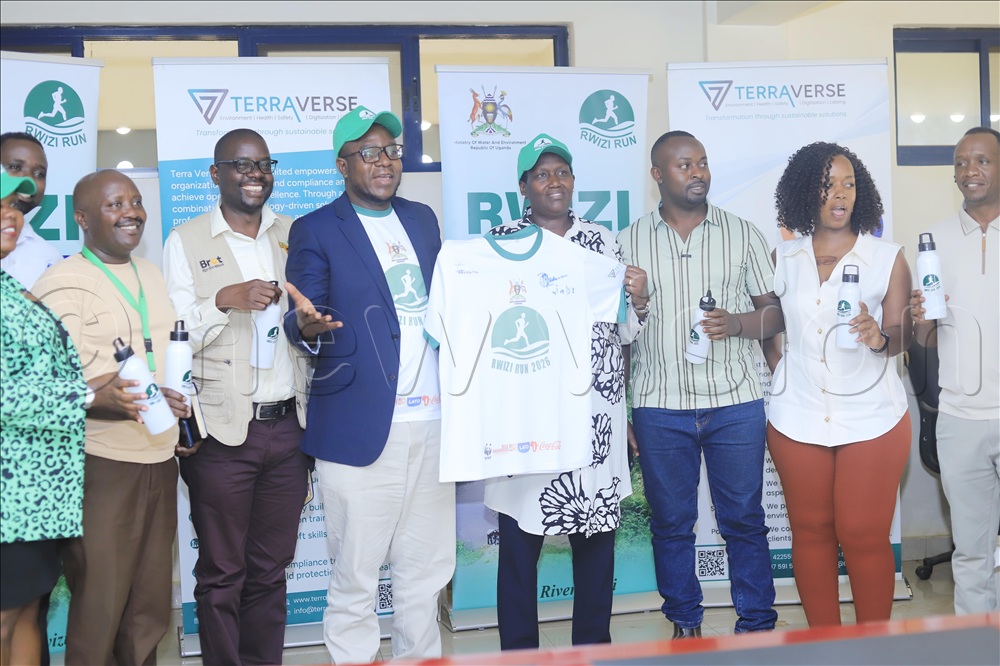
Emor said the 2026 campaign scheduled for September 5, will focus funds on restoring mining hotspots, installing waste interception systems, and promoting sustainable livelihoods in the river buffer zone.
He enumerated the key achievements from the past runs, including establishing a tree nursery with Bishop Stuart University that has propagated over 2,000 bamboo seedlings for riparian restoration and establishing community-based organisations to manage the waste.
The water and environment ministry called for continued partnership to scale up these efforts, reinforcing the commitment to securing water resources for the region. The event underscores that restoring the River Rwizi is a shared responsibility, vital for agricultural stability and ecological health in the cattle corridor.
Kamwine announced that during the upcoming National Cleaning Day on August 29, Mbarara City Council will concentrate all its enforcement and civic resources on cleaning and restoring the heavily polluted River Rwizi and its neighbouring wetlands.
"When there is no water, there is no life," Kamwine stated, emphasising that River Rwizi is the lifeline of the Southwestern region that must be protected "like our baby."
She expressed disgust at the rampant dumping of plastics and chemical containers into the river by residents and revealed that a new community policing strategy to curb the vice will be put in place.
"We are going to put scouts on the riverbanks. We have already compiled a list of volunteers, who will monitor the river and identify anyone dumping garbage in it," she said.