
Makerere’s sensors bring air-quality Monitoring to African cities
Makerere University’s low-cost sensors have helped identify Kampala’s pollution hotspots and inform air-quality regulations, but experts say effective enforcement is needed to deliver cleaner air.
A taxi emits exhaust fumes in Kampala, highlighting the need for stronger measures to combat air pollution in the city. (File)
_______________ Makerere University Professor Engineer Bainomugisha holds part of low cost sensor. (Photo by Gerald Tenywa) (Photo by Gerald Tenywa) Makerere University Professor Engineer Bainomugisha holds part of a high-grade air-quality monitor that works alongside low-cost sensors. (Photo by Gerald Tenywa)
Air Quality
From Kampala to cities across Africa, Makerere University’s affordable sensors are making air pollution measurable. But can better data drive the action needed to make the air safer? writes Gerald Tenywa.
Maria Namutebi knows when the air in Kawempe is polluted before any monitoring device confirms it. When she steps out of her small shelter, Kampala’s traffic, noise and exhaust fumes surround her. The single mother of two sometimes struggles to breathe, but she cannot remain indoors. Her children need food, and she must brave the streets to earn a living.
“I know what good air is because I run short of breath when I am exposed to pollution,” Namutebi says. “I never understood how important clean air was until I started falling sick.”
Near her home, a small air-quality sensor measures what Namutebi cannot see: pollutants in the air she breathes.
The device is part of a network developed by Makerere University’s AirQo initiative to help cities identify pollution hotspots, guide interventions and give communities evidence with which to demand action.
But for Namutebi, the critical question is not whether the sensor can detect polluted air. It is whether a dangerous reading compels anyone to respond.
A decade after Makerere University launched AirQo, that question is central to assessing the initiative. The technology has expanded air-quality monitoring across several cities, increased public awareness and contributed to regulatory action.
What remains less clear is whether those gains have produced sustained reductions in pollution and made the air safer for residents.
Making pollution visible
For years, the high cost of conventional monitoring equipment has left many African cities with limited information about the air their residents breathe.
Without adequate data, authorities struggle to establish the scale of pollution, identify its sources and determine whether interventions are working.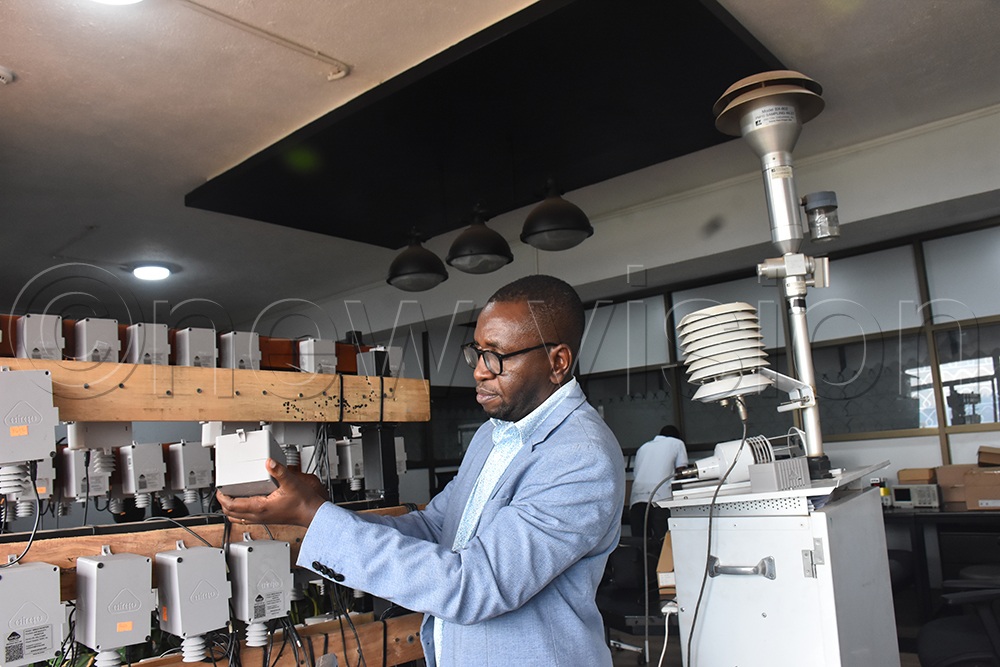
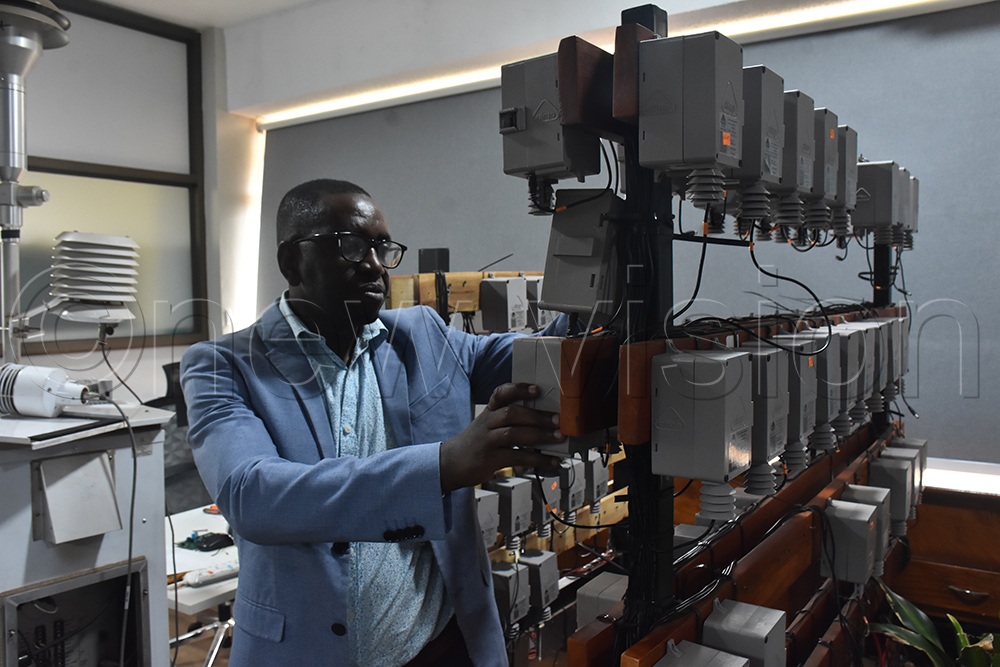
Makerere University launched AirQo in 2015 to close that information gap. Led by Prof. Engineer Bainomugisha through the university’s department of computer science, the initiative develops low-cost air quality sensors at its laboratory.
Production and deployment began in Kampala around 2019. The network has since expanded beyond Uganda, with sensors deployed in Kenya, Ghana and South Africa.
Bainomugisha says the interest extends well beyond the countries where the technology is already being used.
“We have demand for the low-cost sensors from as many as 40 African cities in 10 countries,” he says.
The devices are intended to give cities an affordable way to track pollution. Figures indicate that each AirQo sensor costs about $150 (sh630,000) compared with up to $40,000 (about sh168m) for some conventional monitors.
Although the two types of equipment differ in capability, precision and regulatory use, the price gap allows cities to install more sensors over wider areas instead of relying on a handful of expensive monitoring stations.
In Greater Kampala, AirQo and the National Environment Management Authority (NEMA) have established a network reported to comprise 130 low-cost sensors, with plans to expand it to 200.
The devices can show how pollution varies between neighbourhoods and identify hotspots that a limited number of conventional monitors might miss.
“Fighting air pollution requires a whole-of-society approach. Pollution does not respect boundaries, and changing human behaviour, such as burning waste, requires collective action,” Bainomugisha says.
“We need to empower citizens with information so they can demand accountability from a responsive Government and push for the resources needed to fight air pollution,” he adds.
The challenge is particularly pressing in sub-Saharan Africa, where emissions from transport, biomass burning and other sources are contributing to the deteriorating air quality. For rapidly growing cities with limited resources, affordable monitoring can provide the evidence needed to understand where pollution originates and which communities carry the greatest burden.
But wider coverage is useful only if the measurements are reliable and authorities act on the information.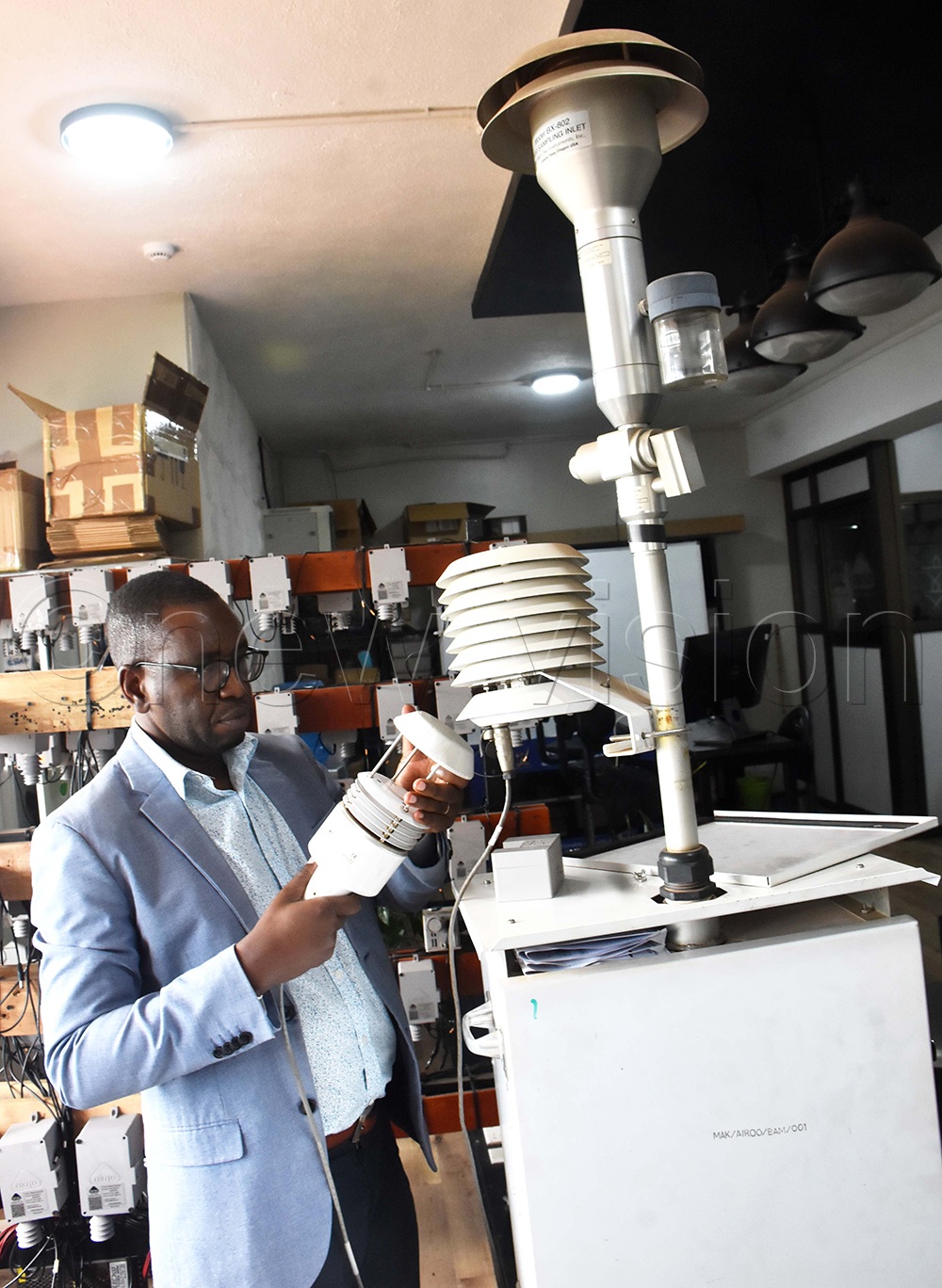
The harder test: Cleaner air
National Environment Management Authority (NEMA) executive director Dr Barirega Akankwasah says Kampala’s air quality is improving, while Makerere University’s Prof. Engineer Bainomugisha cautions against premature celebration. AirQo data reportedly shows localised and seasonal improvements, but pollution levels still frequently exceed World Health Organisation guidelines.
The available information does not include the locations, monitoring periods or changes in particulate matter (PM) 2.5 and PM10 readings needed to demonstrate a sustained city-wide decline.
The distinction between improved monitoring and improved air quality is, therefore, central to assessing AirQo. More sensors can help authorities understand the problem, but the number of devices installed is not, by itself, a measure of environmental success.
Without a clear chain linking a dangerous reading to a responsible authority, required response and enforcement deadline, cities may be able to document pollution without stopping it.
In Kawempe, the sensor near Maria Namutebi, a resident, can turn polluted air into figures. It can place her neighbourhood on a pollution map and alert authorities to the danger residents face.
What it cannot do is stop waste burning, remove a polluting vehicle from the road, penalise an offender or compel an institution to respond. Those decisions belong to public authorities.
For Namutebi and millions of other urban residents, success will be measured by whether the evidence by the sensors triggers action that makes the air safer to breathe.
Until dangerous readings are linked to a responsible authority, a required intervention and a clear deadline, Kampala may be able to see its air pollution crisis without guaranteeing that anyone will act on it.
What sensors can show
AirQo’s current devices measure particulate matter (PM), including PM2.5 and PM10. The team is developing additional sensors to measure gaseous pollutants, Bainomugisha says.
The devices are designed to operate in challenging environments. They can run on solar or grid electricity, with batteries providing backup. Regular cleaning, software updates and the replacement of faulty batteries or components help keep the network operating.
Bainomugisha says the oldest devices, deployed in 2020, are still working. Their durability and maintenance needs will be important in determining the long-term cost of operating monitoring networks in African cities.
NEMA executive director Dr Barirega Akankwasah supports the technology but cautions against treating low-cost sensors as substitutes for conventional monitoring systems.
“All those low-cost sensors are made in Uganda, but because of their limitations, they have to be complemented,” he says.
NEMA is combining them with more advanced reference grade equipment. At NEMA headquarters, the authority has installed a conventional air quality monitoring system to provide more robust measurements and help assess the performance of the cheaper devices.
Jennifer Kutesakwe, a senior air quality inspector at NEMA, says low-cost sensors provide useful information, but their readings are most representative of conditions around the places where they are installed.
“The low-cost air quality sensors provide quality data, but they are area-specific. As one moves away from the sensors, the readings become less accurate,” Kutesakwe says.
Pollution can change considerably between locations, depending on traffic, waste burning, industrial activity, dust and weather. A reading at one site may, therefore, not represent conditions in another neighbourhood.
Kutesakwe says high humidity may cause the sensors to overestimate particulate pollution, while dust can also affect their readings. Data from low-cost devices, in its current form, is unsuitable as legal evidence, she says.
Reference-grade monitors, by contrast, are designed to meet recognised technical requirements, including applicable International Organisation for Standardisation and US Environmental Protection Agency standards.
The distinction is important because low-cost sensors can expand coverage and reveal pollution patterns, but their readings require quality assurance, regular maintenance and, where necessary, comparison with reference-grade equipment.
Their limitations do not undermine the AirQo model. They show why affordable sensors should form part of a broader monitoring system rather than replace conventional equipment.
The larger test is whether the information they produce changes decisions.
From readings to regulation
In Kampala, NEMA says data from low-cost sensors helped reveal the scale of the pollution problem and contributed to the development of air quality regulations.
Kutesakwe says the readings showed that conditions in the city required greater attention.
“We took advantage of the low-cost sensors because we were able to see that we were not doing well, especially in Kampala,” she says.
“We woke up and started working on an air-quality regulation. We started in 2019 and put it in place in 2024. We did not have support from outside,” Kutesakwe adds.
“We were able to know that Kawempe and Nansana are the most polluted parts of Greater Kampala,” she says.
The findings illustrate one of AirQo’s most important contributions: making pollution visible to the institutions responsible for addressing it.
Lynn Atuyambe, an associate professor at Makerere University School of Public Health, says the sensors have also helped Kampala residents become more aware of the condition of the air they breathe.
He points to efforts by Kampala Capital City Authority (KCCA) to introduce measures against pollution, including a proposed ordinance imposing a fine of sh100,000 on people found burning rubbish.
But identifying a hotspot or proposing a penalty is not the same as eliminating the source of pollution. The impact depends on whether regulations are enforced, offenders are held accountable, and subsequent monitoring shows an improvement.
Response is uneven
In Kawempe, one of the areas that NEMA identifies as among the most polluted in Greater Kampala, Namutebi says residents suffering from pollution appear to have been left to fend for themselves.
Nansana has also been identified as a major hotspot, but the information available does not establish whether interventions there have reduced pollution.
Vehicle emissions test
Vehicle fumes present another major challenge for Kampala.
NEMA says it is working with the Uganda National Bureau of Standards (UNBS) and the Ministry of Works and Transport to address transport emissions.
Kutesakwe says the monitoring data has encouraged collaboration among institutions responsible for tackling the problem. Work with UNBS has contributed to efforts to harmonise vehicle emission standards across the East African Community.
“The collaboration with UNBS has worked because UNBS worked with its sister institutions in the East African Community to set up uniform vehicle emission standards,” Kutesakwe says.
But standards have limited impact without a functioning system for testing vehicles, identifying those that fail and requiring owners to repair or remove them from the road.
NEMA is working with the works ministry to introduce vehicle inspections. Kutesakwe says facilities established by the private company SGS are being revamped and equipped for the exercise.
“We are not there yet, but there is light at the end of the tunnel,” she says.
The plans face a major test. A September 2025 report by the UN Environment Programme identified vehicle emissions as a major source of particulate pollution in Kampala, with levels reaching up to 12 times World Health Organisation guidelines. It also highlighted gaps in vehicle emission standards and the absence of an effective inspection system.
The findings show why monitoring must be accompanied by action against pollution sources. Sensors can provide evidence of the problem, but vehicle standards, inspections and enforcement are needed to curb emissions.
KCCA is also developing measures to enable residents to report polluters and strengthen enforcement. Such reporting could help authorities locate pollution sources and direct attention to the affected neighbourhoods, particularly lower-income communities that often have limited control over the pollution around them.
Uneven action in communities
AirQo is also working with local leaders and community organisations to translate air quality into action.
Air quality champions, many of them local leaders, monitor pollution readings and investigate spikes that may be associated with activities such as waste burning.
Josephine Mulamata, a councillor responsible for public health and the environment in Makindye, Kampala, is among the local champions working with AirQo.
“We have the AirQo app on our phones. When we see orange, we know that air quality is not good. Maroon indicates that it is neither good nor bad,” she says. “We keep telling people to stop burning diapers and medical waste.”
Mulamata says community leaders have planted trees to help absorb waste gases and mobilised residents against waste burning.
“I do not work alone, and many people have come out to put pressure on those burning waste,” she says.
Vincent Bukenya, the LC1 chairperson of Kizungu in Makindye, confirmed during a New Vision inspection tour that trees had been planted along roads and around residents’ homes.
But the response is uneven. In Kawempe, one of the areas NEMA identifies as among the most polluted in Greater Kampala, Namutebi says residents suffering from pollution appear to have been left to fend for themselves.
Nansana has also been identified as a major hotspot, but the information available does not establish whether interventions there have reduced pollution.