
Leaders seek infrastructure boost to strengthen Kasese coffee production
Kasese produces about 37,375 tonnes of coffee annually, with an estimated 85% of the population engaged in coffee farming. Of these, about 95% grow Arabica coffee while 5% cultivate Robusta.
A team of three permanent secretaries from Ministries including Agriculture, Energy and Tourism handing of a coffee wet mil machine to one of the beneficiaries. (Credit: Samuel Amanyire)
__________________
Limited land holdings, inadequate rural electrification and poor road infrastructure are constraining coffee production and value addition in Kasese district, despite the area being one of Uganda's leading coffee-growing regions.
District leaders raised concerns during the distribution of coffee processing equipment by officials from the Ministries of Agriculture, Energy and Tourism, warning that unless the challenges are addressed, farmers will struggle to maximise earnings from the country's leading cash crop.
Kasese produces about 37,375 tonnes of coffee annually, with an estimated 85% of the population engaged in coffee farming. Of these, about 95% grow Arabica coffee while 5% cultivate Robusta.
Speaking during a function held at the multi-purpose hall in Nyamwamba division, Kasese municipality, on June 6, 2026, Kasese LC5 chairperson Eliphazi Muhindi Bukombi said land fragmentation remains one of the biggest obstacles facing coffee farmers.
He explained that although Kasese has 44 lower local governments and a large geographical area, the district's estimated 115,000 coffee farmers cultivate the crop on an average of just one acre each.
"This means that the 115,000 farmers who engage in the cash crop have to use the little land sustainably, but again, our population growth is overwhelming, with about 1 million people," Muhindi said.
He also noted that many coffee trees in the district have become old and unproductive, but farmers are often reluctant to prune or replace them because they fear losing annual income.
"Additionally, most of the coffee trees have overgrown, yet farmers have a poor mentality of thinking that cutting them to give room for fresh plants will hinder their annual earnings," he added.
Muhindi further highlighted the lack of electricity in many coffee-growing areas, saying it limits farmers' ability to venture into value addition and forces many to sell coffee immediately after harvesting.
He also cited poor road conditions, particularly in mountainous areas, which make it difficult for farmers to transport their produce to markets.
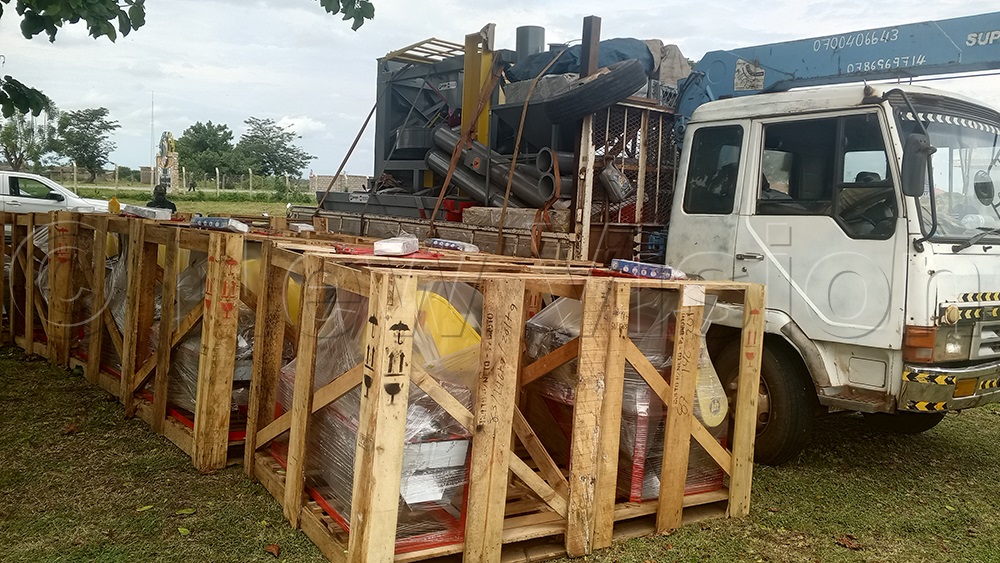
An assortment of coffee equipment that was given to several farmers in Kasese in a bid to ensure value addition to coffee. (Credit: Samuel Amanyire)
Government responds
Officials from the ministries of agriculture, energy and tourism used the event to outline interventions aimed at addressing some of the challenges affecting coffee production in the district.
Doreen Katusiime, the permanent secretary in the tourism ministry, said the government plans to invest more resources in road construction and rehabilitation across the Rwenzori region, partly to promote coffee tourism.
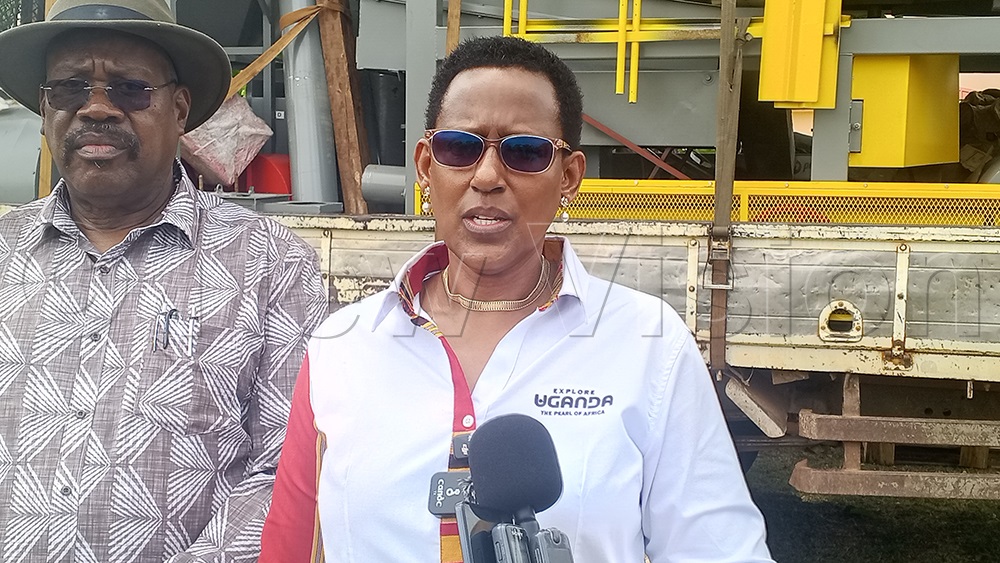
Doreen Katusiime, the Permanent Secretary at the Ministry of Tourism, Wildlife and Antiquities, revealed that the government has yet to spend heavily on constructing and rehabilitating roads in the Rwenzori region, with a prime target of promoting coffee tourism. (Credit: Samuel Amanyire)
"We believe that this will be another potential avenue for us to earn from the visitors, and we intend to organise coffee festivals, coffee competitions, but again, some people are interested in knowing how coffee is grown, harvested and processed," Katusiime said.
Pauline Irene Batebe, the permanent secretary in the energy ministry, said progress on rural electrification had been slowed by contractors who became insolvent following the COVID-19 pandemic.
"I want to assure you that we have got new potential contractors, and recently we visited all the coffee companies in Kasese and we are aware, but also busy working on their power needs," Batebe said.
Govt donates coffee processing equipment
Agriculture ministry permanent secretary Maj. Gen. David Kasura-Kyomukama said more than 70% of households in Kasese depend on coffee farming, most of them operating as smallholder farmers.
He noted that many farmers continue to rely on the sale of unprocessed green coffee, limiting their income and competitiveness in the market.
"Yet the crop contributes significantly to food security, education, healthcare, and community resilience in the face of economic shocks."
To address this challenge, the agriculture ministry donated 16 coffee pulping machines, one combined coffee huller and one wet mill machine to farmer groups and individual coffee farmers in Kasese district.
Kasura urged beneficiaries to utilise the equipment effectively to improve the quality of coffee supplied to markets.
Beneficiaries welcome support
Beneficiaries, including Philimon Muhuba from Kilembe subcounty, Richard Mbaju from Kilembe subcounty, Bugoye Coffee Farmers Group and Rwenzori Organic Coffee Farmers, welcomed the donation.
They said the equipment would help them improve coffee processing, produce cleaner coffee and access better markets.