
Experts raise red flag over River Nyamwamba persistent flooding
They observed that annual flooding along River Nyamwamba has left many communities without safe water, disrupted schooling, and forced some residents to practice open defecation in flooded areas.
Karubanga, a lecturer in the Department of Extension and Innovation Studies at Makerere University and principal investigator of the study talking to refugees as one of the refugees looks on at Farmers Lounge, Kikuube Distric. (Courtesy photo)
________________
Experts have expressed concern over the lack of a lasting solution by government to avert the perennial flooding of River Nyamwamba in Kasese District.
According to a study conducted by researchers from Makerere and Cambridge Universities under the Communities of Hosts and Refugees Transitioning to Climate Resilience (CHART-CR) project, heavy dependence on subsistence agriculture has left many households vulnerable to climate change, floods and prolonged water shortages.
They observed that annual flooding along River Nyamwamba has left many communities without safe water, disrupted schooling, and forced some residents to practice open defecation in flooded areas.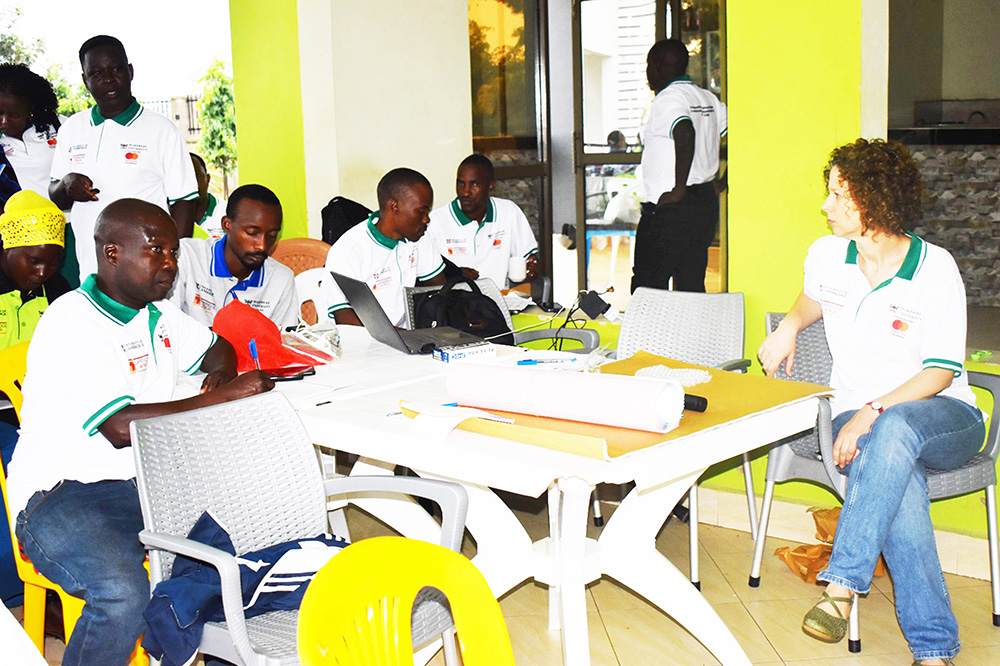
Dr Irit Katz from Cambridge University discussing with refugees and host comunities at Farmers Lounge, Kikuube District. (Courtesy photo)
Dr Gabriel Karubanga, a lecturer in the Department of Extension and Innovation Studies at Makerere University and principal investigator of the study, said they found that flooding along River Nyamwamba has become a recurring crisis every May.
Dr Irit Katz, an Associate Professor of Architecture and Urban Studies at the University of Cambridge, led the Cambridge University team.
Discussing the study at Makerere University over the weekend, Karubanga said displaced residents often move to areas without proper sanitation facilities.
“When people get displaced because of these floods, they find no sanitation facilities like toilets to use where they relocate, and they end up defecating in the flooded river,” he said.
He said many residents continue using the same contaminated water for household activities. “They are using the same water where they have defecated for domestic work. They drink it without boiling it. They need some kind of purification and boiling of the water, which they are supposed to use for their domestic use,” he said.
Karubanga noted that the available boreholes and taps are too few to meet the growing demand for water, forcing women and children to walk long distances in search of water, which exposes them to other risks.
“It causes a lot of security issues when it comes to women moving longer distances at night. Some children do not go to school because of that. Some of them end up getting unwanted pregnancies.”
The study found that floods have disrupted education in areas such as Kilembe, where communities are separated by flooded sections of River Nyamwamba.
“Some children do not go because the Nyamwamba River crosses Kilembe, and people on the other side cannot easily cross the waters. The children can spend that whole time the river is flooded without going back to school. This has been a serious issue causing a lot of dropouts and early marriages,” Karubanga explained.
The team of researchers conducted the study beginning in December 2025 through workshops and focus group discussions in Kasese District. The report describes Kasese as highly vulnerable to climate-related disasters, including floods, landslides, and droughts, particularly around rivers such as Nyamwamba and Mubuku.
Researchers said these disasters repeatedly displace smallholder farmers, women, children, and elderly residents after rivers overflow and destroy homes, farmlands, roads, schools and water systems.
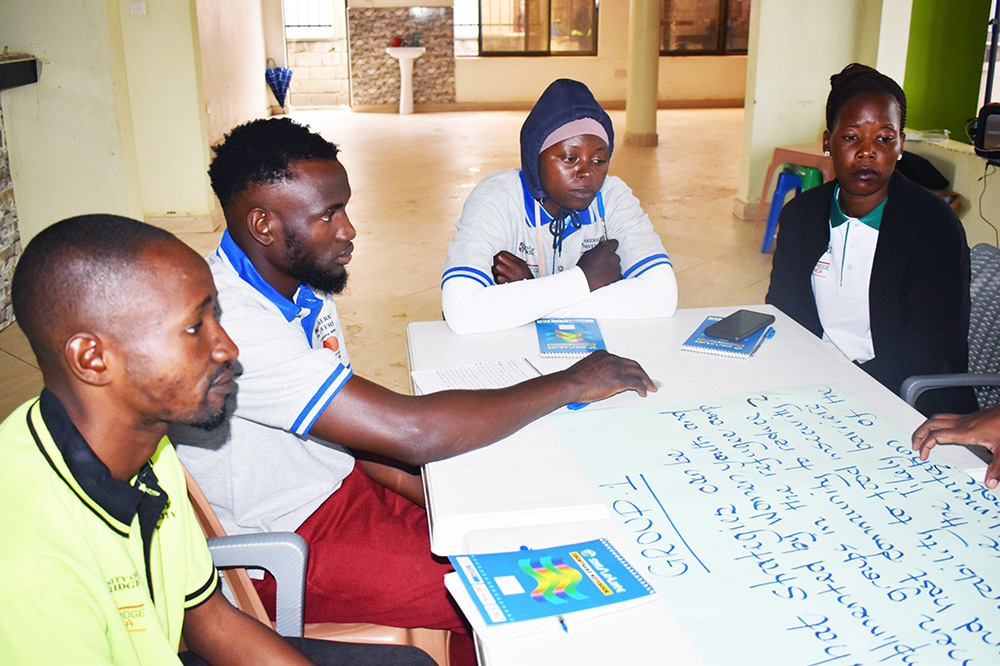
Refugees and communities living around Kasese district discuss the problems brought about by the flooding of River Nyamwamba at Farmers Lounge, Kikuube District. (Courtesy photo)
Families often seek temporary shelter with relatives, in schools, churches, or Internally Displaced Persons' (IDP) camps. The Muhokya IDP camp, established as Uganda’s first climate disaster-specific camp, hosts many flood-affected households.
According to the report, many displaced residents are unable to rebuild because floodwaters deposited large rocks and debris on their land, leaving homes uninhabitable.
The study found that Kasese residents depend on rivers, taps, rainwater, and boreholes for water. Rivers remain the most accessible source, though they are heavily contaminated during floods and droughts.
Researchers noted that washing clothes, disposing of diapers and sanitary materials, carry out open defecation near rivers, thereby worsening water contamination and increasing water-borne diseases such as cholera, typhoid, dysentery and bilharzia.
The report found that access to tap water remains unreliable, with many communities receiving water only a few times a week. Residents reported long queues, high costs, and corruption in water connections.
The report warned that children who spend long hours fetching water often miss school and perform poorly academically. “Instead of attending classes, children have to collect water, which affects their ability to concentrate and perform well,” researchers said.
The experts linked prolonged droughts and floods to climate change and environmental degradation around the Rwenzori Mountains. Participants said flooding has become more destructive since the major disasters of 2013 and 2020.
The study recommended investment in safe water systems, flood-resistant sanitation facilities, drainage infrastructure, river desilting, environmental protection, and stronger enforcement against river pollution.
Researchers urged government agencies, communities, Non-Governmental Organisations, and development partners to strengthen climate resilience programmes and improve access to clean water and sanitation services across Kasese District as a way of solving the resultant effects of flooding.