
How soya milk processing has boosted school feeding nutrition in Busoga
One kilogram of soybeans yields five to six liters of soya milk. The project aligns with the Village Agriculture Model Initiative launched in 2023 by Vice President Jessica Alupo and supports the SET Vision 2030 for poverty alleviation in Busoga.
The Director General of Busoga Consortium for Development Anthony Mula (C) with Busoga Kingdom officials and residents of Busana Village plus officials from Kamuli district local government while at Buteme Light SDA Primary School in Kamuli district. (Credit: Donald Kiirya)
KAMULI - A new initiative processing soya beans into nutritious soya milk is set to enhance school feeding programs, combat malnutrition, and improve learning outcomes among pupils in Busoga.
The Busoga Consortium for Development (BCD), in partnership with China Agricultural University, last week handed over soya milk processing facilities to Buteme Light SDA Primary School in Busana Model Village, Kamuli district.
The school also received height and weight measuring equipment, 500 kilograms of soya beans and 50 kilograms of sugar as a kick-start supply for the program. The height and weight equipment will support the monitoring and evaluation of learners’ growth and development.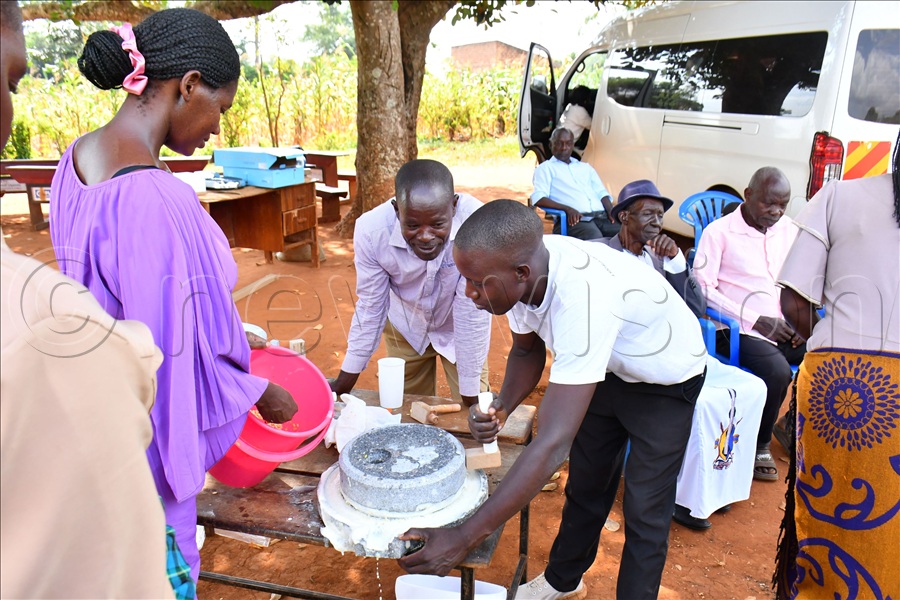
Residents of Busana Model viilage in Kamuli demonstrating how to use one of the Soya Milk processing equipment. (Credit: Donald Kiirya)
Anthony Mula, Director General of the BCD, said the handover flags off the BCD-China Agricultural University Soya Milk Feeding Program. The main launch of the programme is scheduled to take place on July 29th, 2026, in Busana Model Village at Buteme SDA Light Primary School, Kamuli district.
“This program is in response to the need to improve education in our sub-region of Busoga,” he stated.
The initiative revives school gardens and uses locally grown soya to produce milk and by-products such as cakes and bagiyas.
Women and men trained in soya processing in Morogoro, Tanzania, demonstrated the technology during the event.
One kilogram of soybeans yields five to six liters of soya milk. The project aligns with the Village Agriculture Model Initiative launched in 2023 by Vice President Jessica Alupo and supports the SET Vision 2030 for poverty alleviation in Busoga.
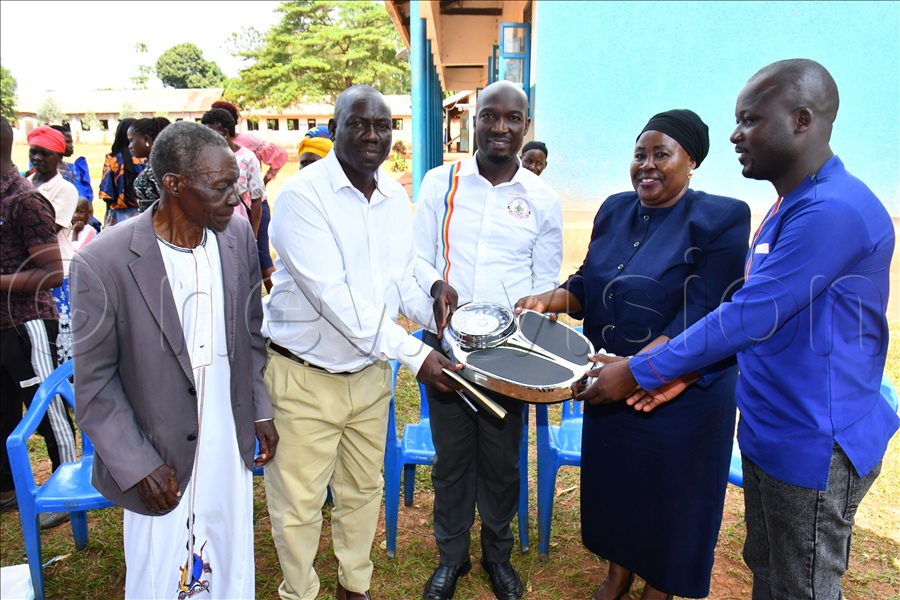
The Director General of Busoga Consortium for Development Anthony Mula (C) joined by Busoga Kingdom's State Minister of Education Nasabu Nantale (2nd R) handing over a height and weighing scale to Steven Makubo (2nd L), the headmaster of Buteme Light SDA Primary School while at Busana village in Kamuli district. (Credit: Donald Kiirya)
Addressing malnutrition and learning gaps
Nasabu Nantale, Busoga Kingdom’s Minister of State for Education, noted a past Prime Minister’s Office survey that revealed widespread stunting due to poor nutrition.
“Many of our learners are going on empty stomachs. Parents hope children eat at school, while teachers assume they have eaten at home — leaving a big gap,” she said.
Nantale commended Buosga Leaders headed by Kyabazinga of Busoga William Gabula Nadiope IV, First Deputy Prime Minister and Minister of East African Community Affairs Rebecca Alitwala Kadaga, Third Deputy Prime Minister Rukia Nakadama, Dr. Mula Anthony and the Busoga Consortium team for spearheading transformative initiatives aimed at ending poverty and improving livelihoods in Busoga.
She encouraged communities across the region to embrace soya production, noting that the crop offers both nutritional and economic benefits.
Dr. James Kuunya, the Kamuli District Production Officer, revealed that about 30% of school-going children in the district are not performing well due to inadequate nutrition.
He expressed hope that the soya milk program, starting at Buteme and expanding to other schools in Kamuli and across Busoga, will improve health, growth, and academic performance.
The headmaster of Buteme Light SDA Primary School, Steven Makubo, welcomed the intervention, contrasting it with the previous plain maize porridge served at the school.
“When children start feeding on soya milk and sugar, no child will be absent himself or herself,” he said.
The school is mobilising the remaining 30% of parents who have not been contributing to ensure all pupils benefit equally.
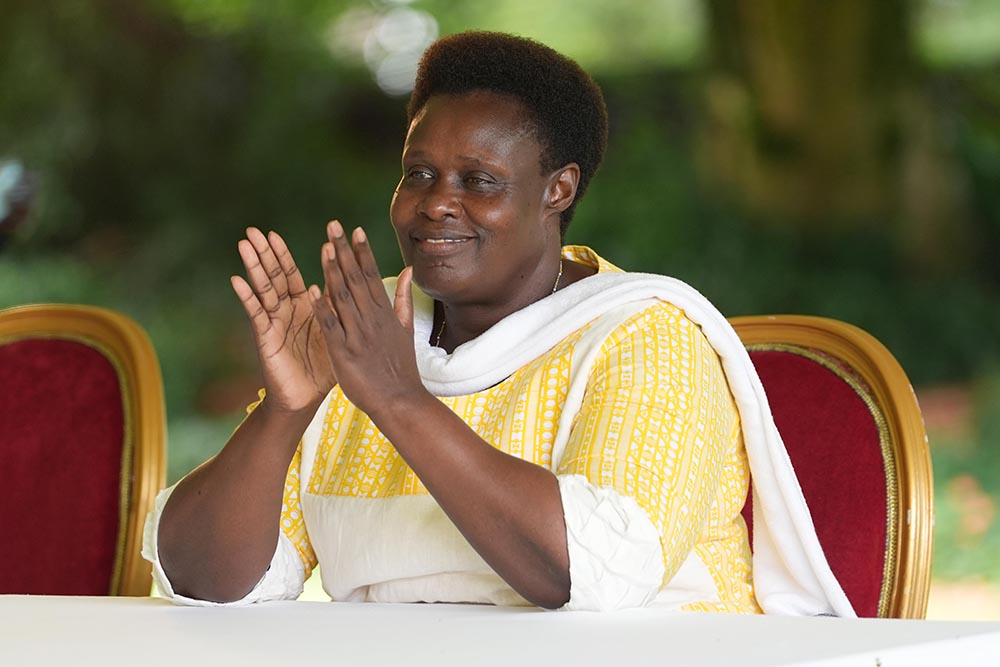
The project aligns with the Village Agriculture Model Initiative launched in 2023 by Vice President Jessica Alupo and supports the SET Vision 2030 for poverty alleviation in Busoga.
Luuka district’s Senior Agricultural Engineer, Alex Kisadha, emphasised promoting school gardens for soya, vegetables, yellow sweet potatoes, and iron-rich beans.
Pupils will gain practical skills they can transfer to their homes, spreading better nutrition practices.
Peter Michael Namuboneyo, the Vice Chairperson LC5 Kamuli District, announced plans to roll out school gardens across all schools in the district.
He urged parents to embrace the revival of the old practice where children carried hoes to school for gardening, with monitoring by school management, inspectors, and councillors.
Beneficiary Sophie Sylvia Nalubega demonstrated the simple processing method: soaking beans for 8–10 hours, removing husks, and grinding with water.
She noted soya milk’s advantages, especially for those allergic to or intolerant of animal milk, and its safety from risks like brucellosis.
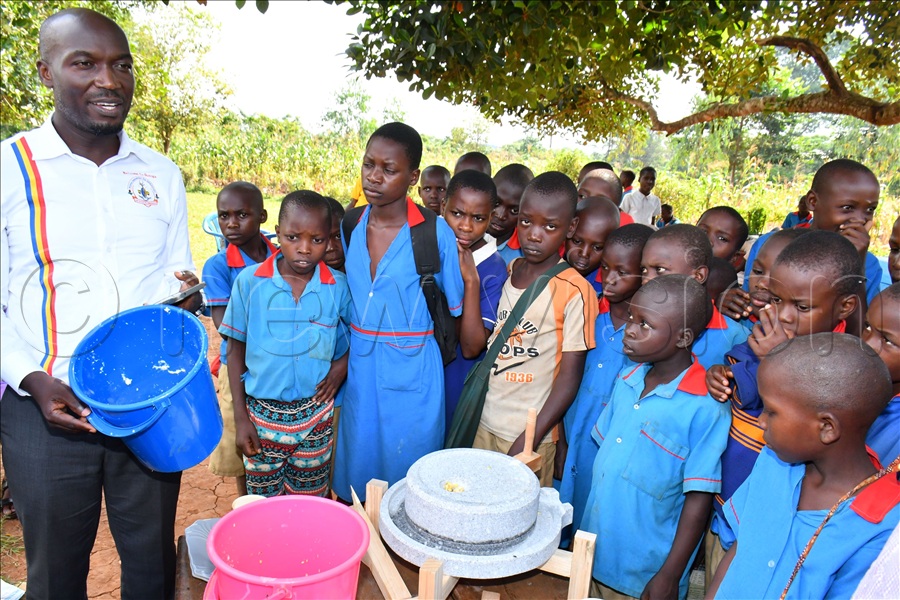
The Director General of Busoga Consortium for Development Anthony Mula (L) explaining about the Soya Milk feeding program in schools while at Buteme Light SDA Primary School in Kamuli district.
Broader impact
The initiative supports local soybean farmers economically while promoting food production as the backbone of the economy. It is expected to reduce stunting, enhance cognitive development, and create a healthier, more productive population.
Officials described soya as a body-building food ideal for school feeding. With strong collaboration between the Busoga Kingdom, local government, development partners, and schools, the program aims to set a replicable model for Uganda.