
How Kayunga farmers are reducing food waste through value addition
Through solar-powered drying technology and other processing equipment, fruits such as bananas, pineapples, jackfruit, and mangoes are transformed into dried banana chips, as well as pineapple and mango juices and wines, among other products.
Through solar-powered drying technology and other processing equipment, fruits such as bananas, pineapples, jackfruit, and mangoes are transformed into dried banana chips. (Photo by Rhyman Agaba)
______________
More than 2,000 farmers in Kayunga district are benefiting from agro-processing initiatives that turn surplus and perishable fruits into dried and packaged products.
This is helping them reduce post-harvest losses while creating additional income opportunities.
Through solar-powered drying technology and other processing equipment, fruits such as bananas, pineapples, jackfruit, and mangoes are transformed into dried banana chips, as well as pineapple and mango juices and wines, among other products.
The processing extends their shelf life to 12 months or longer, allowing farmers and processors to preserve their produce that would have otherwise gone to waste during peak harvest seasons.
Yahaya Wafana, the general secretary of Kangulumira Area Cooperative Enterprise (KACE), said the organisation has 2,447 members, predominantly organic farmers clustered into 24 groups specialising in different fruit enterprises.
He said the cooperative also promotes the participation of women and persons with disabilities (PWDs) in its leadership structures.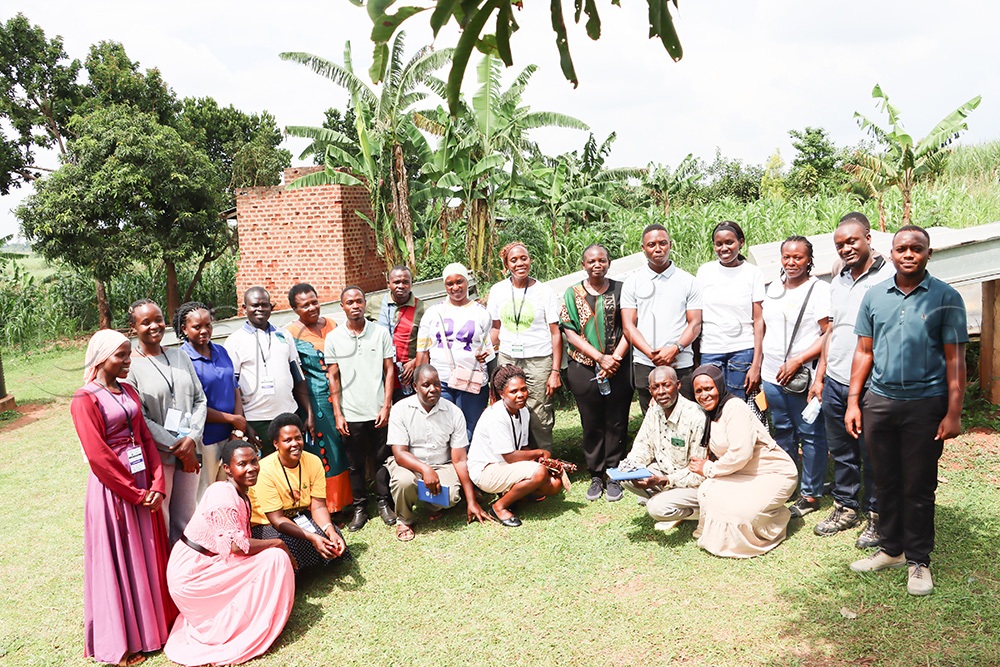
“We have women and PWDs. For example, our chairperson is a lady and so is our treasurer. We usually consider ladies in our leadership because they are trustworthy,” Wafana said.
The farmers' experience was highlighted on November 7, 2026, during a field inspection tour of Flona Commodities Limited's agro-processing plant in Kangulumira sub-county, Ntenjeru county in Kayunga district, as part of activities marking the fifth National Organic Week.
The week-long event, which culminated into a series of agricultural activities at Hotel Africana in Kampala, also featured field visits to Luwero and Kayunga to expose farmers to practical experiences and encourage the adoption of best practices in organic agriculture and value addition.
Turning surplus fruits into marketable products
Florence Isiko, the managing director of Flona Commodities, which hosted the farmers' delegation, said the family-owned enterprise, which she established with her late husband, who was a former NOGAMU board member, has been involved in agro-processing for about 25 years.
She recalled that the business started in a humble wooden structure in Kangulumira, Kayunga, but has since expanded into a processing facility equipped with modern stainless-steel machinery, acquired with support from NOGAMU.
Isiko said the enterprise has created a market for farmers, who previously suffered losses when fruits ripened simultaneously during harvest seasons, leaving them with limited opportunities to sell their produce.
The company now processes and packages products for local and international markets, including customers in Austria and other European destinations.
However, she said accessing financing and affordable processing equipment remains a major challenge. “We are private sector investors. The Government does not support us directly,” Isiko said, adding that the business has largely relied on loans despite the high costs of borrowing.
She called for government assistance, particularly through subsidies on processing machinery and reduced certification costs, to make agro-processing more affordable.
Isiko also cited difficulties involved in importing automated solar-drying equipment, including delays in customs clearance and the high cost of machinery.
The enterprise employs four of her adult sons, who occupy key positions in production, field supervision, marketing and logistics. They are; Arnold Nabongo, Tonny Isiko, Michael Kirya and Edward Isiko.
It also employs more than 16 casual workers, who participate in sorting, washing, peeling, slicing, drying, weighing and packaging produce before it is transported to the market.
She revealed that an exhibition held during the National Organic Week had already attracted interest from a prospective buyer in another African country seeking 100 tonnes of mangoes.
During the factory tour, Nabongo, the Flona Commodities production manager, explained that the company also explores alternative uses for agricultural waste.
“We also occasionally sell the agro-waste to those who seek to buy it, and have worked on products that are meant to be meat substitutes from jackfruit,” he said.
The company produces ready-to-eat products, including chewy banana chips, which are fat-free and high in fibre, as well as sugar-free products.
NOGAMU calls for govt support
Matovu called on the Government to support agro-processors through subsidies on machinery and production inputs, saying this would strengthen markets for farmers and encourage investment in value addition.
"When companies like Flona Commodities exports, they are supporting farmers like Wafana," she said, referring to the pineapple grower and KACE member.
She cited the challenges Flona Commodities experienced while importing processing equipment, including delays at Mombasa port and during customs clearance by the Uganda Revenue Authority (URA), which she said took eight months.
"They have shown us this big equipment and told us the pain they have gone through when they imported it, with delays at customs in Mombasa and the URA for eight months," she said.
Matovu emphasised the importance of organised farmer groups in connecting smallholder producers to processors and markets.
She cited KACE, which operates under the Kayunga District Farmers Association (KADFA) and the Uganda National Farmers Federation (UNFFE), as an example of how farmers can organise themselves to improve their bargaining power and market access.