
Govt moves to set up food and agriculture regulatory authority
The Bill has been referred to the Committee on Agriculture for scrutiny. The proposed authority will regulate the manufacture, processing, importation, exportation, distribution, transportation, advertisement, labelling, storage, sale and supply of veterinary medicines, agricultural chemicals, veterinary equipment and devices.
Agriculture minister Frank Tumwebaze tabled the Food and Agriculture Regulatory Authority Bill, 2026, for first reading in Parliament on August 25, 2026. (Credit: Maria Wamala)
KAMPALA - The Government has proposed the creation of a food and agriculture regulatory authority to bring food, animal medicines, agricultural chemicals and related products under one regulatory framework.
Agriculture minister Frank Tumwebaze tabled the Food and Agriculture Regulatory Authority Bill, 2026, for first reading in Parliament on August 25, 2026.
The Bill has been referred to the Committee on Agriculture for scrutiny. The proposed authority will regulate the manufacture, processing, importation, exportation, distribution, transportation, advertisement, labelling, storage, sale and supply of veterinary medicines, agricultural chemicals, veterinary equipment and devices.
It will regulate food and feed manufacturing, processing and distribution, oversee food and feed safety, develop standards, inspect and certify agricultural inputs, and establish traceability systems for regulated products.
The Bill's memorandum presents a troubling picture of the current food and agricultural regulatory system, stating that the country is “flooded with counterfeit substandard veterinary medicines and agricultural chemicals.”
It cites concerns over medicines and chemical residues, aflatoxins, harmful microorganisms and heavy metals in food and feed, warning that such contaminants compromise public health and the safety of agricultural exports.
It argues that the absence of a single body overseeing the food and agriculture value chain “undermines the effectiveness of regulation” and creates uncertainty for stakeholders.
The proposed authority will inspect food premises, certify meat for public consumption, inspect and certify fish, regulate processed and semi-processed food, and oversee the storage and transportation of food.
The Bill seeks to regulate food packaging, labelling and advertising, while prohibiting the use of radioactive materials, heavy metals and banned substances in food. It provides for residue monitoring to detect harmful substances in food products.
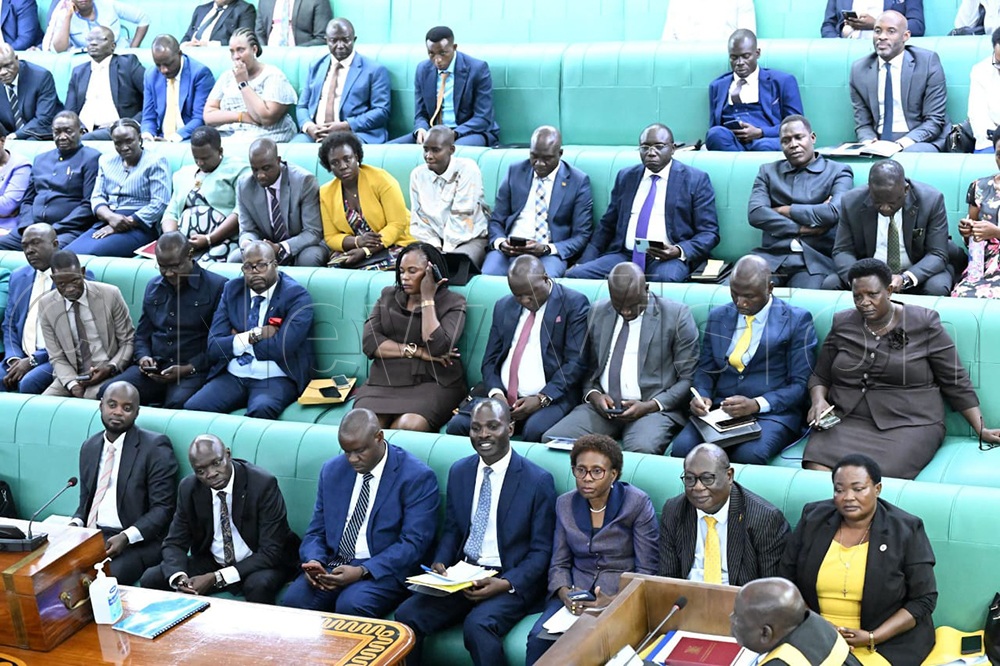
Members of Parliament during Plenary on Tuesday. (Credit: Maria Wamala)
For agricultural chemicals, the Authority will license manufacturers, distributors, fumigators and commercial applicators. It would regulate the import and export of chemicals, as well as their packaging and labelling, storage, sale and advertising.
The Authority will have powers to recall agricultural chemicals and deal with prohibited, banned, restricted, falsified or adulterated products.
The Bill proposes inspectors and analysts with powers to access establishments, conduct sampling and analysis, seize adulterated products and oversee the disposal of obsolete, banned, prohibited and expired products.
The proposed authority will be a body corporate with perpetual succession. Its functions include the registration of veterinary medicines, veterinary devices, veterinary equipment, agricultural chemical application equipment and agricultural chemicals for use in Uganda.
The authority will be governed by a nine-member board appointed by the minister. The board will comprise a chairperson, six members with expertise in veterinary medicine, agriculture, pharmacy, standards and environmental science, and two representatives of farmers nominated by a recognised farmers' federation.
The Bill contains 13 parts, 101 clauses and three schedules. It seeks to amend the Dairy Industry Act, Fisheries and Aquaculture Act, National Coffee Act and Animal Feeds Act, while repealing the Agricultural Chemicals (Control) Act and the Food and Drugs Act.
The proposed law seeks to give the Minister power to issue written policy directions to the authority.
The Government argues that the new framework would improve the quality and safety of agricultural inputs, strengthen consumer protection and help Uganda gain access to regional and international agricultural markets.
The Bill moves to the Agriculture Committee, where MPs are expected to examine its regulatory, institutional and enforcement provisions before it returns to the House for further consideration.
The public, including experts, are expected to provide their views on the Bill.