
Govt commits to promote organic agriculture to create wealth, employment
Third Deputy Prime Minister Rukia Nakadama has reaffirmed Government’s commitment to promoting organic agriculture as a driver of wealth creation, employment and environmental sustainability, urging stakeholders to invest in production, processing, certification and competitive value chains to expand Uganda’s access to local and international markets.
The Third Deputy Prime Minister, Rukia Nakadama (front row, in yellow), poses for a group photograph with NOGAMU officials, delegates and children of delegate Ali Jalali after the opening of National Organic Week at Hotel Africana in Kampala on Wednesday, November 4, 2026. (Photo by Francis Emorut).
_______________________ The Third Deputy Prime Minister, Rukia Nakadama, addresses participants during the opening of National Organic Week at Hotel Africana in Kampala on Wednesday, November 4, 2026. (Photo by Francis Emorut).
The Government is committed to promoting organic agriculture to create wealth and employment for Ugandans, the Third Deputy Prime Minister, Rukia Nakadama, has said.
“I wish to make one thing very clear: The Government, under the able leadership of His Excellency Yoweri Kaguta Museveni, recognises organic agriculture as an important pathway for Uganda's agricultural transformation, environmental sustainability and wealth creation.
Nakadama told delegates from Rwanda, Kenya, Uganda, Tanzania, Rwanda and Europe that Uganda has had a National Organic Agriculture Policy since 2019, which is evidence of the Government's recognition of the sector and its contribution to national development.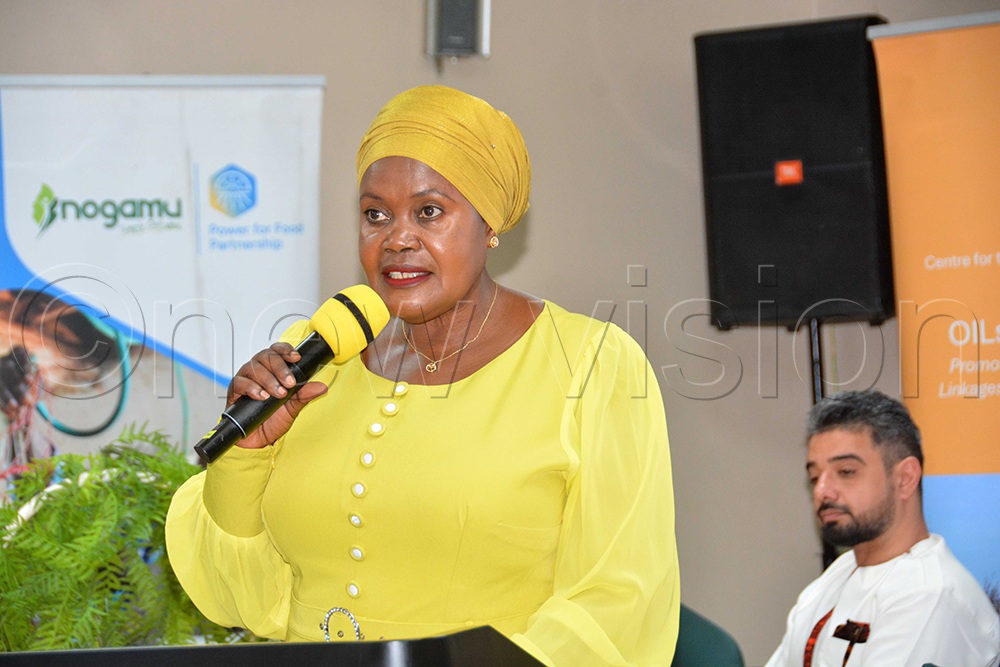
She informed the audience that the Government is now undertaking consultations on the Regulatory Impact Assessment to strengthen the regulatory and institutional framework for organic agriculture.
She added that the process is expected to proceed to validation in the last week of November 2026 and appealed to all stakeholders to participate actively.
“We must establish a regulatory environment that stimulates increased production and guarantees safety and integrity of organic products, builds consumer confidence and supports farmers, exporters and investors,” Nakadama stated.
She pointed out that the government's commitment is to move beyond policy recognition into practical implementation, investment mobilisation, institutional coordination and market development.
She noted that organic agriculture, powered by renewable energy, can contribute directly to household income growth, food and nutrition security, climate resilience, biodiversity conservation, employment creation, import substitution and export expansion.
“Our ambition must be to make organic agriculture a vehicle for commercial agriculture, industrialisation and sustainable wealth creation,” she said.
Nakadama made the remarks during the opening of the four-day National Organic Agriculture Week at Hotel Africana in Kampala on November 4, 2026.
She urged stakeholders not to simply boast about the high demand for organic products, but to produce goods that are competitive on the international market.
“However, demand alone will not make us competitive. We must invest in production capacity, productivity, processing, certification, storage, logistics and market infrastructure. We must harness renewable energy for productive use in agriculture, including irrigation, cold storage and agro-processing.
Our focus must shift from simply producing organic, regenerative and agroecological products to building competitive, commercially viable value chains that generate jobs, increase exports and create wealth for our people. The opportunity before us is clear. The market exists. The policy foundation is in place. The institutions are mobilised. What we must now deliver is scale, investment, productivity and competitiveness,” Nakadama said.
She commended NOGAMU and AfrONet for being at the forefront of promoting organic products, saying the government recognises them as strategic partners in developing Uganda's organic industry and advancing Africa's organic agenda.
“We value their leadership, partnerships, technical expertise, farmer mobilisation, market development and policy advocacy,” she said.
“Our ambition should be to make ONE-AFRICA the African organic and nature-positive industry what BIOFACH is to the global organic industry. We need an African platform where African producers meet African buyers, where African businesses trade with one another, where investors discover opportunities and where the world comes to source Africa's organic, regenerative and agroecological resources,” she said.
Nakadama told delegates that through ONE-AFRICA, Uganda can promote intra-African trade, leverage the African Continental Free Trade Area, attract investment, strengthen African brands and connect producers to global markets.
She encouraged development partners to deepen the“The future of this sector requires government, farmers, the private sector and development partners to work as one,” she said.
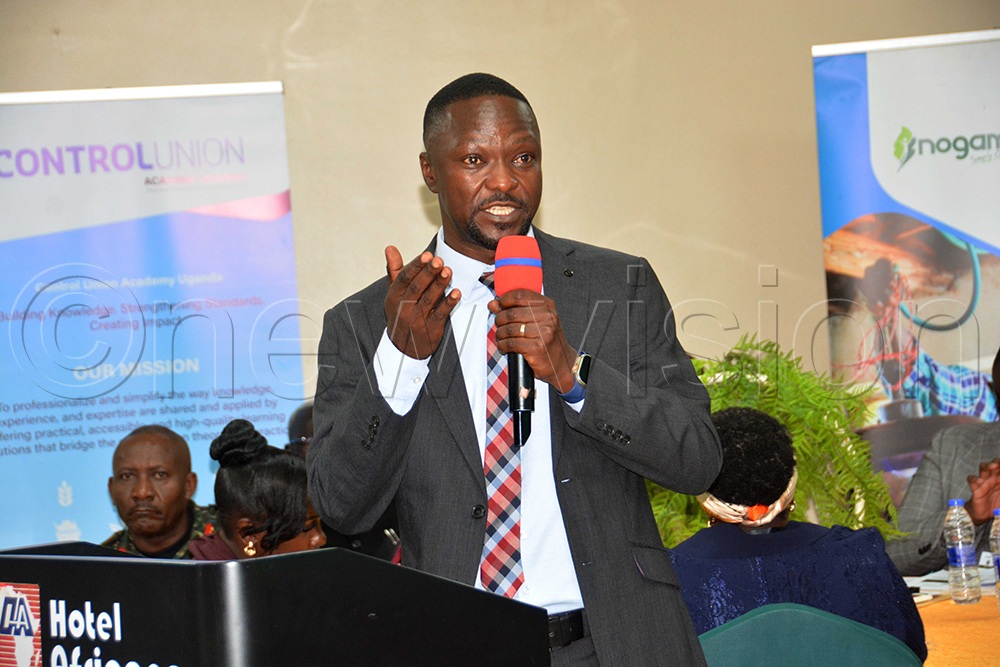
NOGAMU Chief Executive Officer Chariton Namuwoza addresses participants during the opening of National Organic Week at Hotel Africana in Kampala on Wednesday, November 4, 2026. (Photo by Francis Emorut).
The chief executive officer of NOGAMU and president of AfrONet, Chariton Namuwoza, said organic agriculture offers employment opportunities, with many factories now manufacturing organic inputs.
He added that organic agriculture also offers opportunities for tourism, as products have been displayed at different sites.
Namuwoza raised concern over the number of patients admitted to hospitals, including young people suffering from diabetes, hypertension and cancer, attributing the illnesses to the consumption of unsafe food.
On the global market, he said there was high demand for organic products, with the market valued at 147 billion euros (about sh669.9 trillion). He called on African countries to unite to meet the demand and become a superpower in organic agriculture.
The commissioner for crop production at the agriculture ministry, Alex Lwakuba, told participants that the country is grappling with the degradation of ecosystems, which has resulted in poor-quality food.
He said Uganda is the leading country in Africa in promoting organic agriculture.