
FAO urges shift from funding to sustainable financing of Uganda’s forestry sector
Leonidas Hitimana, the FAO sector head of Forestry, Climate and Environment in Uganda, said developing the capacity of financial institutions to understand and finance forestry enterprises was critical to ensuring the sector's long-term growth.
FAO urges shift from funding to sustainable financing of Uganda’s forestry sector
KAMPALA - The Food and Agriculture Organisation (FAO) of the United Nations (UN) has called for a shift from traditional funding approaches to sustainable, long-term financing models to unlock investment in Uganda’s forestry and wood value chain.
Leonidas Hitimana, the FAO sector head of Forestry, Climate and Environment in Uganda, said developing the capacity of financial institutions to understand and finance forestry enterprises was critical to ensuring the sector's long-term growth.
He said Uganda's forestry sector required more than short-term funding interventions, urging stakeholders to establish sustainable financing mechanisms that could support businesses throughout the wood value chain.
“Developing the curriculum is not the end of the work. It is where the real work begins,” Hitimana said.
He was speaking during a workshop on market and institutional assessment findings and recommendations, and validation of the Sustainable Forestry and Wood Value Chain Financing Curriculum, held today at Protea Hotel in Kampala.
The workshop, organised by the Uganda Institute of Banking and Financial Services (UIBFS) in collaboration with FAO, brought together representatives from government, financial institutions, development partners, the private sector and academia.
The participants reviewed the Market and Institutional Assessment Report and validated a specialised curriculum intended to equip financial institutions with the knowledge and skills to finance sustainable forestry enterprises.
Hitimana commended UIBFS for its contribution to developing the curriculum, noting that its effectiveness would depend on continuous training, practical application and sustained engagement with financial institutions.
He also acknowledged the longstanding support of the European Union, Denmark and the Government of Uganda in advancing sustainable forestry development and strengthening the country's wood value chain
Financing the entire value chain
Goretti Masadde, the UIBFS chief executive officer (CEO), said Uganda needed to bridge the gap between the forestry sector's investment potential and access to appropriate financing.
“The opportunity before us is much bigger than financing trees or timber. It is about financing an entire value chain and unlocking economic value,” Masadde said.
She said specialised financial expertise and innovative financing products could empower smallholder tree farmers, strengthen small and medium enterprises (SMEs), modernise wood-processing enterprises and expand market opportunities
According to Masadde, improving access to finance would also enhance Uganda's export competitiveness while supporting sustainable livelihoods and import substitution.
She emphasised that the specialised curriculum should translate into practical financial sector competencies and investment solutions that deliver measurable results.
Masadde said this would contribute to Uganda's ambition of building a $500b economy by 2040.
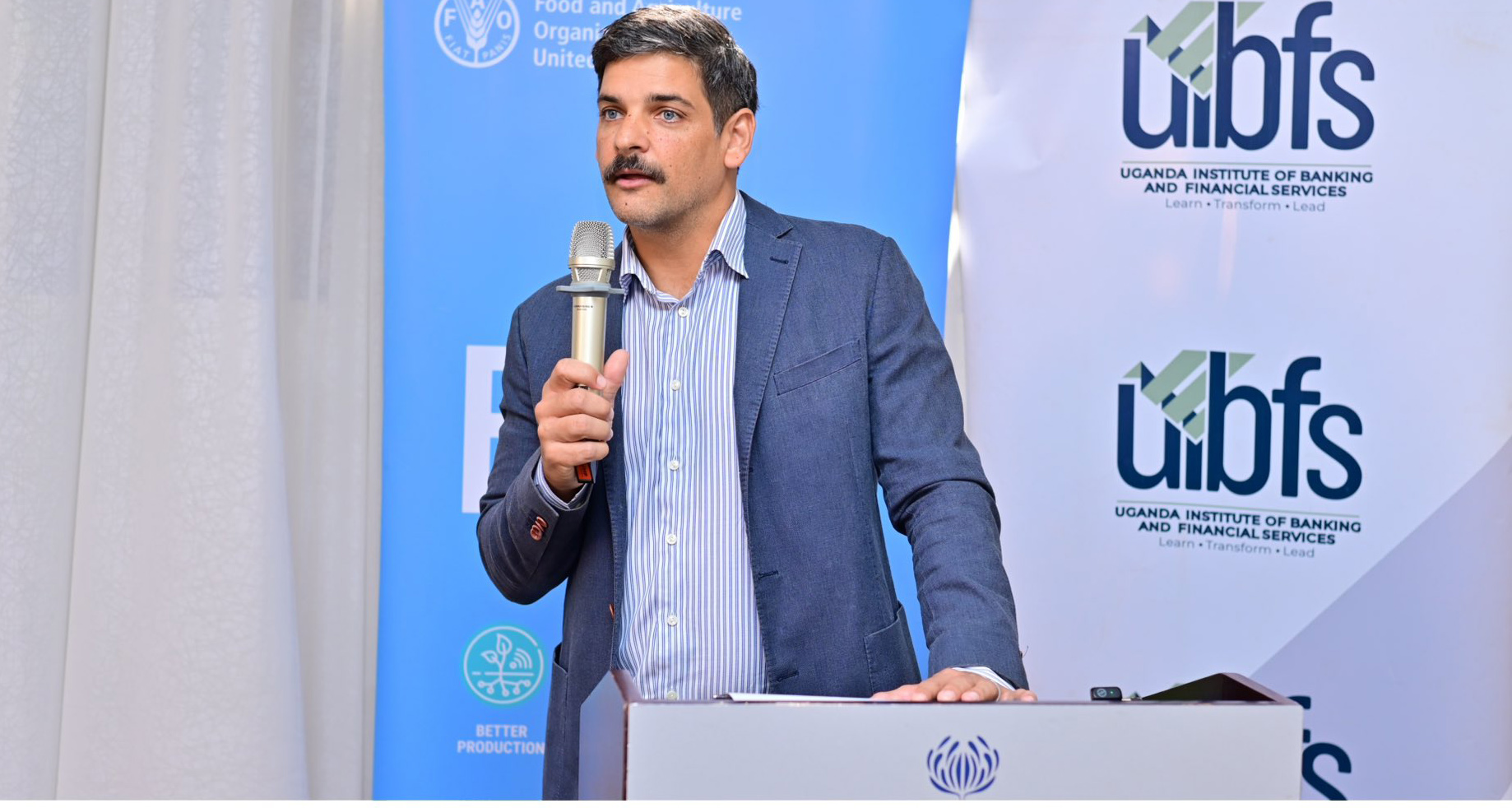
Johan Tejpar
EU calls for innovative financing
Johan Tejpar, a programme officer at the European Union (EU) Delegation to Uganda, responsible for forestry and serving as the focal point for the FAO value chains programme, said access to finance remained a major missing link in developing Uganda's forestry and wood industry.
“Access to finance is one of the key missing links to elevating Uganda’s forestry and wood industry,” Tejpar said.
He urged banks and other financial institutions to develop innovative financing models suited to the unique characteristics of forestry enterprises.
Tejpar also highlighted the EU's forestry programme, co-financed with Denmark, which supports reforestation, forest governance, conservation and the development of wood and non-wood forest value chains.
He commended FAO and UIBFS for their efforts to strengthen access to finance and promote sustainable growth in the sector.
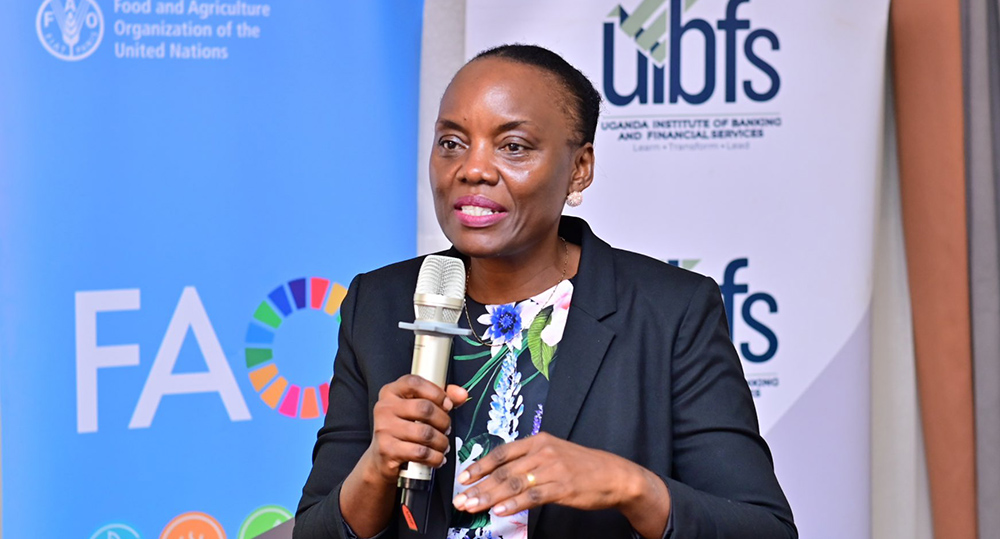
Goretti Masaddde
Building capacity in the banking sector
The initiative seeks to address institutional and knowledge gaps that have constrained financial institutions from adequately assessing and financing forestry-related investments
Through the specialised curriculum, bankers are expected to gain a better understanding of the forestry business environment, investment opportunities and financing requirements across the wood value chain
The programme also seeks to encourage financial institutions to develop products that respond to the needs of different players, including smallholder tree farmers, SMEs and large wood-processing enterprises.
The broader objective is to position forestry not merely as an environmental conservation activity but also as a viable investment opportunity capable of generating employment, supporting businesses and contributing to economic transformation.
The discussions underscored the importance of collaboration between government, development partners, financial institutions and private-sector players in turning Uganda's forestry potential into bankable investment opportunities.
For stakeholders, the validation of the curriculum marks an important step towards building a financial sector capable of supporting sustainable forestry enterprises and unlocking the economic opportunities within Uganda's wood value chain.