
Experts: Put local communities at the centre of conservation
Isaac Obua, a professor at Makerere University’s College of Agricultural and Environmental Sciences, said conservation efforts should examine how people interact with nature rather than focus solely on biology and ecology.
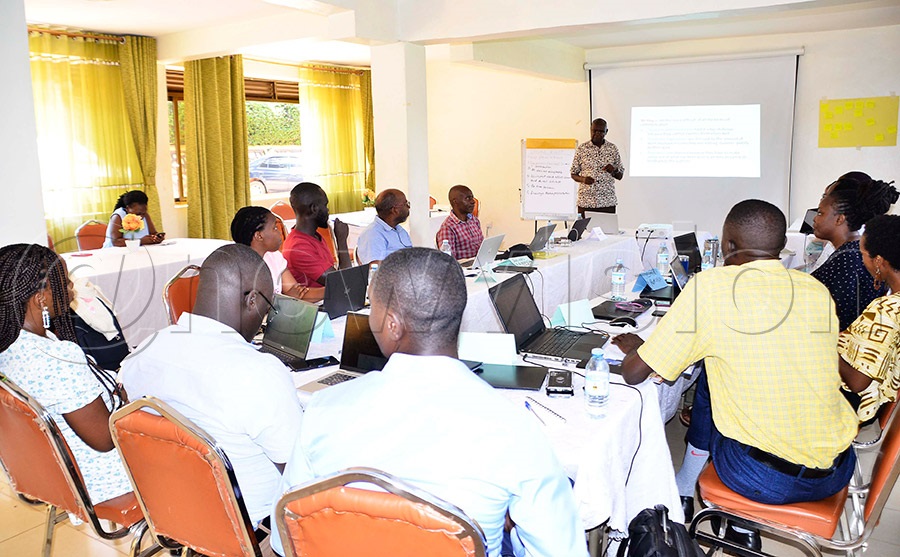
A researcher raises a concern as other participants look on during the workshop. Photo by Juliet Kasirye
Environmental conservation efforts are more likely to succeed when communities living near wetlands, forests and protected areas are involved in decision-making, experts have said.
They noted that conservation programmes often overlook people who depend on natural resources for their livelihoods, while poverty, population growth and climate change are putting increasing pressure on ecosystems.
The experts spoke on Wednesday during a five-day training-of-trainers workshop on Conservation Social Science Research for East Africa, held at Arch Apartments in Ntinda, Kampala. The initiative brings together researchers and PhD students from Uganda, Kenya and Tanzania to strengthen the use of social sciences in conservation.
Isaac Obua, a professor at Makerere University’s College of Agricultural and Environmental Sciences, said conservation efforts should examine how people interact with nature rather than focus solely on biology and ecology.
Prof. Joseph Obua, a Makerere University facilitator, addressing researchers during a workshop. Photo by Juliet Kasirye
“Conservation cannot be achieved without the human component,” Obua said.
He noted that some communities encroach on wetlands to grow crops or build homes, while forests are cleared for timber, firewood and other products.
However, he said environmental degradation is not driven by local communities alone. Some investors fill wetlands with murram or clear forests to grow sugarcane, while other people exploit natural resources because they lack alternative sources of income.
Obua added that climate change disrupts seasonal patterns and affects food production. When households struggle to find enough food, he said, pressure on forests and wetlands can increase as people turn to these resources to survive.
Uganda has policy frameworks that recognise the importance of natural resources, including Vision 2040 and the Fourth National Development Plan, Obua said. However, implementation remains a challenge.
He said government agencies responsible for enforcing environmental regulations often lack adequate funding, staff and equipment. Without vehicles and other resources to reach affected areas, enforcement teams may arrive after wetlands have been filled or trees cut down.
Obua said research, public education and enforcement should complement one another. Research can identify problems, such as declining fish stocks, and provide evidence to guide government action. However, implementing the recommendations depends on the institutions responsible.
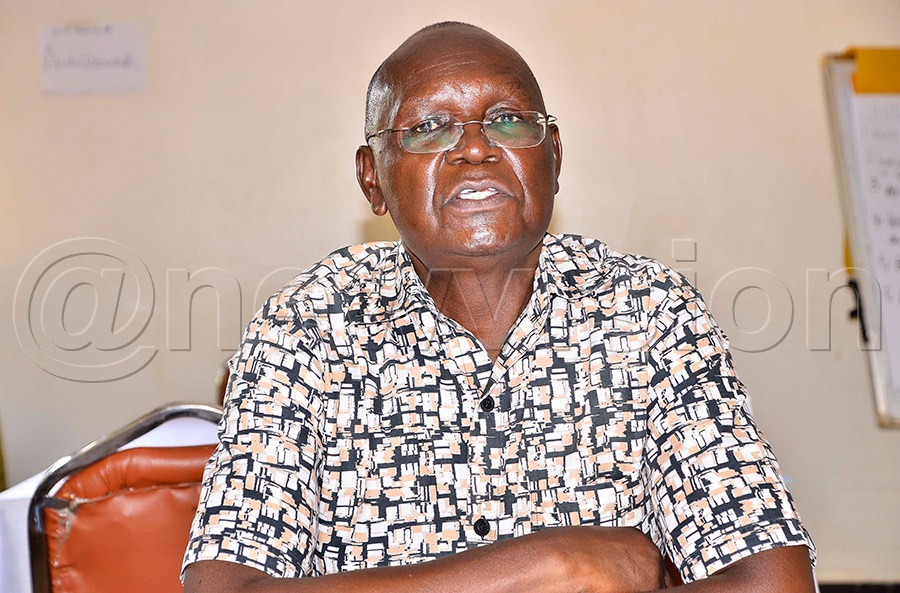
Prof. Joseph Obua, a Makerere University facilitator, addressing journalists during a workshop. Photo by Juliet Kasirye
Editrudith Lukanga, a Tanzanian researcher and executive director of the Environmental Management and Economic Development Organisation, who is also pursuing a PhD in fisheries at Brock University in Canada, said rapid population growth was increasing pressure on natural resources that were not expanding at the same rate.
She said open access to fisheries could encourage more people to fish, threatening fish stocks, while growing demand for timber and fuel for domestic use was putting additional pressure on forests.
Lukanga said communities could play a greater role in conservation if they were trained, supported and actively involved in decision-making. She urged East African countries to engage relevant stakeholders and protect natural resources for future generations.
Betty Nakibuule, a PhD student at Makerere University’s School of Public Health who is researching the health effects of wetland restoration, said communities should take the lead in conservation because they live closest to the resources.
She recommended that 70 per cent of conservation activities should be carried out at community level. Nakibuule also said unclear wetland boundaries could encourage encroachment and called for them to be clearly demarcated to show which areas should be protected.
Her research examines the relationship between wetland conditions and human health. She said her findings indicate that diarrhoea and malaria are more prevalent in degraded wetlands than in restored ones, while restored wetlands can support better water quality.
Liz Mwangi, a Kenyan researcher helping to establish a regional network of researchers working in conservation social science, said some conservation projects introduce predetermined solutions without consulting the communities affected.
She warned that such approaches could worsen human-wildlife conflict. For example, installing a fence without consulting residents could block routes used by neighbouring communities or create other difficulties for people living in the area.
Mwangi said conservation organisations should work with affected communities to develop solutions rather than assume they already know what those communities need.
The five-day training also sought to equip researchers with communication, writing and research skills to help them share evidence with communities, policymakers and conservation organisations. Participants are expected to promote and extend this approach across East Africa.