
Busoga leaders push for irrigation to unlock agricultural potential
The leaders said expanded irrigation infrastructure, coupled with existing government poverty alleviation programmes, would boost agricultural productivity, attract investment and create employment opportunities across the sub-region.
The leaders in a group photo after a consultative meeting on the Busoga Strategic Plan at Nile Village Hotel in Jinja city. (Photos by Charles Kakamwa)
________________
Political, religious and cultural leaders in Busoga have urged the government to prioritise the establishment of irrigation schemes, arguing that year-round agricultural production is key to unlocking the sub-region's economic potential and reducing poverty.
The leaders said expanded irrigation infrastructure, coupled with existing government poverty alleviation programmes, would boost agricultural productivity, attract investment and create employment opportunities across the sub-region.
“Busoga is blessed with fertile soils and abundant water from the numerous water bodies around us. However, we have not fully exploited our agricultural potential because we practice rain-fed agriculture,” Sharif Mangaraine, the Buyende district LC5 chairperson, said.
“If government installed irrigation schemes across Busoga, our people would be able to produce all year round, other than waiting for the seasonal rains, which would translate into increased income and food security,” Bishop Geoffrey Wako, leader of Born Again churches in Kaliro district, added.
Busoga is bordered to the south by Lake Victoria, which separates it from Kenya and Tanzania, to the west by the River Nile, to the east by the River Mpologoma and to the north by Lake Kyoga. The sub-region is also endowed with numerous streams and wetlands.
The leaders made the remarks on Monday, June 8, 2026, during a consultative meeting on the Busoga Strategic Plan at Nile Village Hotel in Jinja city. The meeting was spearheaded by Science, Technology and Innovations, Office of the President (STI-OP).
The week-long engagement brought together members of the Busoga Think Tank, a team tasked with gathering views and analysing enterprises to identify the most viable economic opportunities, alongside LC5 chairpersons, chief administrative officers, commercial officers and resident district commissioners.
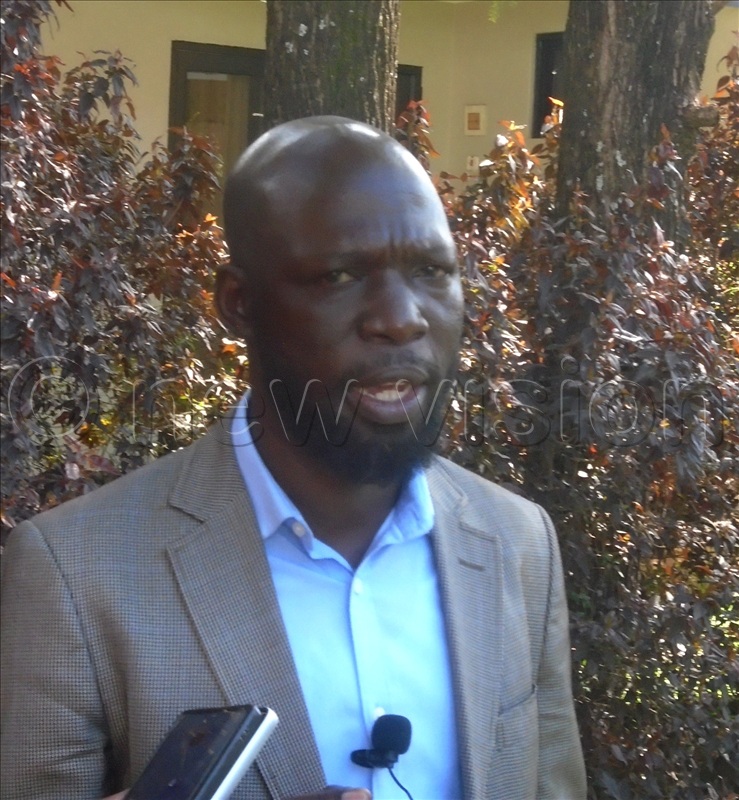
Sharif Mangaraine, the Buyende district LC5 chairperson
During the meeting, Dr Halid Kirunda, a senior principal research officer at the National Agricultural Research Organisation (NARO), stressed the need to transform mindsets and adopt productive practices if Busoga is to regain its economic strength.
He cited the Netherlands, which he said is only one-sixth the size of Uganda geographically, yet ranks among the world's leading exporters of agricultural products because of its adoption of modern technology and efficient farming practices.
“Busoga was prosperous, and the Busoga cooperative union once lent money to the government of Malaysia, but what went wrong? It is partly due to loss of integrity, collapse of industries and institutional weaknesses,” he argued.
In its presentation, STI-OP noted that the Uganda Bureau of Statistics (UBOS) Multidimensional Poverty Index Report of 2022 ranked Busoga 10th out of 13 sub-regions.
In both surveys, Buganda and Bunyoro ranked first and second, respectively.
“Truth is that people in Busoga are hardworking and the area is blessed with favourable weather conditions; fertile soils and water, but unfortunately, the majority work without involving calculations, which explains why the sub-region dropped from third to tenth position in development,” Sam Mulomi, Principal Programme Officer at STI-OP, noted.
Mulomi said the Ministry of Science had developed the Kibalo App to help farmers and businesspeople assess potential investments and select the most profitable enterprises.
“The major objective is to reduce poverty levels by guiding farmers and business people in the various regions on the best value chains they can undertake,” he said.
For Busoga, STI-OP and the Busoga Think Tank have identified cocoa, coffee and oil palm as the most viable cash crops. They have also prioritised food crops such as cassava, maize, beans and sweet potatoes, alongside poultry and fish farming.
Dr Joshua Isiko, Team leader at the Productivity Acceleration Bureau under STI-OP, said consultations are expected to conclude by August this year, with a copy of the Busoga Strategic Plan scheduled to be presented to President Yoweri Museveni by early September ahead of its launch.
Busoga will become the second sub-region to develop a strategic plan after Bukedi, whose Sub-Regional Strategic Development Plan for Accelerated Wealth Creation was launched by President Museveni in August 2024.
During that launch, the President pledged that every sub-region that develops a strategic development plan would receive sh50 billion annually until 2040 to support implementation, according to Dr Isiko.