
Uganda winning neglected tropical diseases fight, inches closer to elimination goals
“With the support of the Reaching the Last Mile Fund and our dedicated partners, we are optimistic that Uganda will have eliminated this disease in line with the WHO 2030 roadmap.”
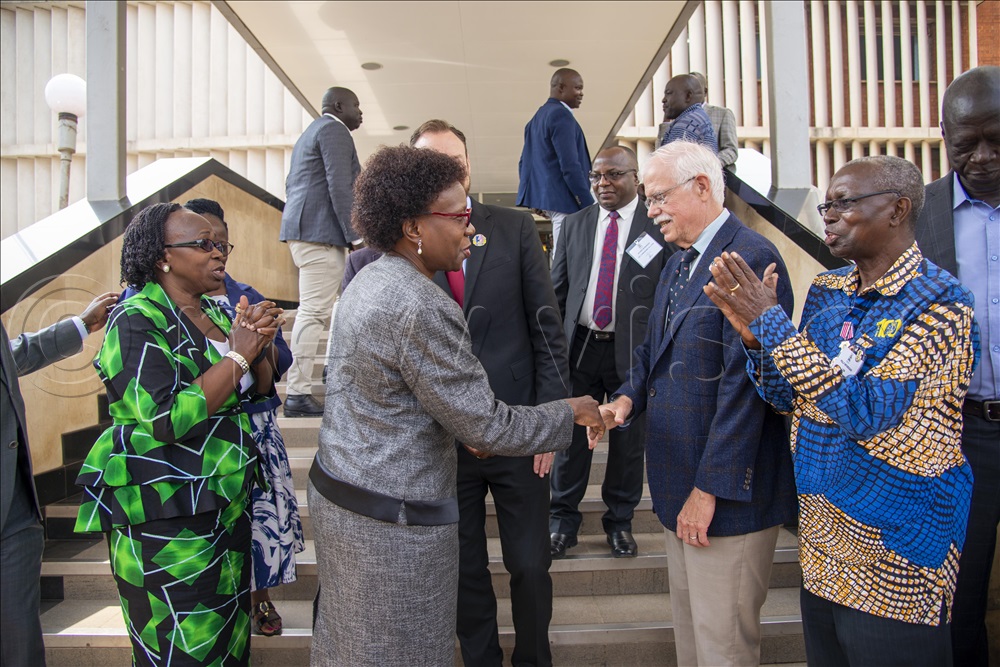
Dr Jane Ruth Aceng, the Minister of Health, lauded the country’s significant progress since embarking on the onchocerciasis elimination journey in 2007. (Photos By John Musenze)
________________
Uganda is on the brink of making history in the fight against neglected tropical diseases (NTDs), with significant progress achieved in eliminating river blindness and other debilitating conditions.
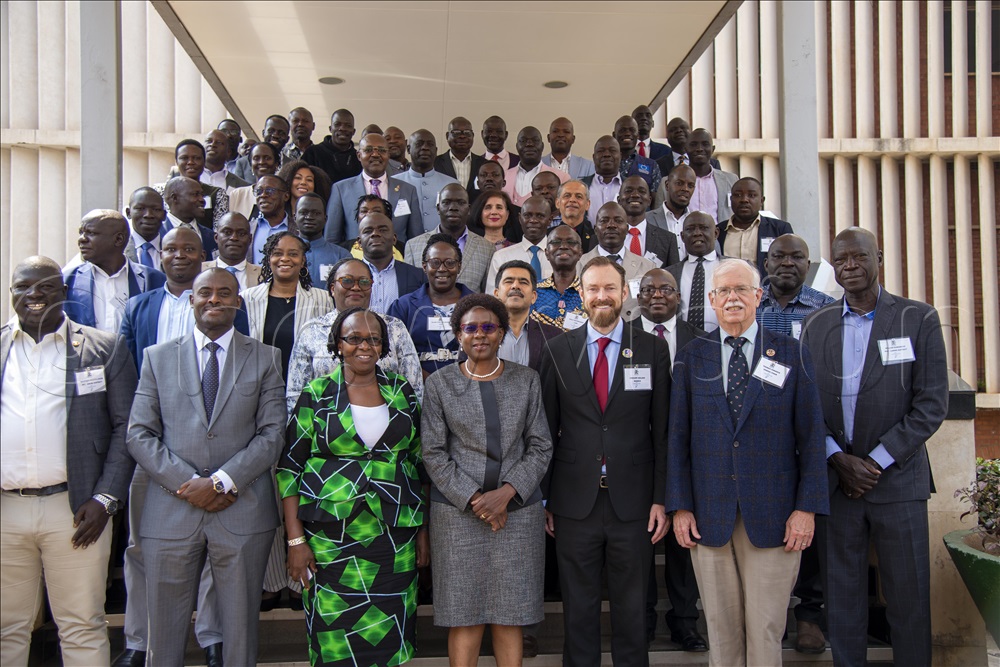
This was the revelation at the opening of the 18th session of the Uganda Onchocerciasis Elimination Expert Advisory Committee (UOEEAC) on August 5, 2025, at the Sheraton Kampala Hotel. The session brought together global experts, partners and government leaders.
Uganda's health minister Dr Jane Ruth Aceng hailed the meeting as a celebration of a long and hard-fought journey.
“Last year, it was reported that 45 out of the 50 districts in 16 of the 17 river blindness foci (areas where the disease is endemic, meaning it is regularly found and transmitted within a specific geographic area) had met the criteria for interruption of Onchocerciasis transmission. That means 7.4 million out of the 8.2 million Ugandans previously at risk are now safe,” she said.
Onchocerciasis, or river blindness, is a parasitic disease transmitted by blackflies. It causes intense itching, skin disfigurement and, eventually, irreversible blindness.
Uganda’s aggressive intervention since 2007, led by UOEEAC and supported by a coalition of international partners, has yielded unprecedented results.
Only five districts—those of Upper Madi not bordering South Sudan—remain to be fully evaluated for transmission status.
“This is a tremendous public health success,” Aceng said.
“With the support of the Reaching the Last Mile Fund and our dedicated partners, we are optimistic that Uganda will have eliminated this disease in line with the WHO 2030 roadmap.”
The minister particularly commended the Carter Centre for extending mass treatment to refugee settlements and also called for greater cross-border collaboration, especially with South Sudan and Kenya, to tackle other NTDs like trachoma and leishmaniasis.
The World Health Organisation defines NTDs as a diverse group of conditions caused by a variety of pathogens (including viruses, bacteria, parasites, fungi and toxins) and associated with devastating health, social and economic consequences. NTDs are mainly prevalent among impoverished communities in tropical areas, although some have a much larger geographical distribution.
The milestone achievements go far beyond river blindness
“Uganda has halted mass treatment for lymphatic filariasis in all 70 endemic districts and is currently conducting assessments in 13 of them,” Aceng said.
“Trachoma has been eliminated in 50 of the 52 endemic districts, while the Gambiense form of sleeping sickness was certified as eliminated by the WHO in 2023.”
She, however, warned that bilharzia (schistosomiasis) remains a significant burden. Pilot mass treatments for children under five using paediatric praziquantel are underway in selected districts.
“We thank the Carter Centre for agreeing to support the integration of bilharzia treatment in the five remaining districts,” she said.
Health ministry environmental health commissioner Dr Herbert Nambasa underscored the importance of domestic financing and district-led integration.
“We have over 20 NTDs. That’s why we developed a master plan—a roadmap that’s enabled districts to integrate NTD interventions into their local budgets and programmes,” he explained.
Nambasa also praised the resilience of health teams in the border districts, who have remained steadfast despite logistical and security challenges.
“Managing trans-border disease transmission is tough. But through persistent collaboration with our neighbours, we are confident that the final five districts will be cleared in the coming years,” he said.
Remarkable strides
“Uganda has interrupted transmission in 16 of 17 onchocerciasis-endemic zones. The country’s elimination of Gambiense sleeping sickness further shows what’s possible. But globally, 99% of onchocerciasis cases remain in 31 African countries, so the urgency to strengthen surveillance and cross-border partnerships is real,” he said.
He reaffirmed WHO’s support to Uganda and called for enhanced integration, sustainable financing, and stronger multi-sectoral coordination. “Let us leverage Uganda’s milestones to accelerate progress continent-wide,” he urged.
Gregory Noland, representing the Carter Centre, reflected on the legacy of former US President Jimmy Carter, a champion of NTD elimination.
“President Carter, who passed away last December at 100, dedicated his post-presidency to fighting neglected diseases like river blindness. His legacy lives on in our work here in Uganda,” Noland said.
He acknowledged the pain of losing USAID’s support due to funding cuts but expressed hope in the Gates Foundation and UAE’s Reaching the Last Mile Fund, a six-year investment aimed at eliminating onchocerciasis and lymphatic filariasis across Africa.
“This is the first initiative of its kind. Uganda and other countries now have access to resources to finish what we started,” he said.
Noland emphasised the importance of integration in light of limited funding. “We must use our resources wisely—integrate NTD efforts and even collaborate across sectors such as mental health. The Carter Centre is proud to support Uganda’s new mental health initiatives,” he added.
The meeting chair, Professor Thomas Unnash, summarised the shift in strategy.
“Initially, we focused on mass drug administration and vector control. But now, the goal is post-elimination sustainability—ensuring the disease doesn’t return, especially in refugee settlements and cross-border zones,” he said.
Uganda’s journey, he noted, is nearing the finish line.
“The agenda for this meeting reflects that the country is in the last mile of a marathon. Let’s ensure we cross that line with strength and coordination,” Prof. Unnash said.
The two-day gathering, which attracted delegations from South Sudan, DR Congo, and Uganda, is a powerful testament to what is possible when governments, global health experts, donors, and communities work together.
According to the Ministry of Health, from nearly 8.2 million people at risk of river blindness, only 600,000 remain. From nationwide mass treatments to targeted surveillance, Uganda’s blueprint is now an African success story.
As Dr Aceng declared, “With unity, science, and sustained effort, Uganda will join Niger and other countries that have conquered river blindness. Let’s get to the finish line—together.”