
Cross-border Women traders decry high cost of COVID-19 test
Due to COVID-19, the Uganda-South Sudan border was closed. Traders say they cannot afford the test fee required to cross to South Sudan, so they have resorted to long-distance trade. However, this has left them counting losses.
HEALTH VIRUS TRADE
The high cost of the COVID-19 test has left women traders at Uganda's border with South Sudan crying foul over failure by traders in South Sudan to pay for the goods supplied.
The closure of borders and travel restrictions due to COVID-19 forced cross-border women traders from Uganda to resort to loading their merchandise on trucks and sending it to their clients in South Sudan, as they could not afford to pay for the COVID-19 test that could allow them to cross the border.
However, the traders accuse their customers in South Sudan of fleecing them huge sums of money by refusing to pay for the goods.
Margaret Auma, the Elegu Women Cross-Border Traders Association chairperson, said while the trade went on smoothly at the start, their customers have since become untrustworthy, something that is causing huge losses to Ugandan cross-border women traders.
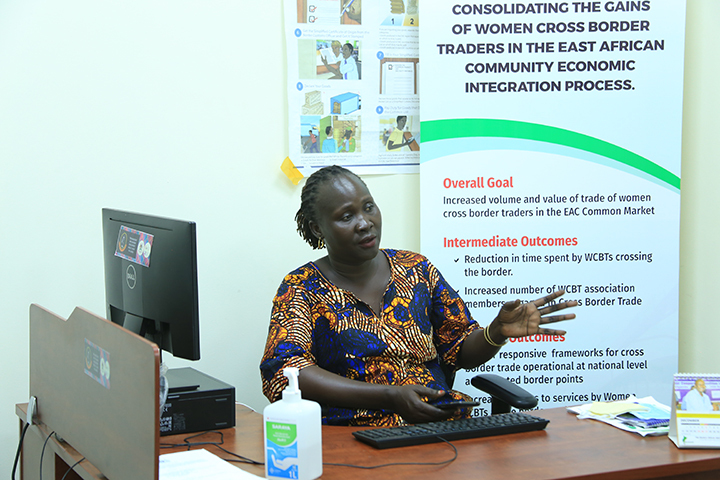
Auma alleged that Ugandan women traders have since lost over sh100m in supplied goods to traders in South Sudan.
"When some customers receive the goods, they tend to deceive that they did not receive the items. Some receive them, but do not send you the money.
"At times, they receive and take long to send the money because they know you cannot cross the border to claim your money. This is affecting our businesses so much," Auma said during an interview recently.
She added: "Personally, I have lost sh3.7m. Some women have even died trying to sneak into South Sudan using illegal routes like through River Unyama to follow up on their payment, while others have been raped."
The cross-border women traders deal in cereals, grains, vegetables, fruits and livestock, among others.
Immaculate Okot, an informal trader at the Nimule-Elegu border, alludes that while they send their goods well labelled to the recipients, they have lost a lot of money in the process.
"The COVID-19 test is so expensive. I cannot pay $50 and yet the profit I get from the sales is less. This is a big challenge. We are struggling to earn a living for our families," she said.
Not true
While the Nimule Women Cross-Border Traders Association chairperson Yemima Semira Erisama acknowledged that some women have died trying to cross through River Unyama and others been raped, she refuted allegations of South Sudan traders fleecing their Ugandan suppliers. She said it is Ugandan traders who are being dishonest.
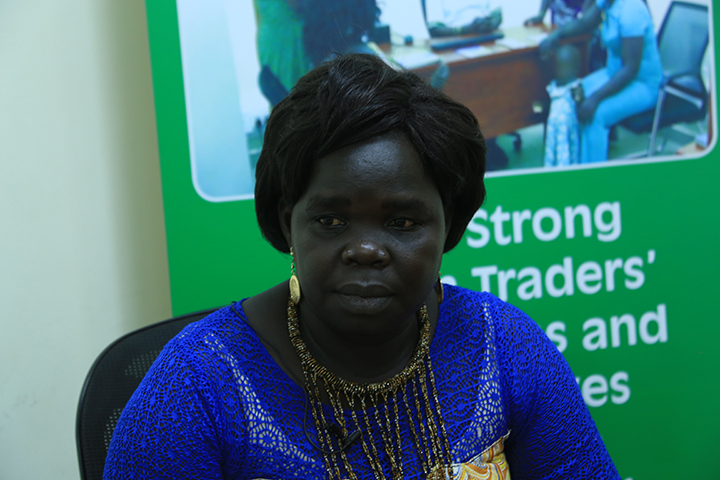
"Initially traders could cross, buy goods and cross back, but that is not possible due to COVID-19 and the travel restrictions. So a truck was put; we send money through mobile money, but some Ugandan suppliers are not trustworthy.
"They pack and send substandard goods which you cannot sell. Others ask for money in advance but when you call them to follow up, they claim they never received the money and you cannot cross the border. So it is challenging for us," Erisama said.
Test expensive
Auma said women traders cannot afford to pay $50 for a COVID-19 test, which is only valid for two weeks.
The country representative for Trade Mark East Africa (TMEA) in South Sudan, John Bosco Kalisa, alluded to the high cost of the COVID-19 tests, which he said is not only affecting cross-border women traders at Nimule and Elegu but the entire region.
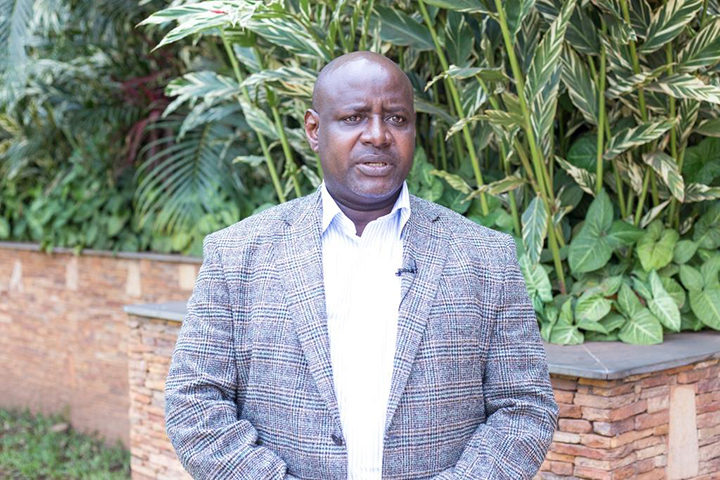
He, however, said the East African Community is working together for a possible solution.
"$50 is too high for these women. That is their livelihood and asking them to pay it only for them to cross the border and sell tomatoes does not make sense," Kalisa said.
He said under the TMEA Safe Trade Zones initiative that is being rolled out, women traders may not require a test as long as they observe the COVID-19 standard operating procedures (SOPs) such as social distancing, sanitizing, hand washing and wearing of face masks.
The programme is developed by TMEA in partnership with Amref Health Africa and seeks to facilitate safe opening of border markets.
Optimism
Despite the negative impact COVID-19 has had on trade, Kalisa is optimistic that it is expected to recover this year, given the numerous initiatives put in place, including the one-stop border posts, and the Economic Recovery Programme, which TMEA is working on, in partnership with the EAC secretariat.