
The Late Festo Karwemera: Salvaging a lost opportunity
I wanted this literary icon that spent 74 of his years brilliantly capturing the essence of the Kiga language to become like the Shakespeare of Kigezi.
OPINION
The late Festo Karwemera who passed away on August 30, 2020, had a dream. He told me his dream back in July 2009 when we met to talk about my work in Kabale promoting literacy.
He said that before he died, he wanted to build a world-class cultural centre so that every Mukiga and everyone who ventured to Kigezi would know the rich heritage of the Bakiga people and their place in Uganda's history, "like the Smithsonian over there where you live in Washington D.C" he would humorously add.
I told him my dream of one day building the first model public library in Kabale town that I would duplicate in every municipality. We immediately grasped the synergy and we made an agreement: if he realised his dream first, he would give me space for a library, and if I realized mine first, I would afford him space for his cultural centre.
It is a crying shame that such a dream from a living legend who died at 95, great innings by any measure, was not realized. In the many eulogies I read, I didn't see mention of his dream, yet I am sure he shared it widely as a man that had such tenacity and a passion for the preservation of culture for the next generation in a tangible way.
His dream is not insignificant, it is key to the pillars of building not only literacy locally, but also cultural fluency for the growing numbers of Bakiga who no longer reside in Kigezi.
It begs the question why the late Karwemera who had access to every learned, top-notch Mukiga in high places among them: two Bakiga prime ministers, the longest-serving governor of the Bank of Uganda, well-traveled wealthy businessmen of international stature, and more pointedly, the Kabale Municipality MP who landed the job of Minister of Tourism, Wildlife and Antiquities, Serapio Rukundo (2006 - 2011) was not able to leave us that world-class museum or cultural center to showcase his work.
I imagine walking into such a place and hearing his recorded voice narrating his own curated work of art, literature and history before our eyes. What a legacy that could have been for generations!
We both made a stab at our ideas; his was a collection of items from the ancient Kiga culture crammed into a small space tucked away inside a touristy hostel on the back streets of Kabale town.
He gave me a personal tour of what he called a museum in that well-known building run by a Slovenian man - Miha Logar - then called "Edirisa" along with 20 or so Americans that had come to volunteer with my Foundation in 2010. The lighting was poor and the space wholly inadequate for what he wanted to showcase, nevertheless he was proud of it, but desperately wanted to build the concept out of that space with, he said "another 30 pieces that are with me at home".
Mine was born out of an unfortunate circumstance in which the Foundation's book shipment that was supposed to contain only children's books was found to have over 10 pallets of adult books. I decided to put some shelving inside the Foundation's offices so we could off-load the books, and in a very willy-nilly manner, it became the "Reader's Corner". A year later a grant from Kirby Simon Trust allowed us to transform a larger space inside our offices into a properly functioning library with a full-time librarian.
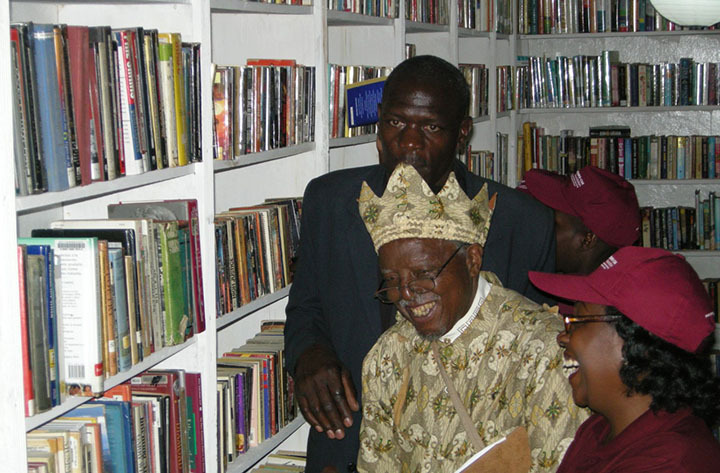
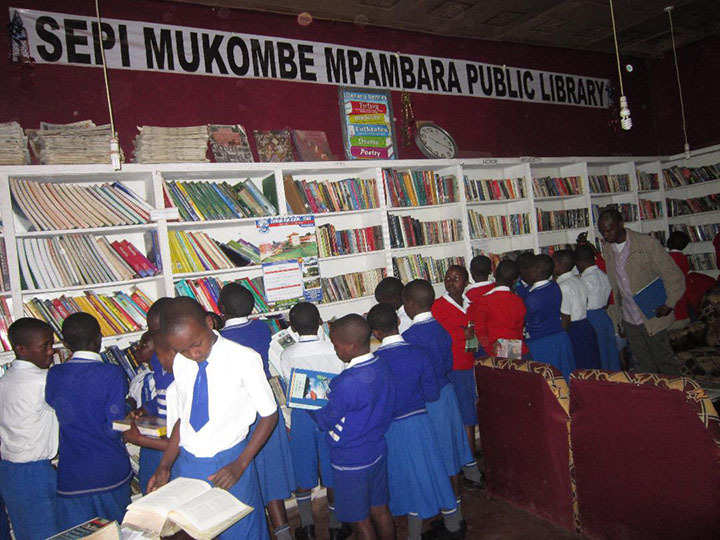
It is this library named for his friend, my father, "Sepi Mukombe Mpambara Public Library" that I invited the late Karwemera to open in July 2012. It wasn't "the dream library", but I honoured my word and gave him the two shelves he asked me to hold his books. When I learned of his passing, my staff and I decided that we would enshrine his legacy in a more visual way and dedicate an entire section to him. But that wasn't enough for me.
I wanted this literary icon that spent 74 of his years brilliantly capturing the essence of the Kiga language to become like the Shakespeare of Kigezi. Shakespeare is of course famous for the acuity of his writing, but in my thinking it also because his books are placed in our hands - in other words, we had to read him as part of the school's reading list, guided by our teachers, time and again. We learn to quote him, we write about him and we laugh and marvel at his words in equal measure. His work is memorable, just like Festo Karwemera's.
So, I designed an initiative, "Katushoome" translated as "let us read" with the tagline "Books to Borrow" which will place his books into the hands of all UPE children in Kigezi. The program rolled out on Monday under COVID-19 guidelines inviting children to our library to borrow books from the children's section.
When schools resume, we plan to work with head-teachers to rotate Karwemera's books so that each child has the opportunity to read him the way we did Shakespeare, guided. In partnership with my Foundation is our dear friend, Dr. Ntabaare, one of the founders of Kabale Book Club and Doreen Kemigisha that uses innovative puppets to bring stories to life as "Mimi and Friends". We are working to enlist other trusted partners in the near future.
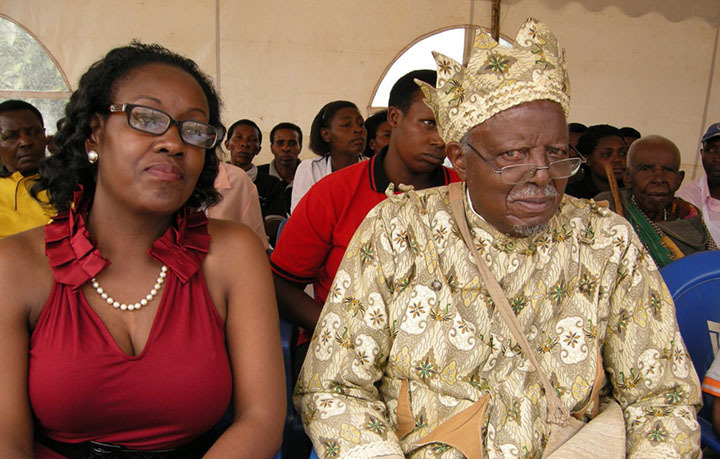
The late Festo Karwemera born January 1, 1925, was a contemporary of my father and we were family friends. I knew him growing up and I saw him grow old. Those that attended the library launch heard the story he told me many, many times with great humour: that in 1969 my father, who he fondly referred to by his Kiga political nickname "Ramuguguza" (pusher and shover till it's done) as Chairman of the National Trading Cooperation had given him his first "real job".
In this job he found himself working alongside about 15 Indian nationals all of whom were more knowledgeable of their job functions than he was. Struggling in the job, he approached my father to talk about this issue. My father, he told me, appointed him supervisor on the spot and told him to apply his great communication skills to ensure things got done!
You only realise the gravitas of this great man we just lost when you consider that he lived 27 years more than my own father and he put to use that communication skill that was obvious even back then to leave us an amazing body of work that now risks lying dormant. Among these works is the translation of the Bible and the dictionary into Rukiga-Runyankore.
Those in high places have hailed him as the guardian of our cultural posterity, but there is no posterity of written records if you cannot put your hands on the books.
That whole "Ramuguguza" spirit is what is behind "Katushoome" as we at the Foundation seek to shine a spotlight on "Kigezi's Shakespeare" by pushing and shoving his books into the hands of a generation of children who have the poorest of reading cultures. Children will be able to quote from my favourite, "Shutama Nkuteyerereze" translated as "sit and let me explain to you".
For while you'll be hard-pressed to find his books in print in Kabale, we have at the Sepi Mukombe Mpambara Public Library purchased and stocked multiple copies of his books.
Patrons will find a new sign that reads: "The Festo Karwemera Collection" that is no longer just two shelves; it is now an entire bookcase that will impressively display his work and hold the copies that will go out to UPE schools when classes resume.
I can authoritatively say that he wrote 30 books (not 20-something that other claim) and starting in November on the Foundation's Facebook page (www.facebook.com/mcoxfoundation/) we will feature each book with the help of Mr. Ivan Mugisha, a lecturer at Uganda Christian University, Bishop Barham University College, Kabale.
In the planning stages for his section of the library, I had a long talk with his daughter, Robinah Tugume, who told me about his last work: a translation of the constitution into Rukiga-Runyankore. She said this particular work at the ripe old age of 95 was completely arduous both in its complexity (of course!) and the sheer volume of the work.
Then she added wistfully, "he was almost finished". I can't help but wonder if he would have finished that great work had even half of the token millions and millions of shillings that arrived for send-off from those in the highest of places had come earlier in his life to help with the heavy lifting of the work of a person they eulogised as a living legend, as the "greatest of that generation".
And that museum now called the "Akeehogo Kaba Karwemera na Baana Babo", it is closed with access only if a family member shows up with a key.
My dream of opening a huge modern library in Kabale is still alive, so his isn't dead yet for when I realise my dream there will be, inside of it a cultural centre in his name. In the meantime, Katushoome.
The author is founder and president of the Mpambara Cox Foundation and publisher of the news aggregation website MothersDailyReport.com