
Investments accelerating Uganda's economic growth
Uganda is one of the top destinations of foreign direct investments in Africa. This is attributed to the conducive business environment.
Uganda is one of the top destinations of foreign direct investments in Africa. This is attributed to the conducive business environment, supportive legal regime, as well as stable political and economic environment, which have been improving and stable since 1986.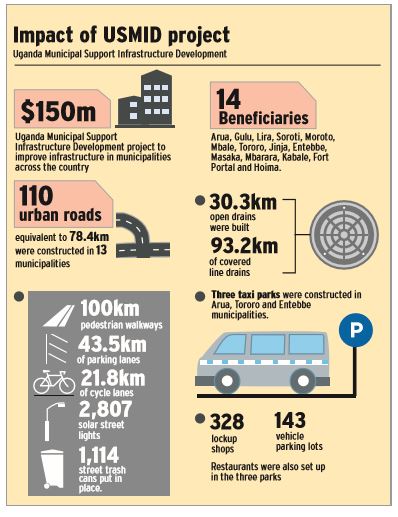
Already, the Government created a One-Stop-Centre (OSC) for business registration and licensing at the Uganda Investment Authority (UIA) in Kampala.
The authority assists in tax advice and registration, immigration and work permit issues, land acquisition and verification, and environmental compliance and approvals. These services save investors both time and money by enabling them to get licences quickly to kick-start their operations.
These can be in various sectors of the economy, including mining, oil and gas and power development projects. This has helped to enhance Uganda's economic growth, improve earnings and create jobs.
MINERALS
There are many private and public investments in the mineral sector. However, some have been groundbreaking ventures that have turned the sector on its head. For instance, the gold refinery venture established in 2017 and the recent project on producing iron ore sponge locally.
These two projects fit well with the third National Development Plan (NDP III) sector goals, where Uganda is looking to increase mineral exploitation and value addition in selected resources for quality and gainful jobs in industrialisation. This is seen reducing the volume and value of imported iron and steel.
On the other hand, it is increasing the volume and value of refined gold exports and copper, as well as deepening investments in the exploration and processing of selected minerals and creating more jobs in the mining sector.
GOLD REFINERY
Three years ago, Uganda commissioned her first gold refinery, thanks to the $15m (about sh55.3b) investment by African Gold Refinery in Entebbe, Wakiso district.
While launching African Gold Refinery, President Yoweri Museveni said it will save the country millions of dollars Uganda has been losing by exporting unprocessed gold. He added that Uganda will not only earn and save more money, but will also create jobs for the youth.
"We have been losing a lot of money by exporting unprocessed gold. When you export unrefined gold, you will be losing about $800,000 (about sh2.9b) per tonne of gold. We are not only losing money, but jobs too. We are exporting jobs," President Museveni said then.
He added that the investment by the Belgians was in line with the country's economic transformation agenda. The country now has about three gold refineries — African Gold Refinery, Bullion Refinery and Simba Gold Refinery. Gold raked in $1.3b last year, becoming the country's top export earner followed by coffee at $438.5m and minerals brought in $103.1m.
Uganda has about 7.8 million ounces of gold reserves in different parts of the country, including the districts of Bushenyi, Mbarara, Kabale, Kisoro, Rukungiri, Kanungu, Busia, Mubende, Moroto and Kaabong. 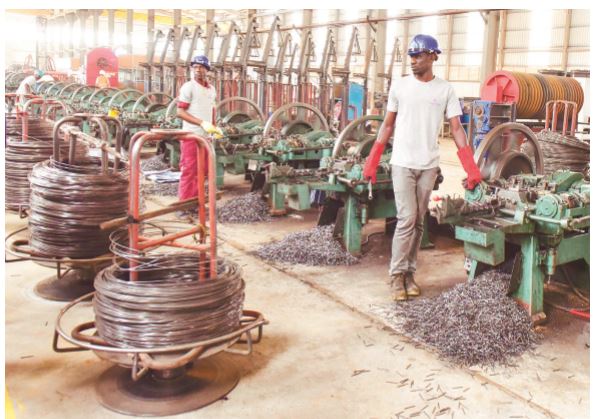
OIL AND GAS
According to the energy ministry, 21 oil and gas discoveries have been made in the country's Albertine Graben. UK firm Tullow Oil confirmed the first commercially viable bio-carbons in the Albertine Graben in 2006.
Uganda's total confirmed oil finds stand at 6.5 billion barrels of oil, with 1.5 billion recoverable. These discoveries have sparked an investment that is tipped to reach $20b, according to officials at the Petroleum Authority of Uganda (PAU).
The key players in the oil sector are Tullow Oil (UK), Total (France) and China's CNOOC. Tullow Oil has since farmed down its 33.3% stake in Uganda's oil sector to Total at $575m or (about sh2.2 trillion). Uganda is building a 60,000 barrel-a-day refinery to serve national and regional demand.
However, most of the oil will be transported to the market by the 1,445km East Africa Crude Oil Pipeline to the Tanzanian sea port of Tanga. The $3.5b pipeline is a joint venture by the Uganda National Oil Company, Tanzania Petroleum Development Corporation, and oil firms — CNOOC and Total.
The oil finds have also led to emergence of businesses in the food supply chain, equipment and logistics, as well as big infrastructure developments such as the Kabaale airport in Hoima district. Officials at the PAU say the oil and gas sector is one of the catalysts that will catapult Uganda to middle-income status.
Uganda expects its first oil in 2022. However, it is yet to make the final investment decision on oil. Oil production is projected to spur the country's growth by 10% per year. Uganda is also banking on earnings from oil to develop other sectors, such as infrastructure, agriculture, health and education. Oil activities have already inspired growth of businesses in Bunyoro region. As a result, roads, health centres and schools have been constructed.
SPONGE IRON ORE PRODUCTION
According to the National Planning Authority (NPA), the resumption of production of sponge iron ore by Tembo Steels Limited is expected to save the country $60m in iron ore and steel imports. The venture propped up the industrial sector and earnings from minerals.
This comes on the back of a ban on exporting unprocessed iron ore by President Yoweri Museveni as part of the import substitution push. Uganda has one of the highest grades of iron ore in the world in the districts of Kabale and Kisoro. Tembo Steels will fill the gap left behind by Steel Rolling Mills about 10 years ago when it stopped production. Sponge iron is a substitute of scrap metal that Ugandan industries have been using in the steel industry.
Scrap metal prices rose to $400 per tonnes, from $200 previously following the closure of Steel Rolling Mills, as it became the only raw material available locally to produce steel. According to a study by NPA, of the 530,000 tonnes of liquid steel production required per annum to meet local demand, only about 210,000 tonnes were produced as at 2019. This means that there is a deficit of 320,000 tonnes per annum.
Uganda imports 65% of its iron and steel needs. It still incurs a huge trade deficit of about $250m sourcing iron and steel raw materials. However, with the resumption of sponge iron production, this should significantly reduce. Tembo Steels is expected to create 1,500 jobs once it is fully operational and will have the capacity of churning out 300 tonnes per day, according to NPA.
Uganda's Vision 2040 earmarked the iron and steel sector as a key driver toward the transformation of the economy. The sector is also critical in the realisation of the country's development goals under NDP III.
$620M FERTILISER FACTORY
The fertiliser phosphate plant with a production capacity of 100,000 tonnes and the bricks factory at the Sukulu Hills in Tororo district is another key venture promoting industrial growth and strengthening agriculture productivity.
The $620m (about sh2.3 trillion) project by Chinese company Guangzhou Dongsong Energy Group Company, came at a time when the Government.
INVESTMENTS ACCELERATING UGANDA'S ECONOMIC GROWTH
was promoting modern and commercial farming to take the country from mainly subsistence agriculture to market-oriented production. The company has created 1,200 direct jobs and 2,000 indirect jobs.
According to the energy ministry, if Uganda exploited and processed many of its untapped minerals, the sector's contribution to GDP could rise to about 40%, from the current 3%.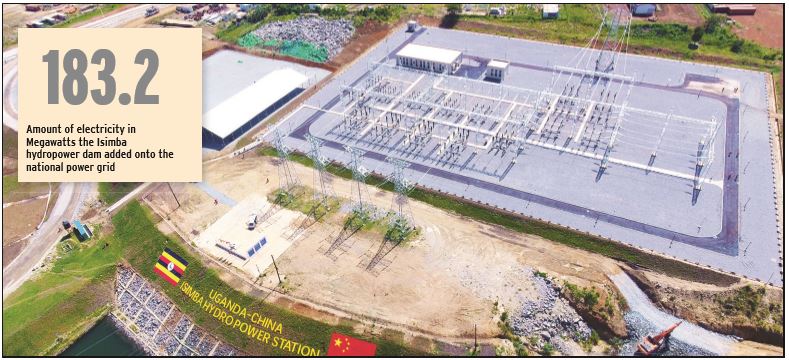
POWER SECTOR
The Bujagali hydropower dam that was commissioned in 2012 was a big milestone in the power sector. The sector was at the time characterised by inadequate electricity supply. With the coming on line of the 250MW power plant, load-shedding was significantly reduced.
The $900m project, which created over 2,000 jobs during construction, has had a huge impact on the local population thanks to increased power supply. At the time of commissioning the power station, electricity shortage was one of the biggest barriers to the country's economic growth.
Access to power has risen to 42.6%. Uganda's installed power generation capacity stands at 1,177MW as at April last year and was targeted to rise to 2,025MW under the second National Development Plan.
The Isimba Hydropower Dam, which was commissioned last year, added 183.2MW onto the national power grid. The $567.7m (about sh2.1 trillion) power plant helped to further reduce loadshedding in the country and support the Government's rural electrification agenda.
The other power stations are Nalubaale (180MW) and Kiira (200MW) as well as various mini-hydro plants across the country. The $1.7m Karuma hydropower project, that is expected to be commissioned by November 30, has already facilitated growth in terms of jobs and business opportunities created.
The 600MW plant in Kiryandongo district will be the biggest hydropower dam in the country once completed. With more power coming on line, tariffs are expected to drop, especially for manufacturers and other intensive energy users.
INDUSTRIAL PARKS
Uganda is promoting development of industrial parks and business zones to drive job creation and spur growth across the country.
According to UIA, the parks will help to industrialise Uganda, create jobs and contribute to national development. So far, UIA is targeting to develop 27 industrial parks countrywide, including five science and innovation parks. The Kampala Industrial and Business Park in Namanve already boasts of several industries that are fully
operational.
The UIA director for industrial parks development, Hamza Galiwango, says 38 investment projects in Namanve are fully operational. They are producing items, such as steel products, plastics, textiles, gas cylinders, packaging materials, trucks and buses. Over 23,000 people are employed in the Kampala Industrial and Business Park, and this is expected to rise to 200,000 jobs at full operational capacity, according to UIA.
State minister for investment Evelyn Anite said development of the parks would help strengthen Uganda's import substitution agenda. It would also support Uganda's balance of trade position and the implementation of the country's value addition strategy to increase volumes, quality and value of Uganda's exports.
Other industrial parks under development are in the districts of Moroto, Kasese and Mbarara. Planned industrial parks are also in the districts of Hoima, Nakasongola, Buliisa, Gulu, Lira, Arua, Tororo, Iganga, Masaka, Luwero-Nakaseke, Bushenyi, Kabale, Fort Portal, Rakai, Mbarara Main, Mityana and Mubende.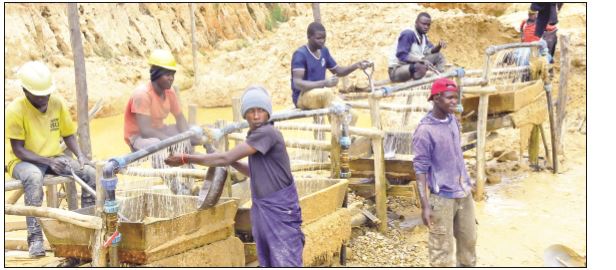
USMID SPURS DEVELOPMENT
The World Bank, through the Uganda Municipal Support Infrastructure Development (USMID) project, released $150m to help boost infrastructure development in municipalities across the country.
The project was implemented from 2013/14 to 2017/18 financial years in 14 municipalities. The beneficiary municipalities were Arua, Gulu, Lira, Soroti, Moroto, Mbale, Tororo and Jinja. Others are Entebbe, Masaka, Mbarara, Kabale, Fort Portal and Hoima.
Under the project, 110 urban roads equivalent to 78.4km were constructed in 13 municipalities. A total of 93.2km of covered line drains and 30.3km open drains were built. Over 100km of pedestrian walkways, 21.8km of cycle lanes, 43.5km of parking lanes, 2,807 solar street lights and 1,114 street trash cans were put in place.
Three taxi parks were constructed in Arua, Tororo and Entebbe municipalities. Over 328 lockup shops and 143 vehicle parking lots and restaurants were also set up in the three parks, while a bus terminal with 16 bus bays and 32 lockup shops was built in Moroto.
In Fort Portal municipality, one lorry park with 14 lockup shops was constructed and Coronation Park in Lira was also improved. All these have helped to create jobs and improved the working environment for small and medium-sized businesses, especially those operated by disadvantaged groups like women and youth in the beneficiary municipalities countrywide.
USMID is now implementing a $350m five-year project in the municipalities of Lugazi, Kasese, Kamuli, Mubende, Apac, Kitgum, Ntungamo and Busia. It will end in 2023.