
Water transport set for growth
Over the last 10 years, there has been demand to boost bulk cargo water transport on Lake Victoria with the addition of more vessels.
Water transport flourished in Uganda with the East African Railways and Harbours, which was founded in 1948.
The company was operating passenger steamer, shipping and ferry services on Lakes Victoria, Albert and Kyoga as well as on the navigable sections of River Nile.
According to the Ministry of Works and Transport, the water transport system suffered a huge setback with the 1961 flooding.
This was on the eve of Uganda's independence. The flooding affected the progress that had been made in the sector by the colonialists and later little investment was put in the sector.
The birth of the East African Community (EAC) in 1967 lifted the water transport system in the region with the creation of common institutions.
EAC COLLAPSE
With the collapse of the community in 1977, the regional institutions that were running the water transport sector collapsed.
Each country had to start its own water transport system. When EAC was revived in 2000, the region resumed co-operation and development of the water transport.
Uganda's natural comparative advantage for water transport is evident as over 18% of the territory is covered by water according to the 2019 Joint Sector Review Report of the Ministry of Works and Transport.
Water transport is important in shipping passengers, raw materials, manufactured products among domestic and international points of trade. Inland water transport is one of the oldest economically and environmentally sustainable modes of transportation for passengers and cargo.
In some areas, it is the only means of mobility and access to basic services for communities.
Gen. Edward Katumba Wamala, the works minister said Uganda's water transport system has three components namely wagon ferry services on Lake Victoria, short-distance road vehicle ferries acting as ‘road bridges' and informal sector operations by individual canoes.
"Water transport is particularly dominated by small motorised and non-motorised boats transporting goods and passengers," Wamala said.
INLAND WATERWAYS
He said inland waterways are managed by Uganda Railways Corporation (URC), the Ministry of Works and Transport and the Uganda National Roads Authority (UNRA).
Apart from the wagon ferries operated by URC, there are ferries and ships operated by UNRA, the Uganda Wildlife Authority and others on private partnership basis with the private sector.
Kalangala district, which is made up of 84 islands scattered over Lake Victoria is accessible by road and motor vehicle through Bukakata (an inland port in Masaka district) to Luku (an inland port in Kalangala district) using the Bukakata- Luku ferry.
Through the northern route that is from Entebbe (Nakiwogo Landing), there is the steamer MV Kalangala services Kalangala town council (Lutoboka Landing). Kasenyi and Kitubulu landing sites, in Wakiso district.
These are gateways into the district mainly using private means of water transport.
UNRA FERRIES UNRA
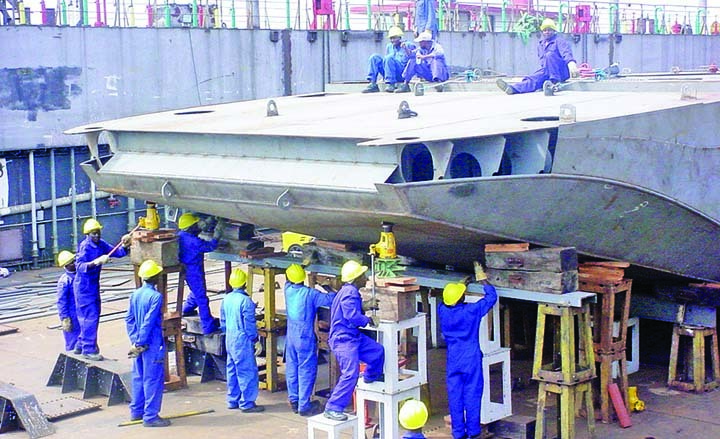
operates 10 ferries in various water bodies across the country. The Kalangala Infrastructure Services, a public-private partnership with the Government operates two ferries, Motor Vehicle (MV) Ssese and MV Pearl that run between Masaka and the islands in Kalangala.
The URC managing director, Eng. Charles Kateba, said the capacity of water vessels far exceeds the capacity of rail wagons and trucks.
Kateba said since independence, the Government has prioritised ports and intermodal facilities that have warehousing, and physical infrastructure for freight transfer from water vessels to railways and trucks and vice versa.
He said Uganda does not have river ports, but two inland ports on Lake Victoria. That is the Jinja Pier and Port Bell in Luzira.
Uganda also uses the neighbouring country lake ports of Mwanza in Tanzania and Kisumu in Kenya.
Lake Victoria is shared by the three countries. Uganda's other water resources that are transboundary in nature and shared with her neighbour, DR Congo are Lake Albert and Lake Edward.
Kateba said the cargo exports through Lake Victoria include coffee, drip water, cotton seeds, Mukwano Group products such as cooking oil, soap, Uganda Baati and Roofings Group products such as iron sheets and steel bars.
Kateba said imports include foodstuffs for World Food Programme, paper products, fuel, raw materials for Roofings Group, computers, car spares, personal items and mixed products.
FREIGHT TRAFFIC
According to Eng. Samson Bagonza, the chief engineer at Ministry of Works and Transport, freight traffic on Lake Victoria increased from 27,665 tonnes in the FY 2016/17 to 40,689.42 tonnes in the FY 2018/19.
The passengers' traffic on Lake Victoria increased from 45,338 in the previous year to 54,695 in 2018/19.
Bagonza said the water transport sub-sector has an estimated passenger crossing of six to eight million per year at different landing sites and the numbers are increasing with the introduction of new ferries.
He said the share of freight transported by rail on Lake Victoria ferries out of the total freight volume transported through Port Bell was 0.002 % in FY 2017/18 and 35% in FY 2018/19.
He added that this is mainly due to the repair of the Port Bell railway line and opening up of the southern route through Port Bell to Mwanza and connecting the central corridor to Dar-Es-Salaam Port.
WATER STUDY
In 1997, the Government with the assistance of donors carried out an Inland Water Transport Study whose objectives were among others to review the effectiveness of the current inland water transport legislation.
The study came up with a number of recommendations that are summed up into a 20-year water transport master plan costing $484m.
These funds were not available to implement the plan according to the works ministry.
In Uganda, the major legal instruments for inland water transport are The Lake Victoria Transport Act, 2007, the Ferries Act 52, the Vessels (Registration) Act 53 and the Inland water Transport(Control) Act 54.
The ferries Act provides for the use of special flags, forfeiture of licence, fees and auctioning of rights to run a ferry.
The Inland water Transport (Control) Act sets the regulations for the licencing of ships while the Vessels (Registration) Act establishes the obligations to register all classes of vessels.
BULK CARGO WATER TRANSPORT
The ministry of works described these laws as disjointed and under the responsibility of numerous authorities.
Over the last 10 years, there has been demand to boost bulk cargo water transport on Lake Victoria with the addition of more vessels.
Alex Mbonye, the chief executive officer of the Uganda Shippers Council said reports show that Uganda and Tanzania need 10 bulk cargo by rail vessels to boost the transportation of goods by water.
The two state-owned vessels (MV) Kaawa and MV Umoja currently operate on Lake Victoria.
MV Kaawa is operated by URC and MV Umoja is operated by the South African-based Mediterranean Shipping Company Tanzania. Mbonye said reports show that the two countries need additional eight vessels to add to the old two vessels to make 10 vessels.
Henry Ategeka, the principal maritime inspector at the Ministry of Works and Transport, said there are over 30 privately-owned vessels transporting cargo on the lake using conventional methods of carrying goods on the head and loading them onto vessels.
According to the works ministry, Lake Victoria offers a competitive transport of freight and passengers within Uganda and her neighbours.
The lake offers an alternative route to traders importing or exporting goods through the Northern Corridor that links the port of Mombasa in Kenya to landlocked Uganda, Rwanda and South Sudan.
CENTRAL CORRIDOR ROUTE
The Central Corridor links Tanzania's Dar es Salaam Port to Uganda, Rwanda, Burundi and the Democratic Republic of Congo through rail, road and inland waterways.
Ugandan abandoned the Central Corridor route when the former rail services concessionaire, Rift Valley Railways (RVR), took over the business in 2006.
Ugandan ships, MV Kaawa and MV Pamba, were withdrawn from maritime service in 2005 after MV Kaawa collided with sister vessel MV Kabalega leading to the sinking of the latter.
After several years MV Kaawa was repaired but remained grounded because RVR did not invest in that side of the business.
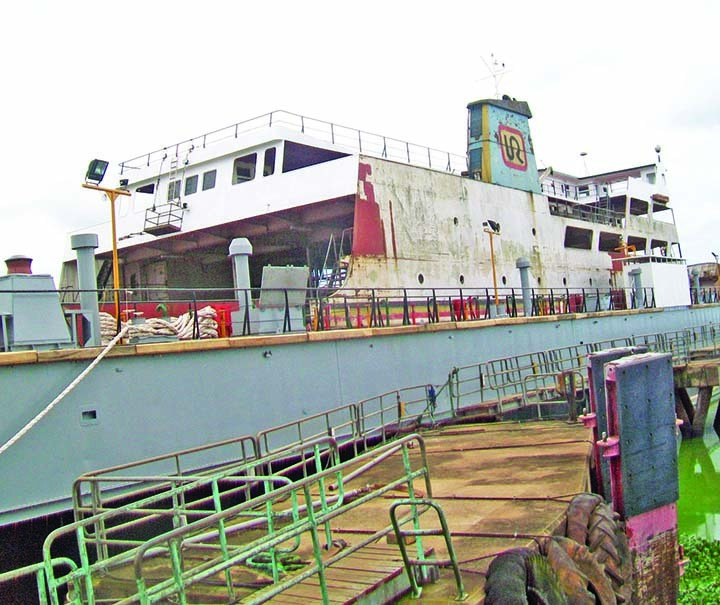
The Government in June 2020 handed MV Pamba to Mango Tree Group Ltd for repairs. The Government plans to replace MV Kabalega which has sunk and repair MV Mwanga.
FREIGHT TRAFFIC
According to Eng. Samson Bagonza, the chief engineer at Ministry of Works and Transport, freight traffic on Lake Victoria increased from 27,665 tonnes in the FY 2016/17 to 40,689.42 tonnes in the FY 2018/19.
The passengers' traffic on Lake Victoria increased from 45,338 in the previous year to 54,695 in 2018/19.
Bagonza said the water transport sub-sector has an estimated passenger crossing of six to eight million per year at different landing sites and the numbers are increasing with the introduction of new ferries.
He said the share of freight transported by rail on Lake Victoria ferries out of the total freight volume transported through Port Bell was 0.002 % in FY 2017/18 and 35% in FY 2018/19.
He added that this is mainly due to the repair of the Port Bell railway line and opening up of the southern route through Port Bell to Mwanza and connecting the central corridor to Dar-Es-Salaam Port.
RISK MITIGATION
Navigation on Uganda water bodies remains risky. The water bodies lack the equipment to guide users.
There are current measures by the Government to improve water transport such as the setting up of an independent department in charge of maritime administration in the ministry of works, the development of Bukasa Port, improving landing sites, sensitisation, updating laws and regulations.
Cabinet has approved the Inland Water Transport Bill 2020. It seeks to strengthen water transport safety management, streamline and better regulate water transport safety and strengthen enforcement.
Water transport is the cheapest means of transportation for bulk goods.
Societies have always settled near water, partly due to the fact that water transport is more efficient than overland travel.
If properly developed, water transport plays a vital role in boosting the economic development and integration of countries that share water bodies.